Categories
fauna

The Freeze Game

Mid-morning on a Saturday, I headed up to the woods for a walk.

Passing Piney, the sole white pine in that part of the woods, I rubbed my fingers in a patch of pine resin dried on his bark. I find the scent intoxicating. I had been having difficulty getting out of my head and properly arriving in the woods, and the smell pops me suddenly and effectively to where I am standing.

I decided to smell the resin for as long as the scent remained, and was happily huffing the pine-tipped tips of my fingers when I saw a large bird flush from the ground, about 10 meters to my left.

I froze, wanting to see it before it spooked further. And focusing my gaze deeper into those trees, I realized it was not a large bird that had lifted from the ground, but the head of a deer. There was a doe to the side of the trail, about 10 meters into the brush. She, like me, had frozen.

A part of me, and I admit it is a large and loud part of me, immediately went to reach for my phone. “Pics or it didn’t happen” has wheedled probably a little too deeply into my brain.

But on this morning, I made a good choice, and left my hands where they were. The moment recorded only by my own devices, rather than the kind I carry around in my pocket.

Now remember I was in the middle of sniffing pine resin on my fingertips when I spotted her, and that is exactly how I froze. I had also just stepped over a rock in the trail, and my feet were in a moment of awkward pigeon-toedness.

And that is the pose I would stay in, until this stalemate broke. “Stillness, in many ways, is the ultimate camouflage.” (~Ray Mears)

It was the deer who broke first. She began tentative small movements. I didn’t react. She made her movements a little bigger. I didn’t react. She bobbed her head owl-like from side-to-side, trying to get a read on the shape she was sure she had seen in motion only a moment before. I didn’t move.

She flicked her white-tail to its alert position, and bounded up the trail. But not the full alarm bound I have seen when deer decide to really hoof it out of harm’s way. A small scale alarm. Just a few meters further up the trail. A little further away from me, and conveniently for me, a little further upwind. The whims of the breeze still protected my scent.

But she wasn’t done with me yet. Though she looked like she might resume browsing, instead she turned towards me again, and, in movements straight out of a cartoon, extended her long neck out and around a tree. Peering at me, as if around a door. I didn’t move. She moved a little further, and did it again. And again. Leaving her body obscured by brush, but extending her neck and head like some North American woodland giraffe.

Unable to get a fix on me — pigeon-toed-finger-sniffing me — she wound her way back the way she had come. Moving even closer to my spot, gingerly, but determined. If she had been a human, her stare would long ago have become rude. Her eyes were fixed on my form.

Somewhere in the recesses of my memory is the idea that if you are trying not to spook an animal, you should take care not to focus your eyes on it. We humans have great peripheral vision, well-tuned to detecting motion. And animals can feel our predatory gaze. The theory passes the gut test — we can feel the eyes of other humans on us, why wouldn’t animals notice the same?

So in addition to maintaining my ridiculous statue pose, I was also trying to ensure that I did not ever return her gaze. I kept my focus diffuse, only allowing my eyes to focus on her very briefly, in the moments she was facing away or largely obscured.

The doe was now quite closeby. Back where she had started, but a few meters closer to me. The head bobbing and staring continued. I didn’t want to cause her stress, but it had only been a few minutes, and I knew our deer-and-human game of cat-and-mouse would be over soon enough.

Moving to my north hadn’t yielded an answer, so now the deer began working her way to my south. She walked slowly a few meters further, now working her way downwind of me. In my current statue position I wasn’t going to be able to see her much longer, as my head was facing to the north and up the trail. So while she was walking behind some trees, I turned my head incrementally south, allowing me to continue to see her as she moved towards the rear of me.

She was now a half dozen meters further south from her starting position. From her starting place, she had gone about 10 meters, north, now back to her starting place, only now a little closer to this strange object. None of that giving her the answers she wanted, she would try a southerly position.

She stopped, and licked her nose. This delighted me! Though I knew it signalled that the jig was about to be up.

In her excellent book On Looking, Alexandra Horowitz describes the olfactory senses of her dog. Dogs keen access to smell-formation that human noses have no access to (though don’t count us out entirely — our nose can tell us a lot!). She describes observing her dog deliberately sneezing and then licking his nose before an adventure in their urban environment:

Sneezing is a dog’s way of clearing everything out of the nose, so the next good stench can be inhaled.

…by licking his nose, he was readying it to catch things to be smelled. You may have noticed that the world outside your door smells brightly new after a rain, when the ground is wet…

Wet air (or noses) allow for better absorption of an odor.”

On Looking, Alexandra Horowitz

This deer, I reckoned, with its similar big wet dark nose, was attempting to do the same. And so she was. Only seconds after she licked and sniffed, she bolted. Tail head high, this time she bounded away with commitment. Downwind, my human stink had inevitably given me away. She may not have encountered many humans before who stood perfectly still with their fingers half up their noses and their toes pressed together, but she wasn’t taking chances. No matter how strange its shape, if it smells like a human, I run.

The whole encounter lasted maybe 5 or 10 minutes, but like so many nature moments, time goes muddy. It becomes alternately fast and elastic or slow and stretchy as treacle. Each detail in high relief.

However many moments passed on the clock, they were each precious to me. We get so few chances at chance encounters. And I am glad that for this moment, I was smart enough to leave my phone in my pocket, and really capture it.

~Kate

Categories
thinking big

A little patch of nowhere

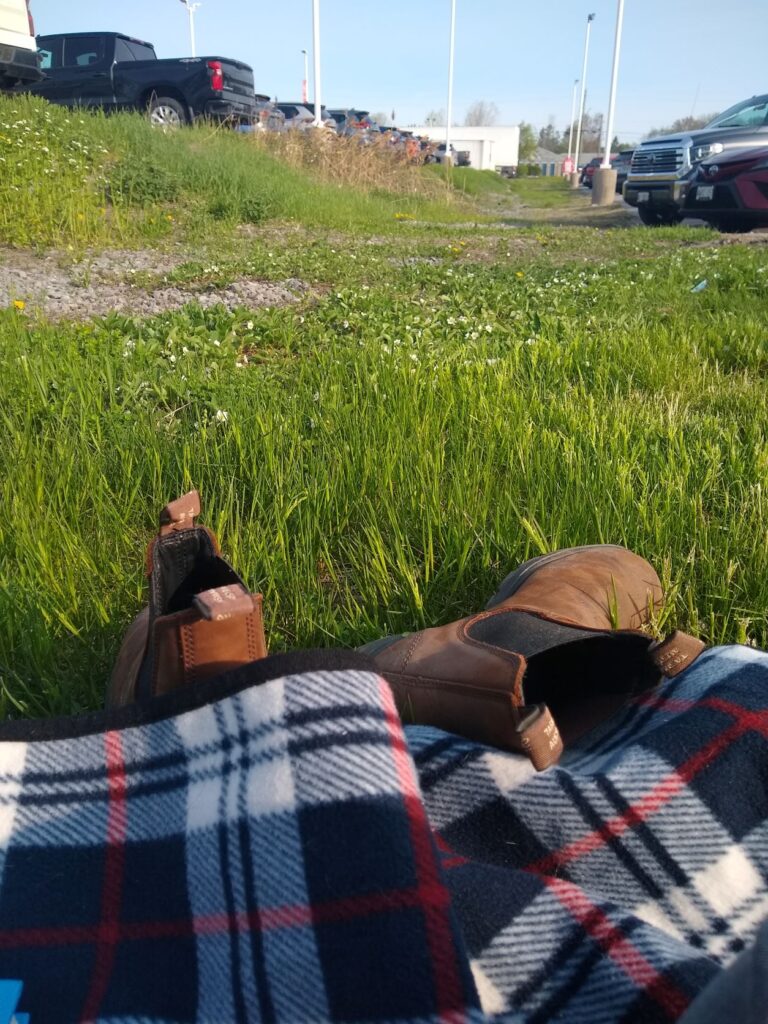
Took the car in for service today. And instead of waiting in a pleather chair beside CP24, I opted to sit outside, in a patch of dandelions by a low wire fence to the highway. You can still find places to be, sometimes, in the cracks of the world. Sometimes you only need be willing to, as the luscious Beau Miles said, look like a d*ckhead.

I am pretty willing to look like a d*ckhead. Not all the time, but most of the time. Whether or not it’s safe to be an outlier — to walk the alleys or sit still in the forgotten spaces — is sometimes out of my hands. It can be dependent on the gender and skin colour and etceteras that are ironed to our identity. But when I can, I try to grab these moments.

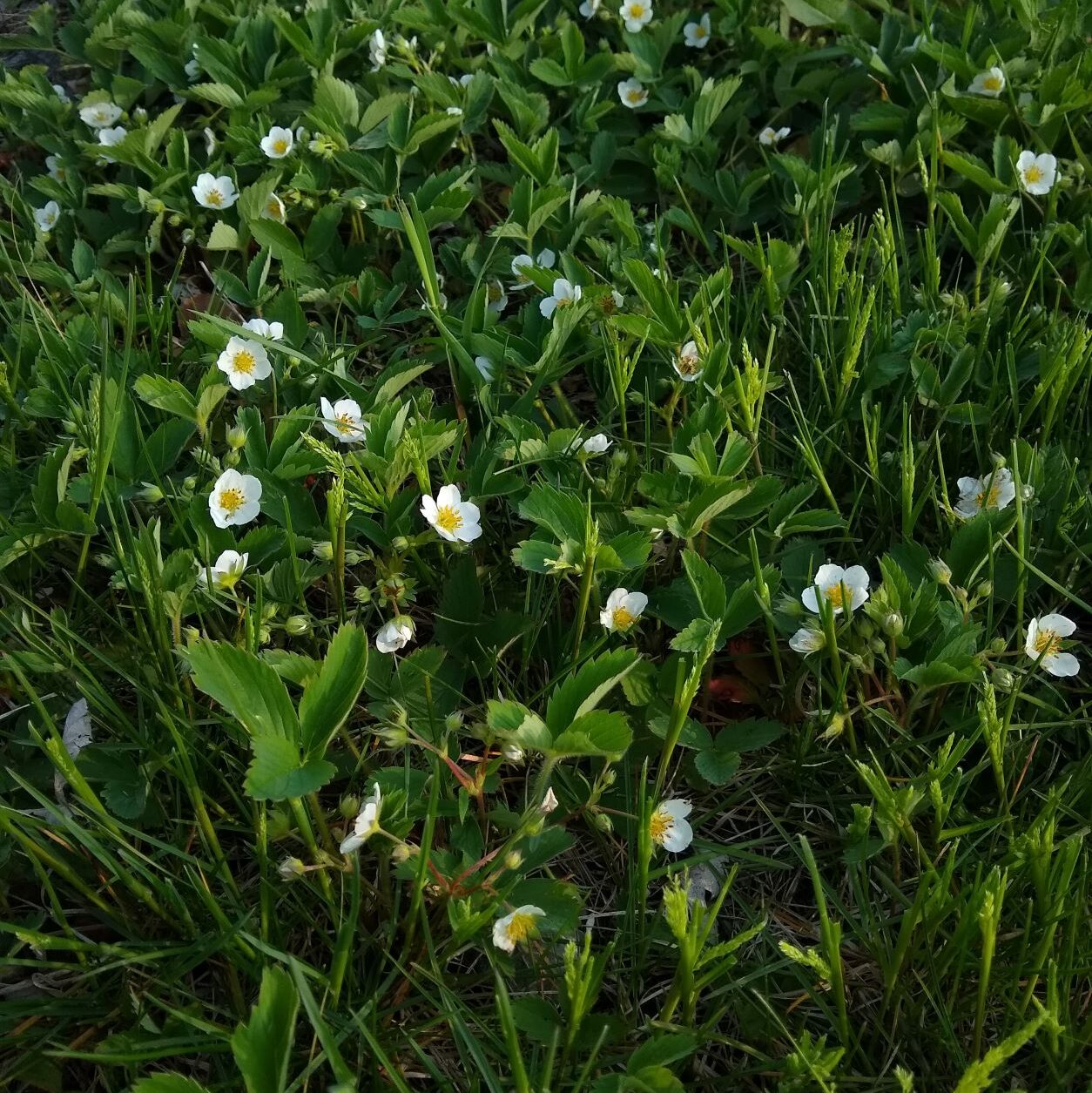
The spot outside the dealership looked like a scrub of nothing. One of those patches of grass that is only still grass because it would be too much trouble to pave. But as I stepped closer I saw a giant patch of wild strawberries. With more flowers and nascent fruit than in our whole garden. Then generous trees, just the other side of the fence. And more trees coming up from cut stumps in the fenceline, as though they had simply been coppiced. Three Canada geese fly overhead. Two pigeons conduct their business on top of a truck. A pair of seagulls share a perch at Home Depot with a crow. A patch of phragmites is erupting from under the bumpers of cars for sale. A plant which, turned by the right hand, could be used to thatch a roof. Dandelion that could become cordial or pesto or inks (were it not sprayed) is abundant. A crow carrying a treasure. A red-winged blackbird buzzes so close to my head I feel I could burn my fingers on its vermilion shoulders.

Between and above the din of the highway there are still, incredibly, birds singing. Robins, song sparrows, crows, mourning doves, seagulls. They seem to wait for the transport trucks to pass, and then shout into the tiny spaces, their songs quickly crossing the street.

Ground like this is the very definition of a “disturbed” site, so I think it is quite fair that we don’t feel at peace in them. But the longer I sit, the more it takes shape as a place around me. The sound and fury of the highway becomes white noise, and I can more easily pick out the small movements of the bugs and birds and plants nearby. In its own way, it is quite quiet here. I am left alone with my thoughts and the songbirds.

I am of course complicit, in some of the erasure of real places. I am sitting here because I drive a car. A hybrid car, but a car nonetheless. Made of mined metals and petroleum rubber and built to drive on roads that tear scars across every landscape they touch. There is no ‘us’ and no ‘them’ here. Or if there is, I acknowledge I belong to both.

At eye level, I’m surrounded by concrete and cars and places that have forgotten how to be places. But eye level is only one place to look. Look up. Look down. The ground and the sky often manage to sneak their treasures past the toughest concrete. I prefer when the sights at eye level are more nourishing to drink in. But I’ll take this crack in the world.

Even a nowhere still has a someplace inside it.

Have a wonderful weekend makers.

~Kate


Recommended reading for looking up and looking down:

Rosemary Mosco’s A Pocket Guide to Pigeon Watching
Alexandra Horowitz’s On Looking
Shawn Micallef’s Stroll
Jason Allen-Paisant’s Thinking With Trees (start with Right Now I’m Standing)

Categories
birbs

The nest of the Thunder Chicken

Ruffed grouse nest!!

My love of the “Thunder Chicken” runs deep. So I was ecstatic when we came across this ruffed grouse nest at the base of a tree.

Neil and I were walking the woods when a grouse flushed from the brush beside us. That’s not so unusual here, but she was calling as she flew away, which is a bit unusual. Given the time of year, we had a quick look for a nest — and found one! I snapped this pic and we skedaddled out of there, to leave her in peace.

Ruffed grouse nest in hollows on the ground. Like this one, they’re often concealed at the base of a tree, or next to a log. The birds are incredibly well camouflaged in dappled deciduous woods. I now know exactly where this nest is, with mama sitting on the ground, and I still find her tricky to see.

Only 4 eggs were visible when we found the nest, though the hen may lay as many as a dozen or so eggs in total. Spot the feathers she’s added to the nest! In the photo below you can see what the nest looked like four days later — if you didn’t know the eggs were there…

This nest is close to a path we have to use. I’ve taken these two photos while mama hen was off the nest, but I know my attention is not helpful to her or her future babies. For the next month while she incubates and the babies hatch, we’ll dial down our frequency on that trail and pass by as quickly and respectfully as possible.

I love love love that the woods has its secrets. There’s no bulletin board listing who is nesting today. For every nest I see, there are probably a dozen I don’t. Moments like this remind me that even when I’m paying all the attention I have, I’m only glimpsing the tip of the iceberg. Life abounds.

~Kate


Source:

More information on how and where birds nest — among many other fabulous facts — can be found in “The Birder’s Handbook” by Paul R. Erlich, David Dobson, and Darryl Wheye

Categories
foraging fungi

The fiery nature of King Alfred’s Cakes

The story goes that King Alfred, exhausted from battle, filthy, and lost in the woods, was given shelter by a herdsman’s family. In his unkempt state, they didn’t recognize him as the king, and thought he was a tired soldier.

The wife was in the middle of baking bread on the hearth, and asked the King to watch the fire while she went to fetch more wood. While she was out, he fell asleep and she returned to find the loaves burnt. Scolding him for his carelessness, and the wife expressed surprise that anyone would not understand the importance of tending to the bread. What sort of person doesn’t understand such a basic household task?

In one version of the story, King Alfred scatters the burnt loaves in the woods to hide his mistake.

Enter Daldinia concentrica. Also known as “King Alfred’s Cakes”.

Daldinia growing on decaying wood. Tiny burnt loaves.

But the story of the burnt loaves is not this fungus’ only connection to fire…

King Alfred’s Cakes are also sometimes referred to as “coal balls” or “carbon cakes” or “carbon balls”.

But much like the legend, the exact details of why depend on who you ask.

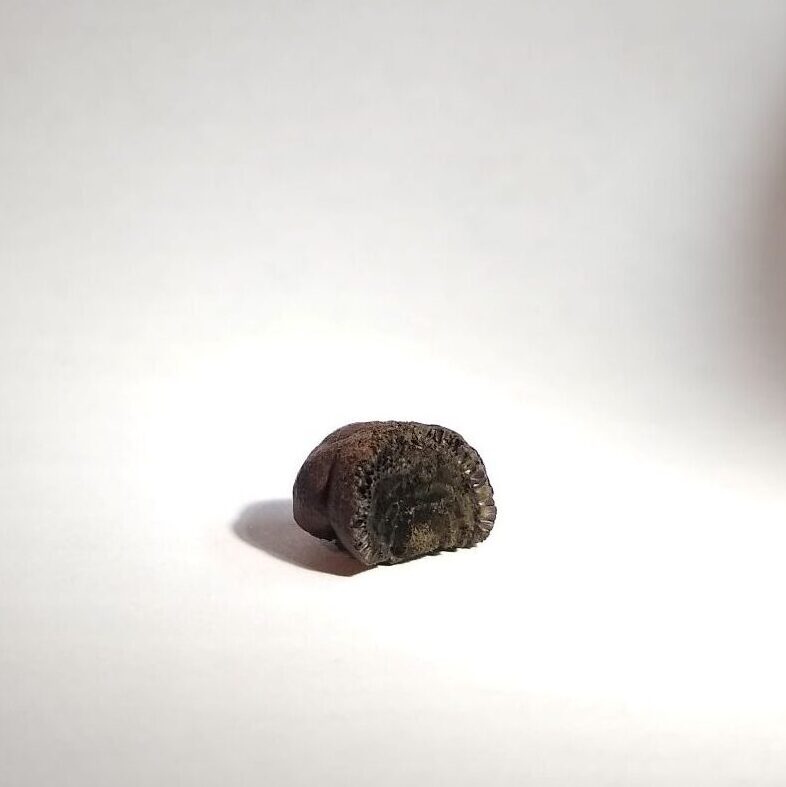
Some say that the “coal” name comes from Daldinia‘s sooty spores. Spores of Daldinia are ejected through little tubes (perithecium) at the outermost layer of the fungus. You can see these tubes in the cross section photo below. The ejected spores look like a fine black powder, and the “soot” this fungus leaves behind certainly do make you think of carbon or coal.

Half a Daldinia. The perithecium (the tubes from which spores are ejected) are visible on the outer layer. Consensus is that each concentric ring represents a season’s growth.

However, there is another explanation. One that ignited my interest, as it were.

Because Daldinia has another unusual and interesting property: an ability to catch and hold fire. This fungus ignites quickly, but smoulders slowly.

This mushroom can carry fire.

Now, if you hand me information like that, there is one more thing you have to hand me. Matches.

I took my tiny Daldinia sample over to the fire pit, and, well, here’s what happened…

Now that’s what I call confirming an ID! I conducted this experiment around 6am one morning before getting started on work, and it made my whole dang day. I’m still high on it.

Daldinia are quite common, and this fiery property may have historically made this fungus a useful “tool” to forage: as a vessel for moving fire from one place to another, or as tinder. Using fungus as tinder would not be unique to Daldinia. This was also famously concluded as the reason that Fomes fomentarius, “hoof” fungus, was one of two fungi found in the travel equipment of Ötzi the Iceman’s 5000 year old mummified remains.

//

It’s all still there, even when we fail to notice. The raw materials for heart-rending heart-mending fascination. Both the tinder and the spark. The embers of science and magic in the tiny un-flashy fungi, and the sense of wonder we adult humans seem to constantly misplace, or dampen under the wet rag of a humdrum existence. But there it all is, smouldering away, waiting for our interest to ignite, and set it ablaze.

~Kate


Note: According to some sources the species that grows here in North America should be identified as Daldinia childiae, instead of Daldinia concentrica.

Selected Sources:

Categories
birbs flora

The red-headed white-bellied Red-Bellied Woodpecker

Red-bellied woodpecker feasting on sumac…or the bugs therein?

The red-bellied woodpecker. I’m not ragging on the folks who assigned woodpeckers their common names, but… okay, maybe a little. Because if I was going to describe this woodpecker to someone, “look for its red belly” would be way way way down the list.

“Neil! Come see this red-bellied woodpecker! No don’t look for a bird with a red belly. The belly looks bright white from here. I mean I can get you a close up reference photo where you can see it’s actually a bit ruddy… Ahhhh there’s no time for this, it’s that bird with the BRIGHT RED HEAD.”

It’s the same deal with the yellow-bellied sapsucker, with its brilliant red cap and (in males) equally bright red throat. And belly that if you are about five feet away from one, and happen to have a pantone deck with you, you *might* describe as the colour of watery butter.

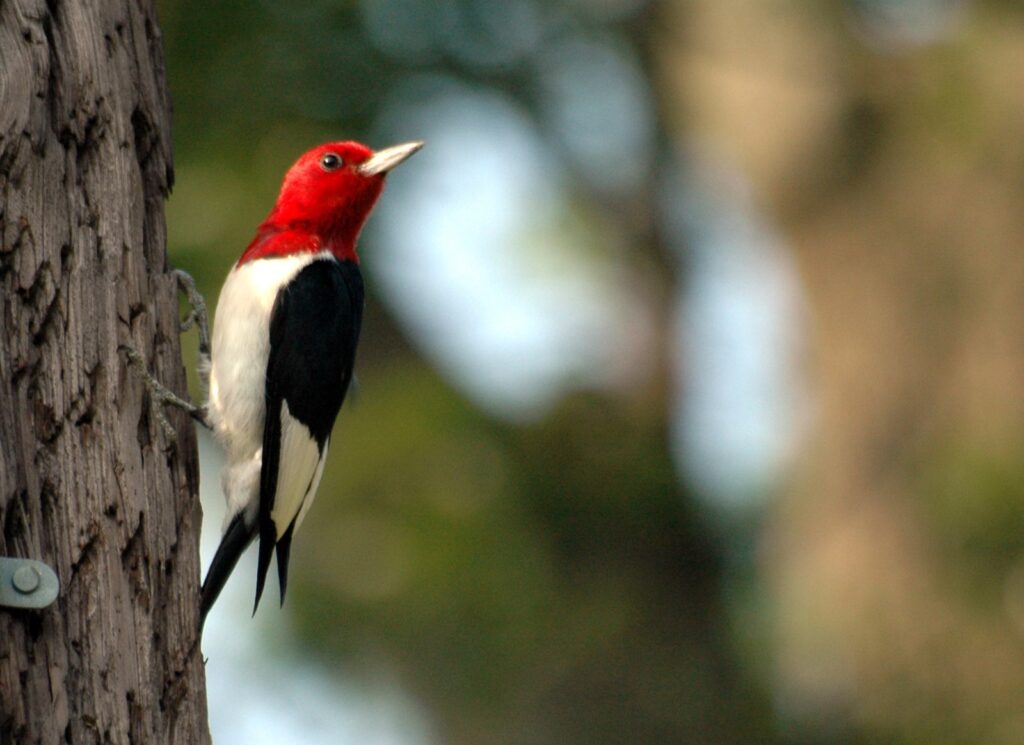
I said I’m not actually ragging on those woodpecker namers though, and I do mean it. Because when you see the bird who scored the name “red-headed woodpecker” you can’t help but think — alright, fair enough.

Pic by The Lilac Breasted Roller (CC BY 2.0), via Wikimedia

~Kate

Categories
technology thinking big

Leggy plants… and planters

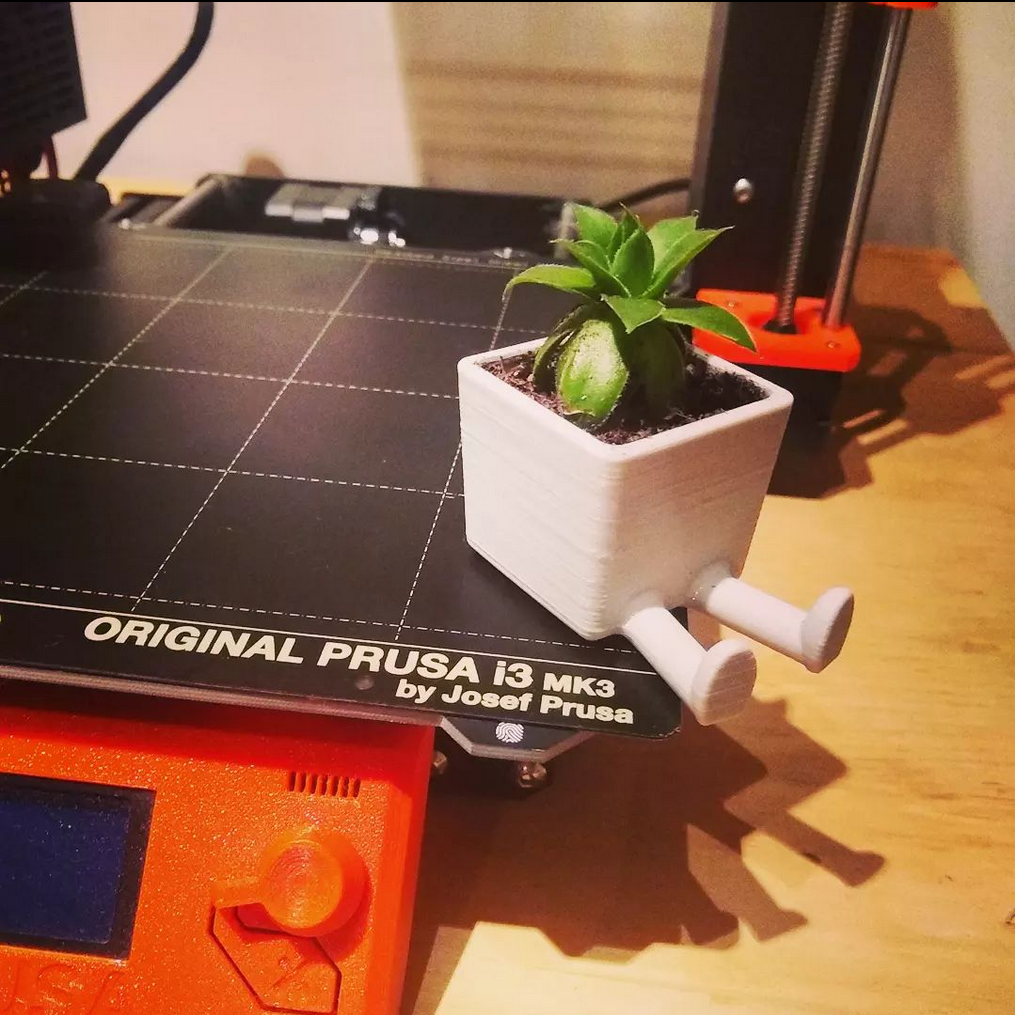
“Leggy is a very special succulent planter that could walk away at any time, but as long as he has light and enough water, he will stay with you forever”

~p4Zr, Leggy’s designer on Thingiverse

3D printed this little guy the other day for a succulent who needs a new home and more love.

3D printing has a lot of potential. What if we could use compostable materials to print, at home, only what we need, when we need it? No gas-guzzling shipping halfway around the world. And what if when it was done being one thing, we could chip it, melt it, extrude it, and turn it into something else?

It’s an exciting idea for a smaller footprint. But we do need to point out too when the Tech Emperor has no clothes. And that dude is naked a lot of the time.

Machine learning, AI, 3D printing… Sprinkle in the words “deep” or “neural” or “cloud” to add another zero to your funding. “We use soft robotics to neural our blockchain to the cloud…4.0”. All aboard the hype train, next stop, Quick Fixes.

The reality is complicated. Each one of these can be wonderful tools. And like all tools they work best when we first learn how they work, how to use them, what they’re best for. We don’t try to cut wood with a hammer.

3D printing is both great and has a ways yet to go. PLA requires an industrial facility to be properly composted, and end-to-end residential re-use solutions are expensive and rare.

There’s great possibility to use tech in creative and planet-friendly ways. But deep understanding is in its early days.

I figure while we squeak closer to better systems, the best quick fix for now, and probably for always, is using less.

…And I don’t mean only printing pint-sized planters 😉 Although how flipping cute is this guy.

Happy Earth Day folks! Have a great weekend.

~Kate

Categories
birbs

Eastern Red Cedar Waxwings

A good omen yesterday: a little flock of cedar waxwings flew into our cedars to feast on the berries.

I could flap my gums and wax eloquent about these softly beautiful birds, but first let’s look at the tree they are feasting on: Eastern Red Cedar (Juniperus virginiana).

I love this tree. It’s a scrubby scrappy tree. One of the first species to grow back in damaged or eroded land. It is also a far and away favourite of the critters that visit here. The bright blue “berries” — the female cones — are recklessly munched by red squirrels and most other passersby. I think it is not considered a pretty tree, but I don’t consider that consideration well considered.

The blue cones of these junipers take three years to mature – year one they flower, year two the cone turns green, and year three they are sky-blue and ready for harvest. The Eastern Red Cedar berry is listed in the Slow Food Foundation’s “Ark of Taste”: a project to recognize and draw attention to “small-scale quality productions that belong to the cultures, history and traditions of the entire planet.”

“Eastern red cedar berries are related to common juniper berries but are superior in flavor. They are mild without the turpentine notes and bitterness of common juniper. They are almost sweet, with a woodsy piney flavor.”

~ Slow Food Foundation for Biodiversity

Cedar waxwings engage in beak rubbing, dances, and food sharing as displays of courtship, and “[o]lder birds pair preferentially with each other”. As I look over at my mate of 20 plus years, I get it. I may not secrete a red waxy substance from my feather shafts, but between their food sharing and their love of the eastern red cedar, me and the waxwings have a lot in common.

~Kate


Selected Sources: The Birder’s Handbook by Paul R. Ehrlich et al; The Slow Food Foundation Ark of Taste Project

Categories
QoTD

QoTD: Art holds it

Things are going to happen all the time. The unendurable happens. Y’know, people we love, and we can’t live without are going to die. We’re going to die. One day. We’re going to have to leave our children and die. Y’know leave the plants and the bunnies and the sunlight and the rain and all that… I mean it’s unendurable. Art knows that. Art holds that knowledge. All art holds the knowledge that we’re both living and dying at the same time. It can hold it. And thank god it can. Because nothing out in the capitalistic corporate world is going to shine that back to us. But art holds it.

~Marie Howe, from In the Room + Marie Howe and Krista Tippett
Categories
birbs fauna

A most unusual squirrel

Alright, I thought, I’ve done my walking lap, and my woolly coat and gloves are back on the bench now. I’m down to some pretty threadbare leggings and a hoody. So if I don’t start running soon, this nippy feeling is going to blow right past chilly to points more unpleasant.

And then… a sort of “chirp”. High up a tree, ahead of me on the path, and a little to my right. To my slightly muffled ears, poking out the bottom of my orange toque, it sounded a little like the indignant chirrup of a red squirrel.

Only… slightly not.

I have learned – am learning – to pay more attention to the “slightly nots”. The woods doesn’t post a roster listing who is in attendance today. Moving slow and listening fast are the only reliable ways to find out who is around.

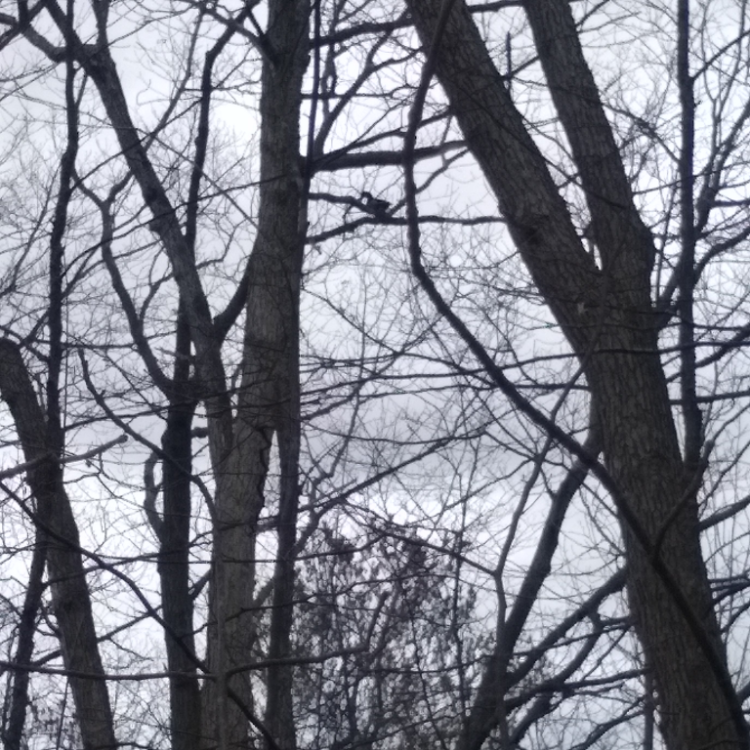
I stopped and scanned the trees for the squirrel I’d made indignant by walking past, or anywhere near, his tree. Only it wasn’t a squirrel. Because as I turned in place, a large bird took off. From a perch high up in an oak, about 5 metres ahead of me, along the trail that follows the crest of the hill. The bird didn’t go far though. But instead took another perch, just as high, only a little closer to me, and a little closer to the hill’s edge.

A pileated woodpecker? It was large, and I’m sure I saw a flash of colour on the head.

But… it didn’t land like a pileated. And it was… squat? Can a woodpecker be squat?

I took a step back, literally and figuratively. I tried to stop expecting to see something, and instead see what was there.

And what was there was… a duck??

I squatted down and took a long hard look way up the tree.

And it was, in fact, a duck.

And not just a duck, but a duck with pizzazz. Some exotic escapee. A resplendent rainbow of duck. Colours splashed akimbo all over its little duck head and squat duck body. A squat duck body currently perched high high up an oak tree. A male duck of some kind I guessed, with his elaborate plumage. He made another chirp. And another.

I hunched down in the dirty leaves, no longer feeling so chilly, and took a minute to absorb this unexpected squirrel-chirping rainbow duck.

Just as I’d decided to move along, and let this dollop of rainbow get on with whatever he was doing, he made another much louder chirrup, and then off THEY flew, singing a new song as they went. Not only the male I had been watching, but also… a female! Who had, apparently, stayed sitting quietly on the original tree the male had started from. It seems I had fallen for the oldest trick in nature’s book — with his fancy outfit and catchy songs, Mr SquirrelRainbowDuck had been distracting me. Holding my attention, while his mate, a few trees over, sat entirely in my blindspot.

Well played Mr. Duck. Well played.

If you are a birder, you have perhaps been shouting “IT’S A WOOD DUCK!” at your screen since I first mentioned our squat rainbow friend. And right you are! Confirmed by BirdNet in real time, which I was using to record their calls, and which showed me an exact photo of the duck I was looking at, along with that wonderful ID phrase: “almost certain”. (If you’d like to hear them for yourself, the calls they made were similar to the second last calls in this list, only more intermittent.)

There is no permanent body of water in our woods. But when the wood ducks flew off, they flew towards the creek that winds along parallel to the nearby road. The creek is out of sight from the path, and not connected to our woods — except as the duck flies.

//

Have a wonderful week folks! And if you want to guarantee some goodness in your week — I recommend stopping everything to google video of fledging baby wood ducks. I promise you won’t be sorry.

~Kate

Categories
foraging wild inklings

Oak galls

Why build a nursery for your baby when you could have an oak tree do it for you?

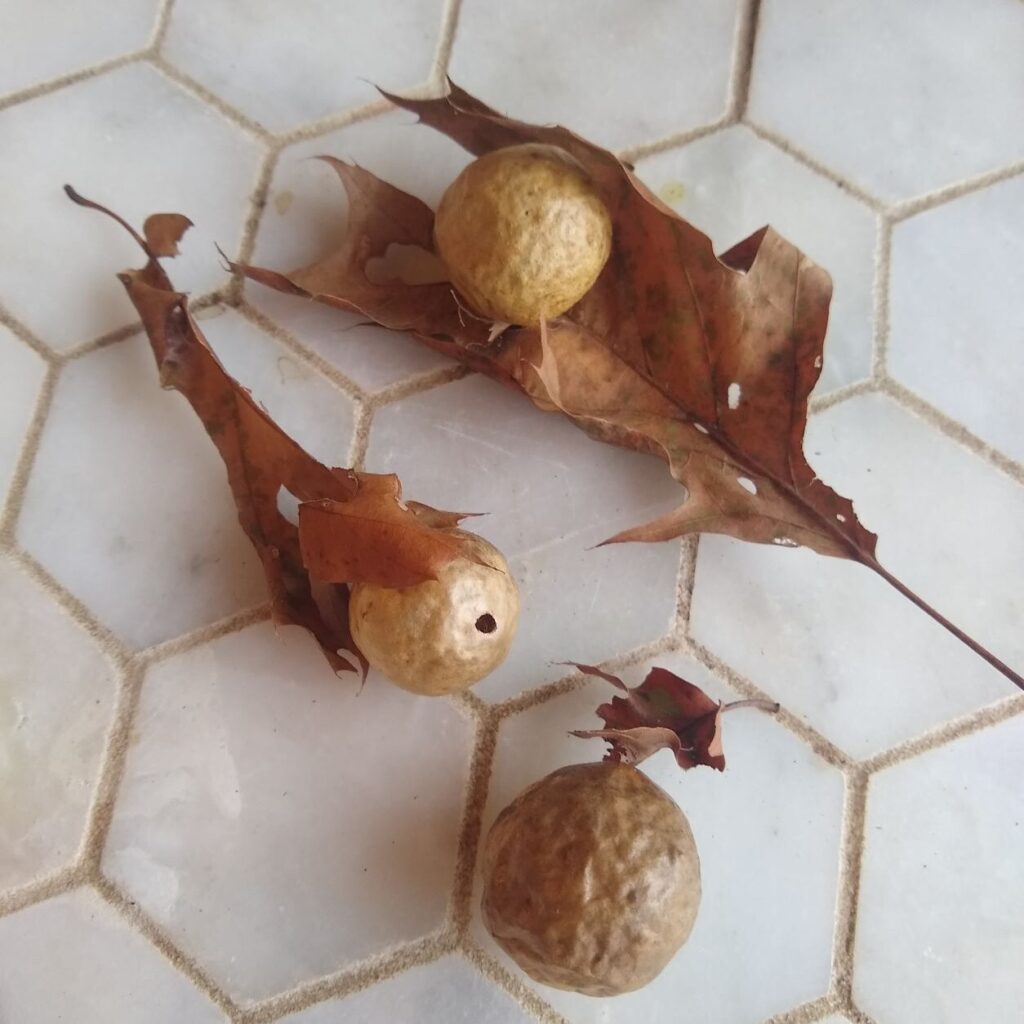
The adult gall wasp lays its egg in a growing part of the tree, like a leaf bud, in the spring. The oak responds to the activity by forming a growth around the disturbance – a gall. The gall contains the wasp, but also… contains it. The little wasp egg gets a snug little nursery, both shelter and food – free room and board — as it feeds on the still growing and nutritious walls of its home. When the baby wasp is all done growing up, it chews a little round exit hole for itself (seen in the photo of galls above). Off the wasp goes to begin the cycle all over again.

There are many insects, fungi, bacteria, etc that result in the growth of galls. Large oak galls like the ones shown above are likely made by the Amphibolips quercusinanis wasp.

These galls often fall to the forest floor, bright green with red spots when fresh, drying to papery brown. They’re one of the treasures I keep an eye out for when I’m out for a walk, as they’re a key ingredient in a historic natural ink. I find the wild turkeys are great friends to me in this quest, as they seem to leave the gall behind when they dig up the forest floor. See the photo below for an oak gall as I found it, in a perfect tiny clearing. Thanks turkeys!

Mixing oak galls with iron salts results in a rich black ink (albeit one that sometimes eats through paper). It’s a project I’ve had percolating for a few years now, and I hope to make a batch this spring/summer. Collecting enough of the right galls has been a slow but very enjoyable process. And I almost always remember that I put a papery delicate gall in my pocket and don’t crumble it to dust by jamming a chilly hand quickly in a pocket later on the same walk. Almost always.

“Let there be gall enough in thy ink”

~William Shakespeare, Twelfth Night

~Kate

Read more about oak galls, wasps and ink at: