Categories
tracks & scat

Little feet

Before work this morning, I took a lap of the woods. My thoughts often label a walk like that a “constitutional”. That’s how I think of a walk when I don’t plan to linger, but to clear my head for the rest of the day’s work. Often when I go to the woods, I am happy to fill my mind with new thoughts. But a constitutional is when I am looking to empty it.

I don’t think I’ve heard that word much since childhood, when it was already the language of grandpas, scholars, and other persons sporting leather elbow patches on their jackets, and a smart walking cane. These were people who knew the value of a good constitutional. Keep the joints limber, the air fresh, and the mind open.

My thoughts were definitely elsewhere, my mind open and drifting, when I realized the path I was walking on had fresh prints on it. Fresh prints with five toes!

Perhaps I could let one or two thoughts in… People with leather elbow patches also know the wisdom of not missing out on the present.

I always get a little extra excited when I see prints with five toes, front and back. My heart often wishes to see fishers, or other mustelids. But tracking is all about seeing not what you want to see, but what is there. It’s a good frame of mind to hold on to for the rest of the day.

Most of the tracks were very faint. The ground was “noisy” and there wasn’t much new snow fall. But there was enough to follow for long enough to get a clearer view. My gut had been whispering the tracks were not behaving in a weasely way. And my gut and brain agreed with each other when I came across the clearer tracks. Raccoons walk in a funny gait where their hind feet end up swinging up alongside their front feet. They roll their hips while they walk, so the hind foot leaves a mark beside the opposite front foot. (It’s a fun gait to try and imitate, as a human.) When I came across a set of prints like that, my brain tumbled over to the better ID: I was following raccoon tracks.

These tracks are closer to a gallop than a walk, with the tracks more spread out.

I usually remember raccoon prints best by thinking of the front foot as leaving a mark like a small human hand, and the hind foot as leaving a mark like a small human foot. Not so different you and I, my procyon friend. With your little human-ish tracks, your nimble hands, and your inquisitive nature. Thanks for joining me this morning; I enjoyed following in your footsteps.

~Kate
Categories
QoTD

QoTD: While I am here

I don’t want to give it to despair; I don’t want to take refuge in detached ridicule of unironized emotion. I don’t want to be cool, if cool means being cold to or distant from the reality of experience. I want to feel what there is to feel while I am here.

John Green
Categories
poetry QoTD

QoTD: I wish you

I wish you enough sun to keep your attitude bright.
I wish you enough rain to appreciate the sun more.

I wish you enough happiness to keep your spirit alive.
I wish you enough pain so that the smallest joys in life appear much bigger.

I wish you enough gain to satisfy your wanting.
I wish you enough loss to appreciate all you possess.

I wish you enough hellos
to get you through the final goodbye.

Bob Perks
Categories
D-I-Why Not homeMADE

I really felt that flame

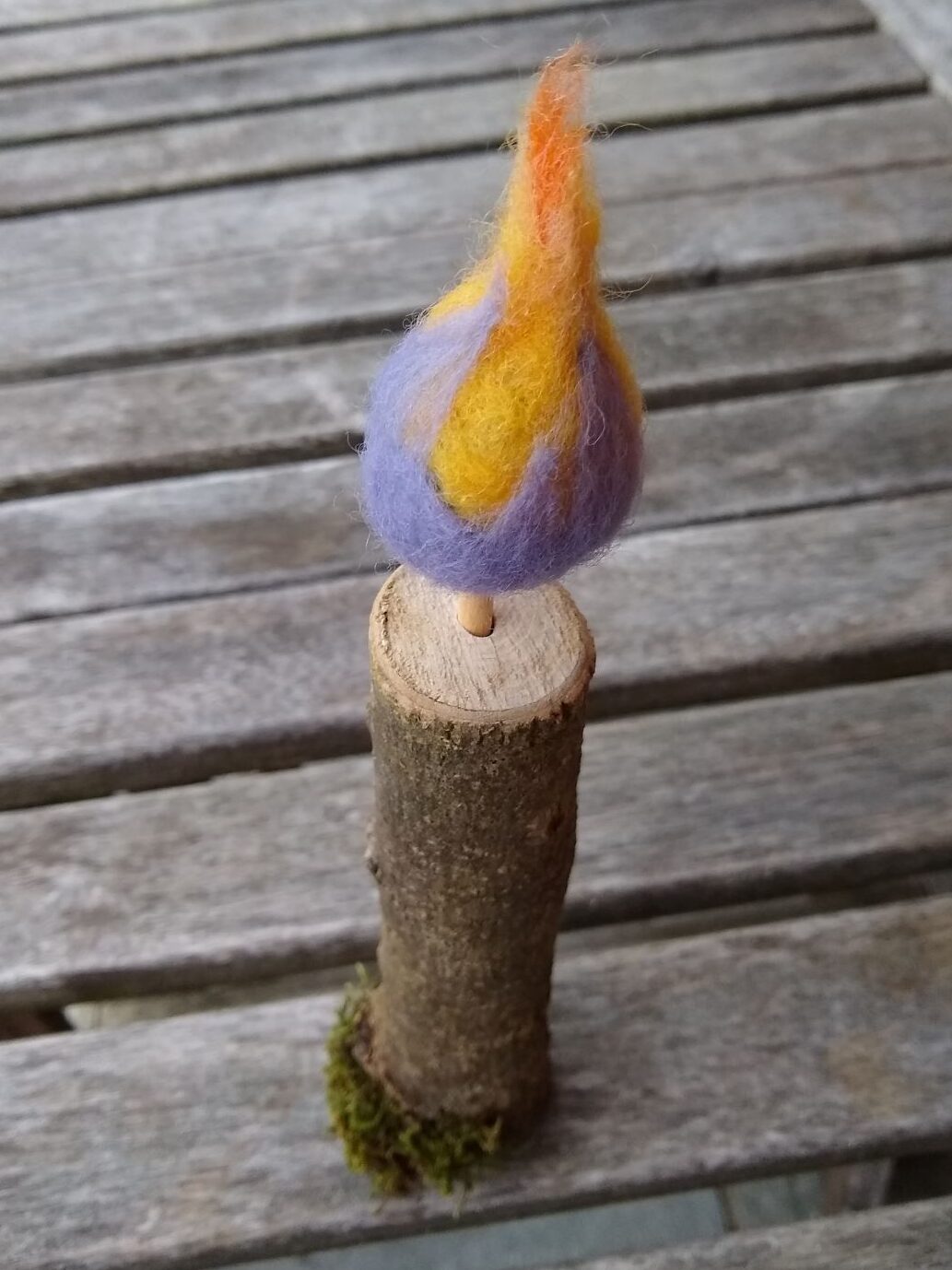
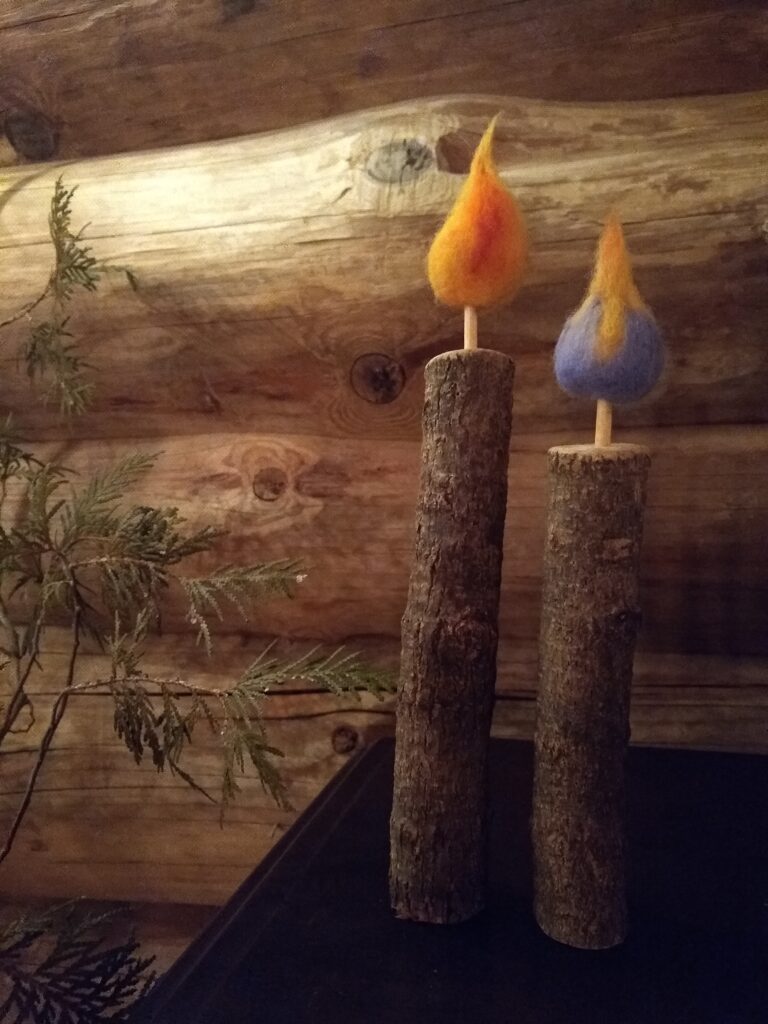
I posted these “candles” to our Instagram stories the other day. I got so many DMs that I thought I’d post how I made them.

I saw candles like these on an Instagram repost from Flannel Dog Farm, and I knew I had to try making some myself. The original post, with the beautiful felt/wood candles in the background, was about (re)normalizing a different sort of holiday gift giving. Instead of buying different, buying not-at-all. Swapping seeds, starters, recipes. I’m in!

How To: Wooden Candles

I made these candles by creating a needlefelted flame, and attaching it to pruned wood with a dowel. We always have a stash of cut saplings and branches with the firewood, usually either from removing invasives or from windfall. Invasives like buckthorn would be perfect for this project.

I looked for a relatively straight length of wood to start with, since it’ll stand better unsupported. The first step is to make a nice straight cut of the wood to whatever length you’d like your candle. The ones shown here are taller tapers, but little chonky ones also look great.

I needlefelted these flames, but they could be wet felted as well. All you need for wet felting is soap and water. Here are visuals for how to make a wet felted ball, from some videos we posted of how to make felted acorns.

For a really bulbous flame, you can do your felting on a form — e.g. make a felted ball first, and add a flaming tip. To make the candles shown here, I repurposed a couple of small styrofoam balls from an old project, wrapping them in roving, and felting it in place.

Build up your flame from the inside out. E.g. Take a tiny tuft of red, and wrap it in orange, leaving a little exposed. Felt the red and orange together, then then wrap the orange in yellow, leaving a little exposed. Keep adding yellow until the flame is the thickness and size you would like. You won’t need much of your inner flame colours, your outermost colour (e.g. yellow) is what you’ll keep building up to get a nice fat flame. You can “stitch on” character colours with a felting needle once you have a basic shape. Once the flame is formed, you can roll and twist the tip with your fingers to create a pleasing point.

The flame and branch are then attached together with a small dowel. I started by drilling a hole in the centre of the base wood, approximately the same diameter as the dowel. If it’s a snug enough fit you won’t need glue. Then I used an awl (or nail) to “pre-drill” the flame — poking a hole in the bulb end, then inserting the dowel. I find sanding and rounding the edges of the branch at the top gives a pleasing look. I think I’ll be even heavier handed next time, and really “melt” that branch.

These “candles” are perfect for if you have a spot that could use a little warm cheer, but where it isn’t safe to have an open flame. Or if, hypothetically, you have a cat who likes to jump up on the coffee table, immediately swishing her tail right through the candle, and then you have to quickly both extinguish a tail, and learn how to get wax out of fur.

I am of course speaking hypothetically. (She was fine and we never used candles there again.)

If you try making one of these candles too, I’d love to see a photo. Happy making, makers!

~Kate

Categories
fauna homestead technology

Silent Night

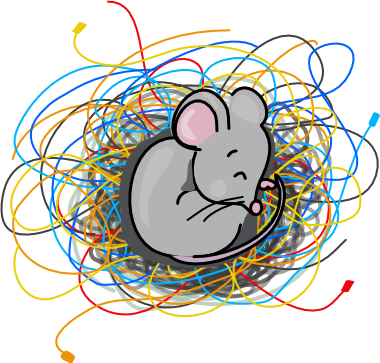
We’ve had no internet for about a week now. The Bell technician who came out today traced the problem to its source – a mouse nest in the cable box. This is not the first time a mouse has made its house somewhere unfortunate. Last year our mechanic made a similar discovery under the hood of our car. Shelter is shelter.

As a little girl, one of my favourite Christmas stories was about a wee churchmouse, retconned into the story of Silent Night. The tale imagined that Silent Night was composed by Franz Gruber on guitar because the organ was broken – its leathers chewed by the hungry mouse.

Mouse nests are part of the texture of our world now, living nestled in the woods. It’s a fluffy ephemeral texture. The nests we find are lightweight and constructed from all sorts of different materials, yet somehow always distinctly mouse-house-ish.

Stacks of firewood make particularly good places to build mouse houses. My winter fuel is your habitat. I can see it. Neatly stacked wood is not so different from my log cabin. I imagine a jumble of telephone wires looks similarly suitable. It’s usually halfway there after all. Even before it’s been rearranged to suit a rodent, we humans call a tangle of wires a “nest”. Its mousey potential is that evident.

It’s inevitable that mice will get into the nooks and crannies of the human-constructed world. Mice are small and they are multiple. But I wouldn’t want to be in a universe without them. They may nibble cables and carry Lyme disease, but mice are also good food for fox. We’ve yet to have a fox try to get into our hen house, but there is lots of evidence that they regularly help themselves to the abundant local mouse population. The mice are welcome here too in their own role as predator, a natural check on LDD (“gypsy”) moth populations — mice enjoy feasting on LDD pupae.

“When we try to pick out anything by itself, we find it hitched to everything else in the Universe.”

~John Muir

Living as we do, thick in the 21st century, most of our work is done online. And despite our extensive and ever-growing book-based library, many of our references are online as well. So having no internet is pretty inconvenient. But in our case it is not life threatening, and even pleasant from time to time. I am no different from the rest of my species: it’s too easy for me to spend too much time scurrying around the web. I can fall down an internet or social media rabbithole with the best of them, and it doesn’t always bring out the best in me. A pause is welcome. I may or may not spend the time composing songs on guitar, but I am happy to have a few silent nights.

~Kate

Categories
D-I-Why Not homeMADE

Raw Materials

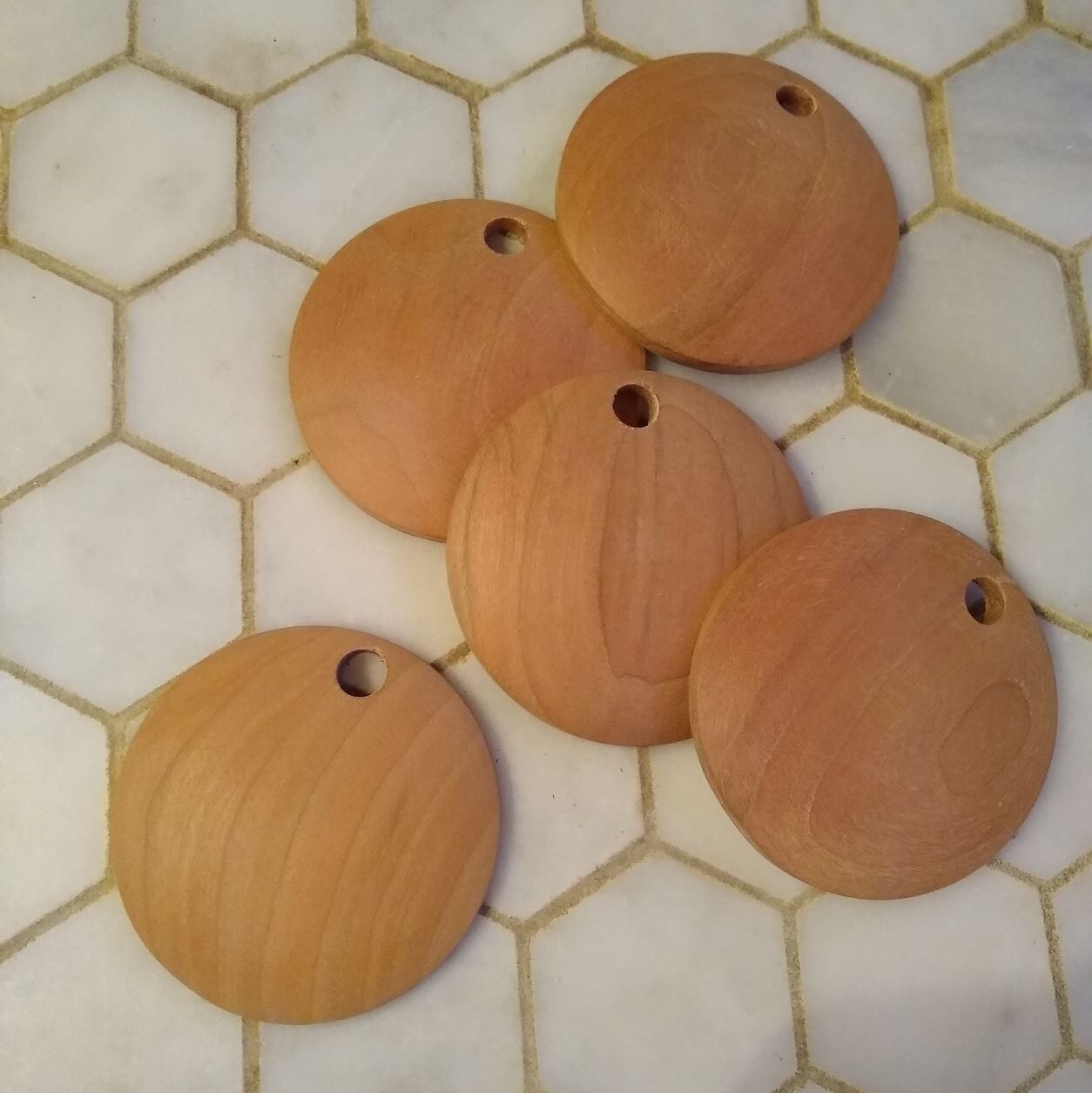
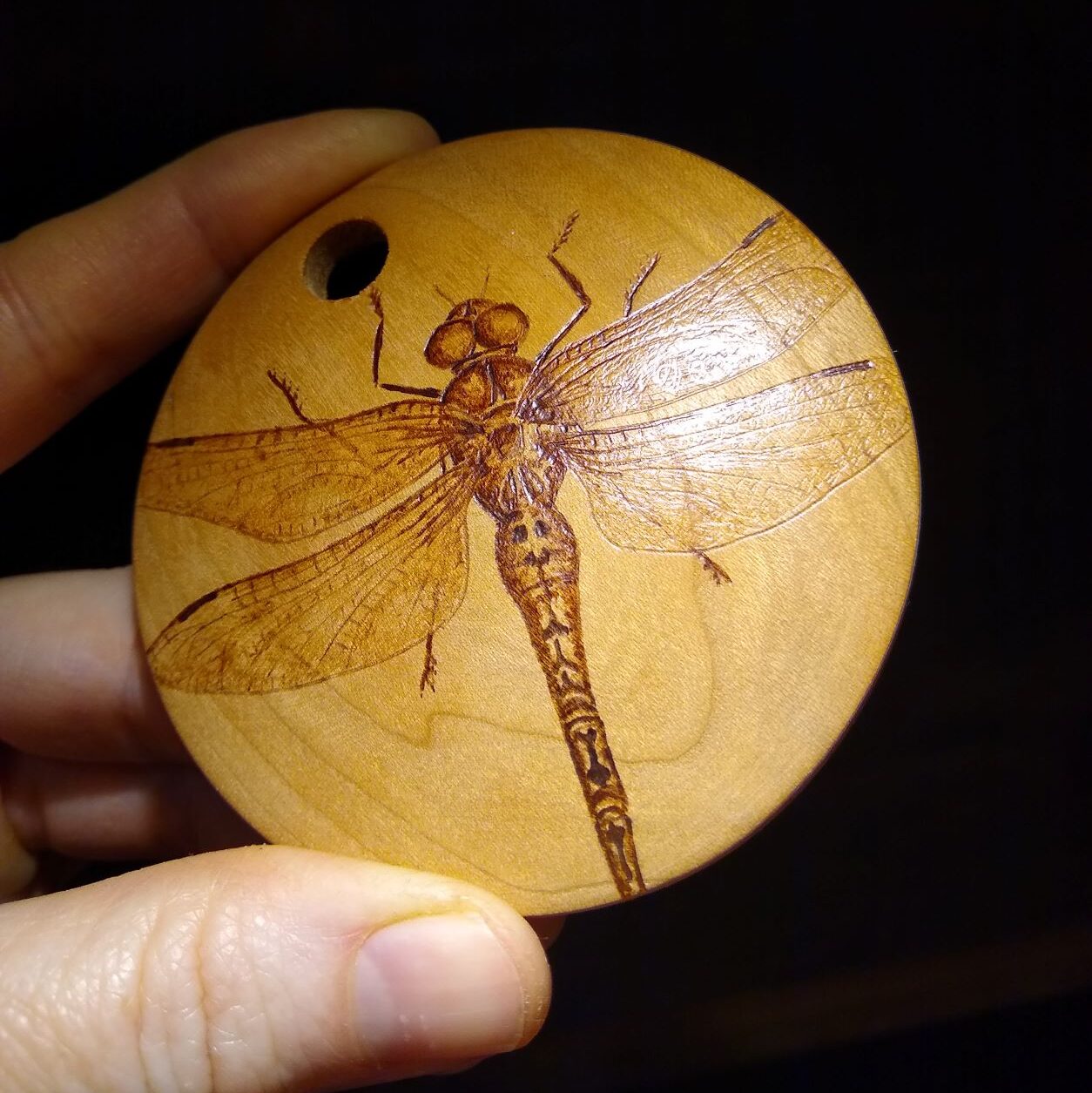
Beautiful offcuts made ship shape and ready to woodburn, thanks to Mystic Wood Carving

Each Christmas, I ask my niblings (pl. niece + nephews) to choose their favourite X and I woodburn it for them to make an ornament. Last year it was their favourite bird, the year before it was their favourite mammal. This year, I requested they choose their favourite insect. (What kind of aunt would I be if I didn’t encourage a love of bugs??)

This may be the last year for this particular mini-tradition, since everyone loves a triptych. But at least on the Aunt end of things, it’s something I have really enjoyed doing. Each critter they request is a fun challenge. And I like the time it gives me both to consider the nibling in question, and to spend time with whatever critter they requested. A macaw, a highland cow, a rhinocerous beetle. And so far so good. I’ve been able to woodburn each one to a recognizable level. As far as I know, the nephew who requested the macaw didn’t confuse his with the cow, or vice versa. 😉

When I share pictures of the ornaments on social media, people often seem to like them, but it’s frequently expressed in comments like “It would be so wonderful to be an artist!” or “I wish I had natural talent like you!”

Y’all. I can’t express this quickly enough or loudly enough. I do not have natural talent. Art was consistently one of my two lowest grades in school (the other was gym). I usually got a “C”, and each one of them was a little kick in the soul teeth. My high school art teacher took me aside one day to make extra sure I got the message. Once we were out in the hallway, she said, “Your art is not very good, because you don’t have natural talent like the other girls. You should probably pursue something else.”

For the record, I give that attitude an “F”.

I have come to believe something about “natural talent”. And that is that it is mostly bunk.

I am able to make lots and lots and lots of things. But that’s not because I’m a magical snowflake of maker-ing. Or that my brain came with some special sauce on it that someone else’s lacks. It’s because I make things. All the time. From breakfast to a tatty old tshirt upcycled into underpants. Make all the things!

Many people who identify as artists or makers or creators were told early or often that they were those things. And that goes a really long way towards their ability to believe in themselves. The inverse, unfortunately, is also true.

Most people are told in ways big and small and often all the things they are Not. And so they stop believing in themselves before they’ve even begun. They are not an artist, they are not a musician, they are not a computer person, they are not good with X, Y, Z.

It is not helpful.

Because you Are. You are.

You are.

You are.

It’s not that simple of course. There are a few “Nots” that diehard makers like us must allow ourselves…

You are not done learning.

You are not going to see all the times your works don’t turn out the way you’d like as anything other than… times your works don’t turn out the way you’d like. They are not referendums of your skill, or predictors of your potential. They are called your “works” because you work on them. (Otherwise they would be your “dones”.)

You are Not done trying.

You are not going to let discouragements settle in your soul.

You are not going to give up that easily.

~Kate

Categories
baking homeMADE

Snow Cake

Every year, to mark the first snowfall, we make “snow cake”. It’s a winter tradition in my family, and it’s a good one. It marks and celebrates the first “real” snowfall of the year, by baking a white cake frosted with white icing. Snow cake is often decorated with chocolate chip snowmen, or whatever else your heart desires. Rainbow sprinkles is a popular adaptation…

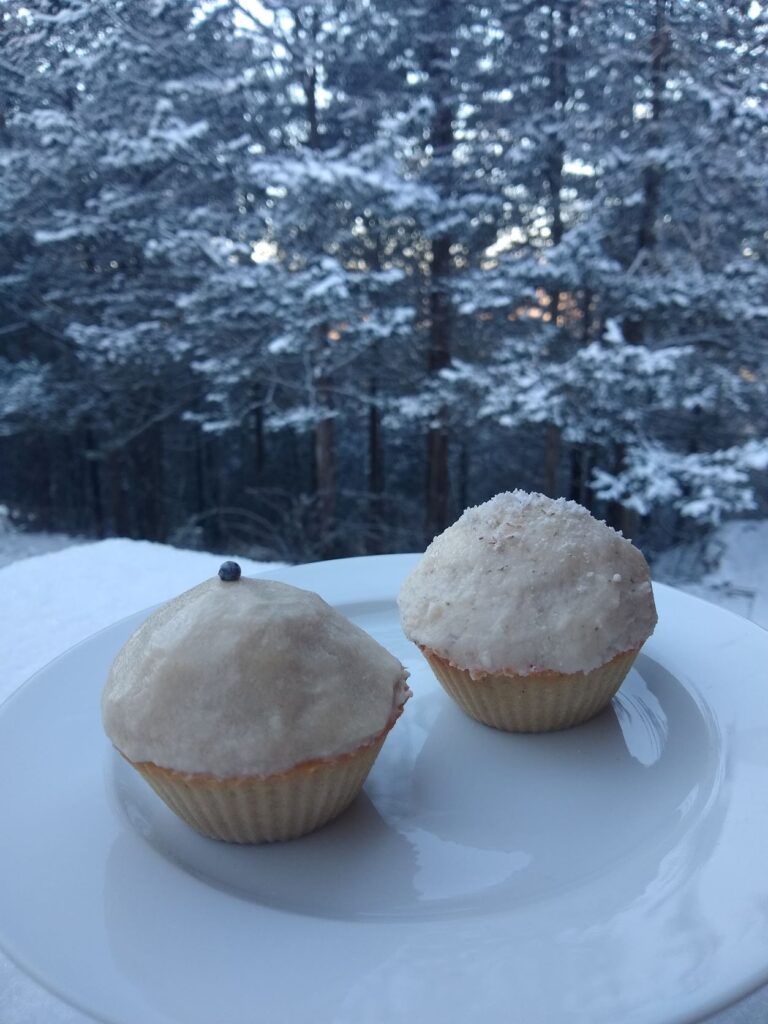
This year, to bring a dash more seasonality to the tradition, I iced one cupcake with a juniper berry syrup-infused frosting, and one flavoured with white pine sugar. Conifers in snow. This year’s Snow Cake cupcakes are pictured above — juniper berry at left, white pine at right.

You are most welcome to adopt and adapt the Snow Cake tradition for your own family. Anyone who would like to make a snow cake to celebrate the beauty of winter is an honourary member of my family. And if you happen to be living far away from your snowy home city, perhaps you could follow along with their weather from afar, and let your baking bring the snow to you.

Snow Cake works for any sized family, from 1 member+. Here’s a bit more of the backstory, the “rules”, and a recipe both for a full on pan or layer cake, as well as an option for a single celebratory cupcake. The single cupcake recipe, doubled for the two of us, is what is pictured above.

How We Make: Snow Cake

Happy winter!

~Kate

Categories
fauna homestead

A weasel if you pleasel

Neil was standing thoughtfully by the window a few days ago, when he abruptly interrupted his own reverie with: “Look! There’s a rabbit running across the… What is that??!”

Our home sits on the side of a drumlin, about halfway down. There are woods above us and woods below us, but our home sits on a shelf in the landscape. A flat open area as the woods step down to the road.

With woods on all sides, we often catch moments of stories whose narrative starts and ends in the trees and brush around us. Our yard is not usually the setting of the climax, though sometimes it hosts intense moments that advance the plot. The line of coyote tracks don’t pause here, they’re just following the thread between the woods north and south. A hawk may swoop fast and low across the open space, but its talons are destined for something on the other side. Or, in this case, the yard reveals a furry flash of bunny, trying to put as much distance as possible between it and the… what-is-that.

I dropped everything and ran to join Neil. If Neil thinks he sees something interesting, then Neil has seen something interesting. Don’t drop everything, and regret will follow.

The what-is-that was a weasel. A beautiful long-tailed weasel (Neogale frenata) bouncing and slinking around the yard. At a glance, it reminds you of a squirrel. Same sinewy gallop, and a similar scale, on the smaller-than-a-breadbox woodland size chart.

But the best part, the very best part, was that the weasel was mid-moult. Come winter, long- and short-tailed weasels here change out their brown coats for brilliant white ones. They are the snowshoe hares of southern Ontario. But there is a glorious chapter when the work is still in progress. And if you’re lucky, you might spot a tortoiseshell weasel. Not quite brown, not quite white. Though, in this case, the weasel had a fully moulted winter-white tail. Must be interesting to have your tail a season ahead of your torso…

The very tip of the long-tailed weasel’s tail is more stoic than the rest of its fur. It doesn’t do anything so fickle as change because of the weather. It remains an ebony black no matter what wind is blowing. There are theories to try and explain the why of it. Even the weasel, much maligned by chicken-keepers the world over, has its predators. Owls and other raptors will happily make a meal of a weasel. It’s possible the weasel’s flicking black tail tip is bait, keeping eagle eyes away from the jugular. Go after the tip, and you’ve calibrated to the wrong end. An escape might still be possible.

The name “ermine” is colloquially applied to many species of weasel, not just Mustela erminea, whenever the weasels are wearing their winter coats. And if you think an expanse of white fur with a little black dot looks familiar, but you can’t quite place it, it might just be weasels’ “noble” connection…

I hadn’t given much thought as to why the white fur trims on garments in old paintings were so often dotted with black. I assumed it was a decorative element added or dyed after the fact. But it is as nature made it. The black is the tip of the tail, included when the pelts were stitched together. A little whisper of the weasels that were. Have a look through historic portraiture, and see the plush fur trim with new eyes. Nothing says “I am powerful and important” like wrapping yourself in weasels. (We are not so far from this today, with modern humans gluing mink to our eyelashes, sights set on that elusive target, “beauty”.)

Back to present day though. And this moulty tortoiseshell jumping bean of a friend. Here is a video of its few moments in our yard. Flashy acrobatics out by the woodpile, followed by a dash through the woods when the bunny returned. I don’t know how the tale with the bunny ended, though I root equally for each of them. In this story, they are predator and prey. In another, our cast takes on new roles. A hawk chasing the weasel, the bunny nibbling the sapling to the ground. All the realities of nature. Everything wants to live, everything needs to eat. Not all stories have villains, most especially the ones that are true.

~Kate

Categories
inspiration thinking big

Cycles and Seasons

“When I was a child…before I learned there were four seasons to a year, I thought there were dozens: the time of night-time thunderstorms, heat lightning time, bonfires-in-the-woods time, blood-on-the-snow time, the times of ice trees, bowing trees, crying trees, shimmering trees, bearded trees, waving-at-the-tops-only trees, and trees-drop-their-babies time. I loved the seasons of diamond snow, steaming snow, squeaking snow, and even dirty snow and stone snow, for these meant the time of flower blossoms on the river was coming.

These seasons were like important and holy visitors and each sent its harbingers: pine cones open, pine cones closed, the smell of leaf rot, the smell of rain coming, crackling hair, lank hair, bushy hair, doors loose, doors tight, doors that won’t shut at all, windowpanes covered with ice-hair, windowpanes covered with wet petals, windowpanes covered with yellow pollen, window panes pecked with sap gum. And our own skin had its cycles too: parched, sweaty, gritty, sunburned, soft.

Once, we lived by these cycles and seasons year after year, and they lived in us.

…They were part of our soul-skins–a pelt that enveloped us and the wild and natural world–at least until we were told that there really were only four seasons to a year…

But we cannot allow ourselves to sleepwalk wrapped in this flimsy and unobservant fabrication… and therefore to suffer from dryness, tiredness, and homesickness. It is far better for us to return to our own unique and soulful cycles regularly, all of them, any of them.”

~Clarissa Pinkola Estés
Categories
fauna QoTD thinking big

Chick-a-dee-dee-

-dee.

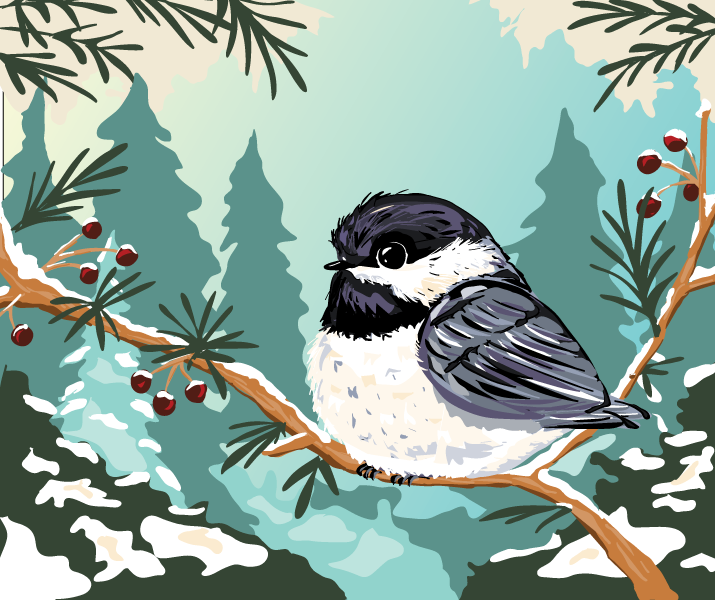
"The chickadee's fear of windy places is easily deduced from his behaviour. In winter he ventures away from woods only on calm days, and the distance varies inversely as the breeze... To the chickadee, winter wind is the boundary of the habitable world.

... Wind from behind blows cold and wet under the feathers, which are his portable roof and air conditioner. Nuthatches, juncos, tree sparrows, and woodpeckers likewise fear winds from behind, but their heating plants and hence their wind tolerance are larger in the order named. Books on nature seldom mention wind; they are written behind stoves." ~Aldo Leopold

They are written behind stoves. <3

~Kate