Categories
tracks & scat

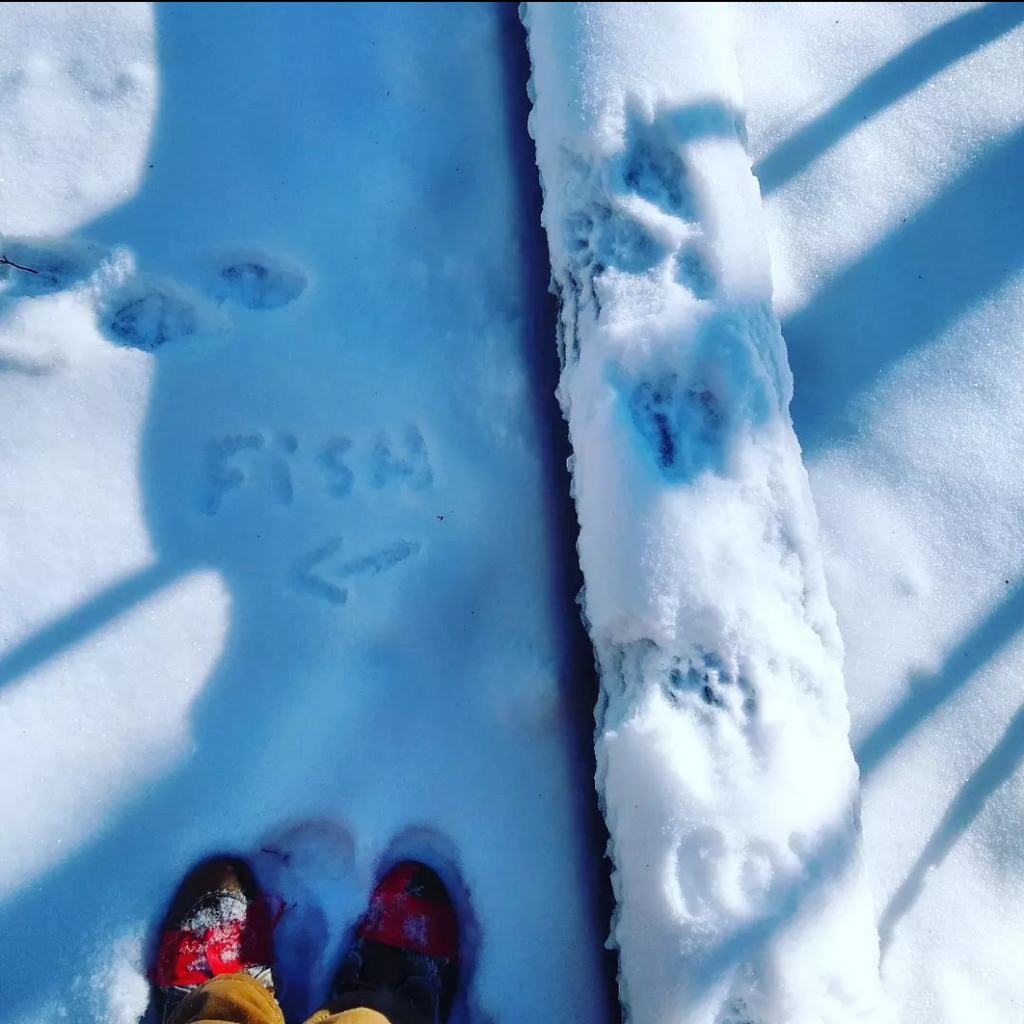
Following Fish…ers

❄️⏳: There’s a lot to love about a snowy winter. For one, it gives everybody a superpower — the ability to look back in time.

❄️📝: Because snow’s crisp white pages note every passing. From the stealthiest critter to the tiniest one, in snow, they all leave their mark. Even when their paws or hooves move in total silence, the snow records it. A fisher went this way, a fox went that. Mice scurried back and forth and back and forth and back and forth under this fallen tree. A weasel wandered along the ridge, and a deer did a u-turn.

❄️📚: It all happens before I get there. But snow is a great storyteller, always ready to share its tales. An otherwise quiet walk is enlivened with a cast of dozens, story after story, chapter after chapter.

👃👀🔍: In other seasons, the stories are often written in invisible ink. One day perhaps I will learn how to read the missing moss, smell the earth more thoroughly, notice crushed grasses, follow gentle tracks left in morning dew.

But for now, in the winter, I’ll revel in the bright bold text of these frozen moments. This peak into the recent past. There are still plenty of mysteries — the snow doesn’t do spoilers — but it’s enough to follow some of the plot, meet some of the characters.

It’s storytime. 💙
//
Wishing you all well in this first chapter of 2023 ❄️

~Kate

Categories
birbs homeMADE products

Birb’s Eye View

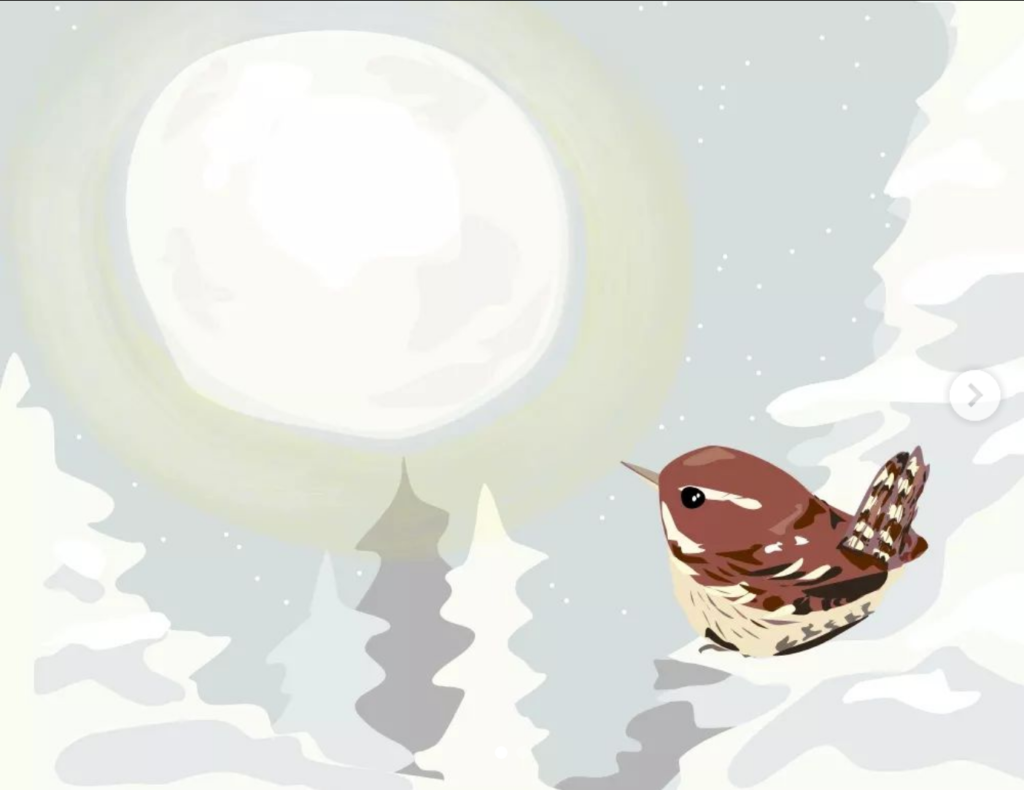
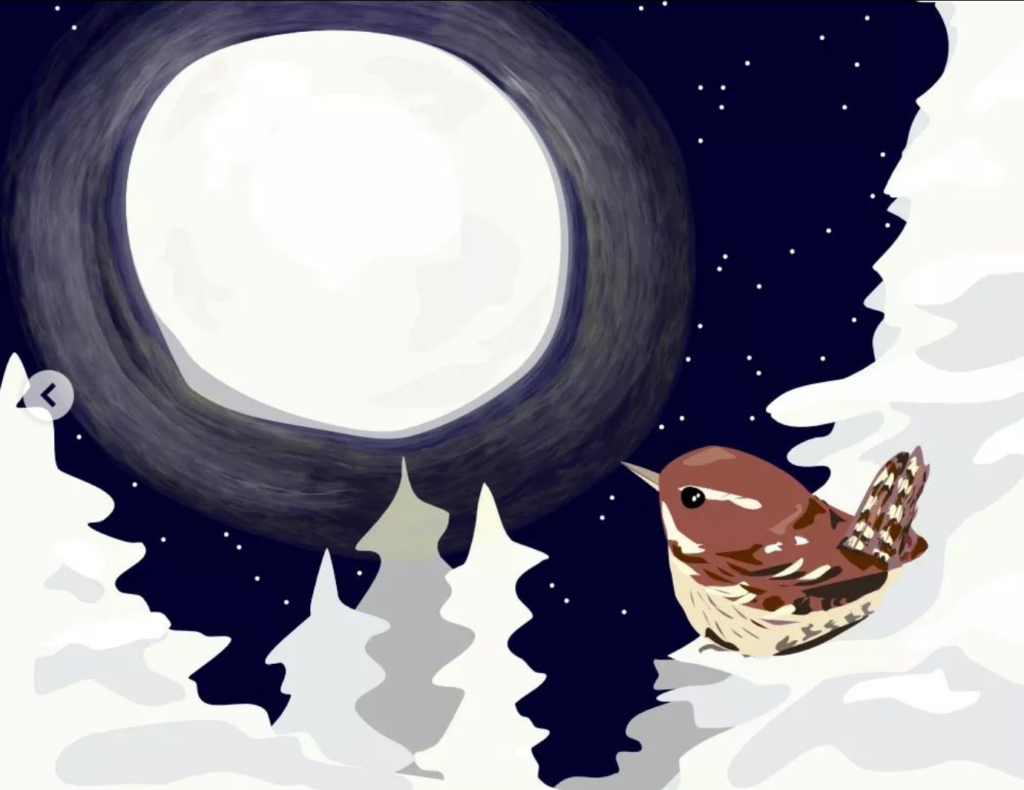
🐦✏️: This is a little winter wren that is actually not a winter wren but instead is a Carolina wren. Because I got aaaaaallll the way through drawing a winter wren and then read that most winter wrens move out of Ontario for winter. 🤦‍♀️

🍄❄️: (In my defence, I ran into a winter wren in the woods here just a few weeks ago. Though I guess a few weeks ago the woods were also full of oyster mushrooms and not snow.)

🐦🔁🐦: Fortunately I was just a brighter belly and an eye stripe away from a Carolina wren — who *does* overwinter in Ontario. And who is also super adorable, and is also a sometime resident of our woods.

🖨️❔: This artwork is intended to be printed up as this year’s Maker’s Dozen holiday card. Though I’m having trouble finding a local printer with recycled (or FSC at minimum) cardstock. It’s really put a WRENch in my plans. Any recommendations in the Quinte West area welcome! 👍

Hope you’re having a great week folks!❄️🐦🌲

🙌🏳️‍🌈: And thanks to the incomparable @wellpreservedcreative for reminding me to quit playing colour wheel roulette and just look at colour theory when I’m stumped. (*Rogue colour choices remain my own.)

~Kate

Categories
amphibians birbs

The Night Shift

Owls and salamanders 🦎🦉🍂
//
🕯️🍂: A little before midnight last night, I went for a short candlelit walk. There’s always a lot to do this time of year, before the cold and icy thrall of winter. But right now we’re perched on that point between light and dark and warm and cool, and I try to make moments to go notice it.

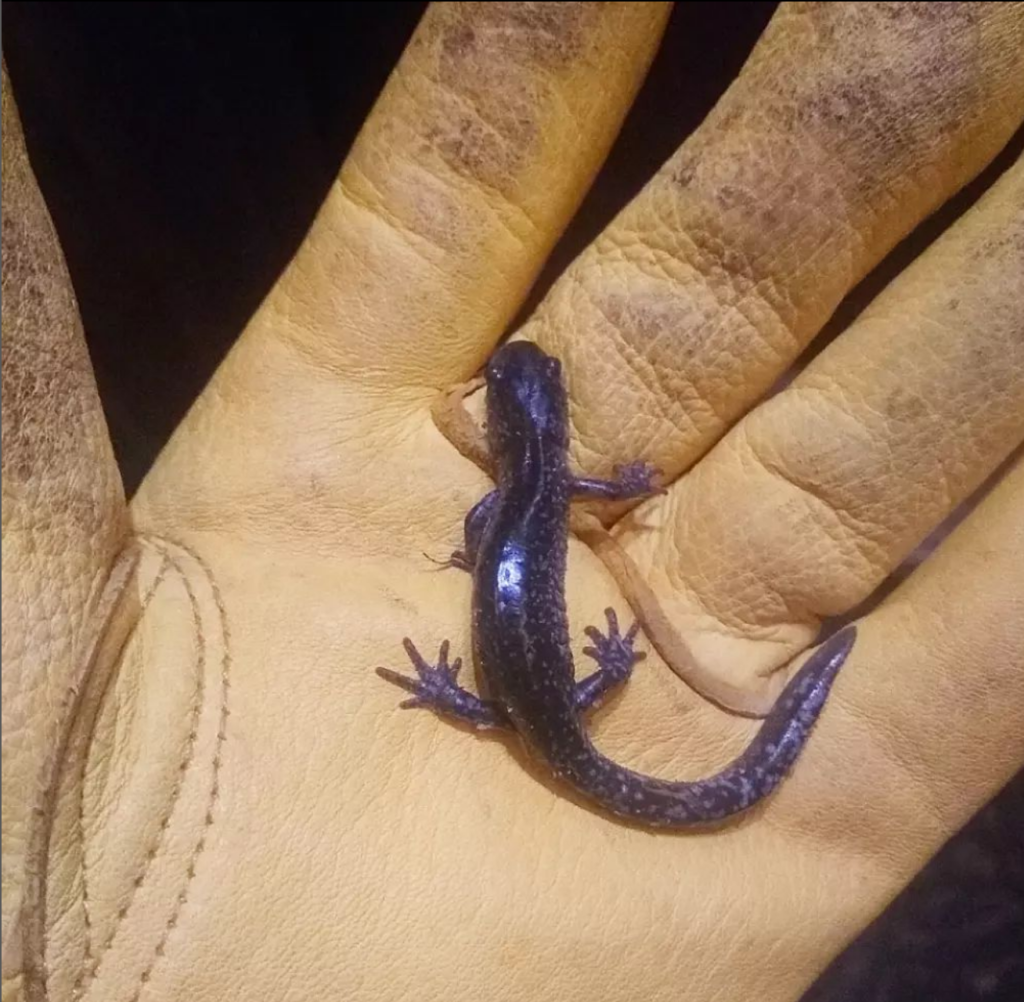
🦎🚪: When I got back to our front door, I found a little friend sat on the door mat. A blue-spotted salamander. As perfect as it could be. A nocturnal critter that enjoys the damp and dark, its hunt was just starting up as we wound down for rest.

👶🐈❓: When I crouched down to look at this blue beauty, I noticed a call repeating in the night air. A bit like a child, a bit like a cat — a Great Horned Owl. In the autumn, their calls become more prominent and frequent. Now is the owls’ time to court and set territories, before they make their winter babies.

🌜: Life doesn’t end at nightfall or pause for the cold or wet. The lead roles are taken over by a new cast, but the story — the story never stops.
//
Have a great day slash night slash day folks! 💙
//
👣📝: I am only holding the salamander to move it away from the front door where we come and go and come and go — aka a High Squish Zone. I popped them into a nearby pile of logs and we both went on our way. 👍

~Kate

Categories
fauna wild inklings

Bunnies, bees, and armpits

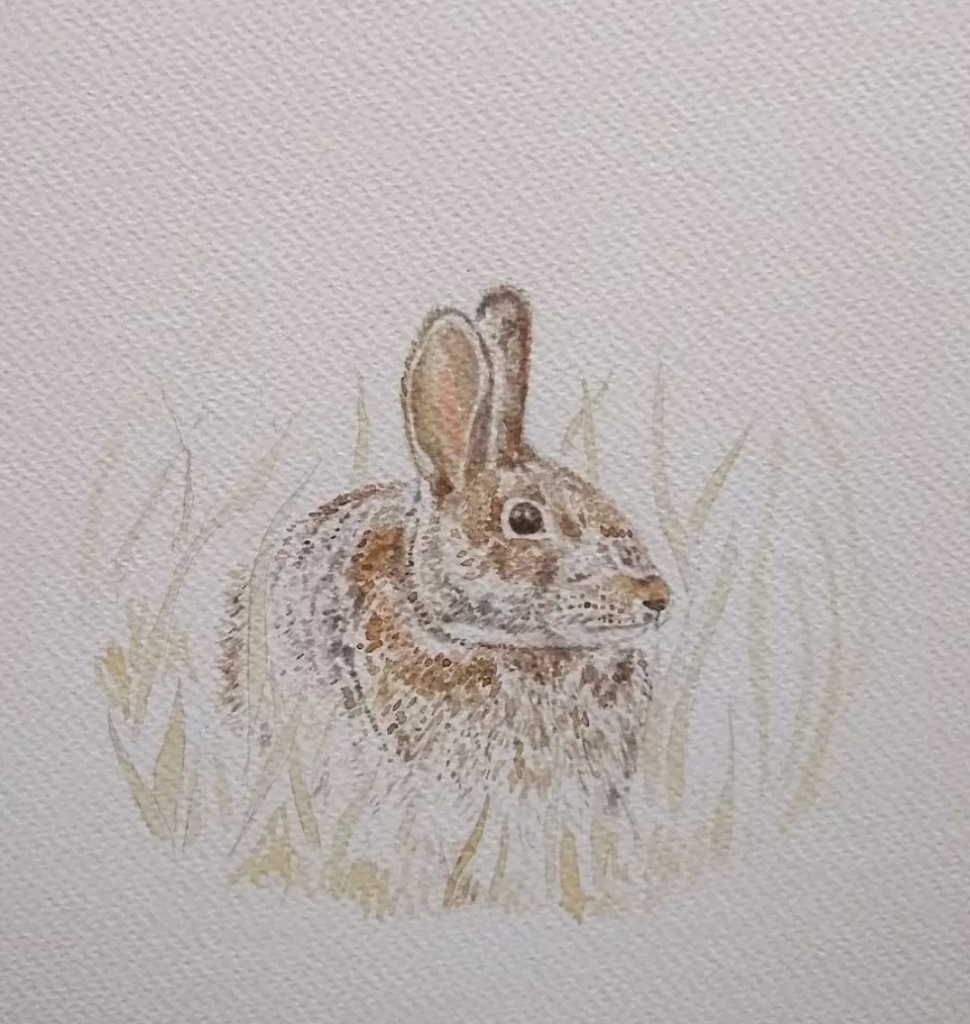
🐇🌱Bonus bunny! Painted with plants. (Buckthorn, wild grape, oak gall, avocado, and sumac.)

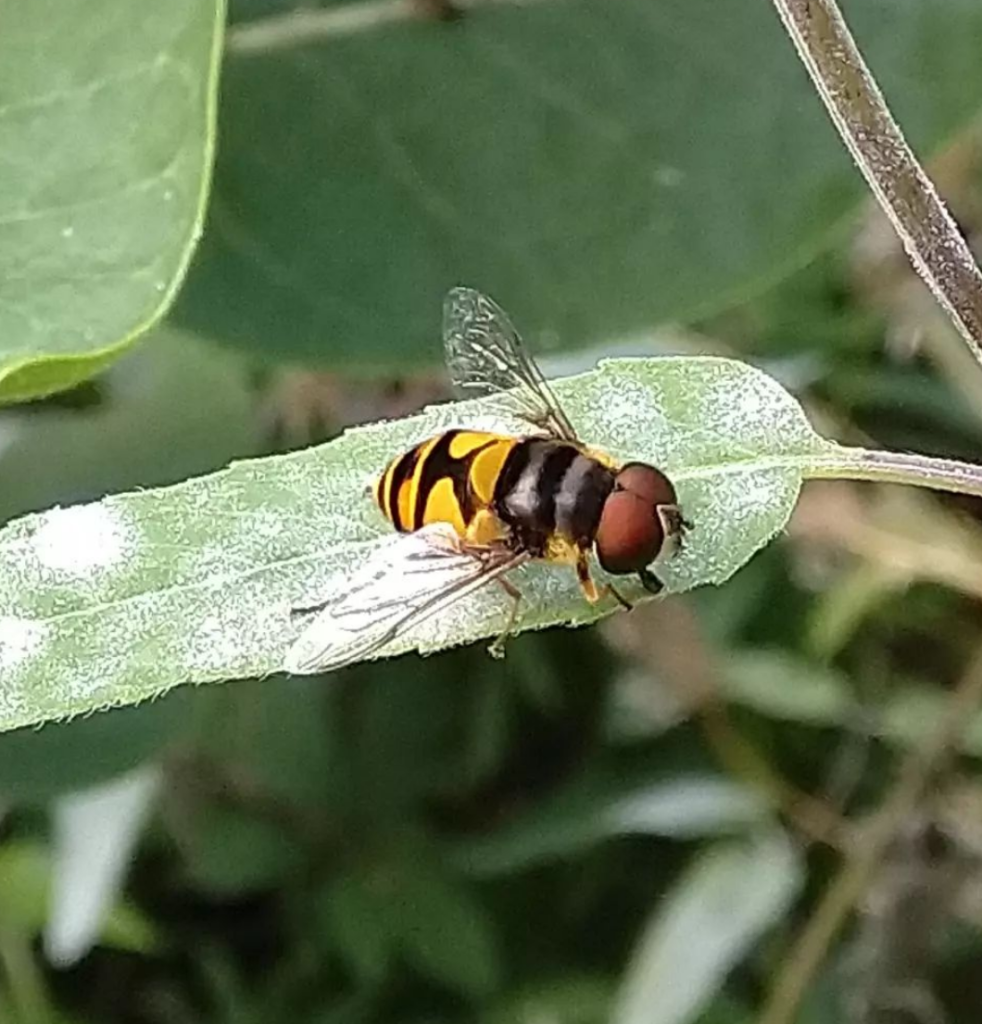
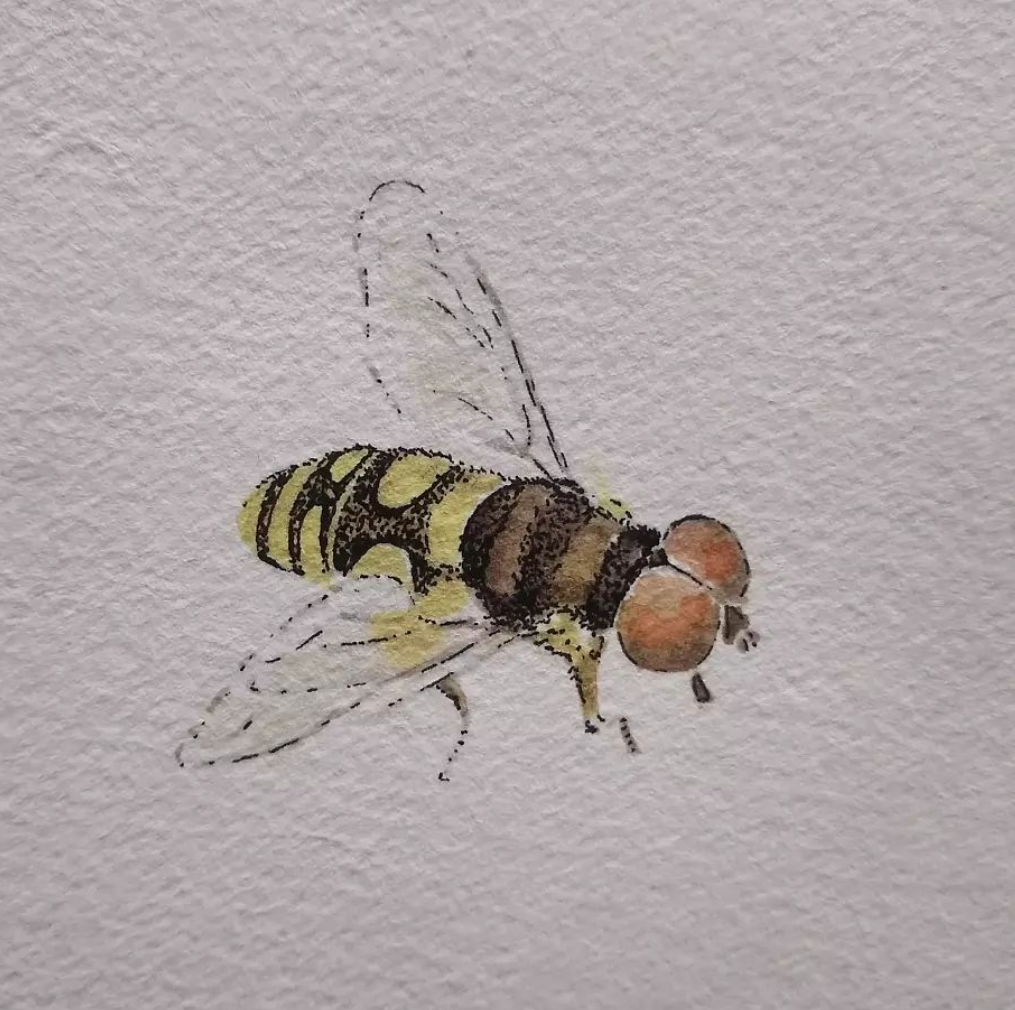
🚁🌻: Before the bunny, I actually started off painting a cool hover fly that Neil photographed in the garden (pics 2 and 3). I noticed it not only looked very bee-like, but it was interacting with the flower in a very bee-like way. So I fell down a whole rabbit hole (hehe) learning about hover flies, and how they are a super important pollinator! Adult hover flies feed on nectar and pollen, and are “often considered the second-most important group of pollinators after wild bees.” (🤯) So they don’t just look like a bee, they be like one too!


☣️💪🐍: Critters mimicry of each other is so fascinating. In Thomas Halliday’s book “Otherlands”, he describes how slow loris, when threatened, imitate a spectacled cobra. They raise their arms up behind their head, shiver, and hiss. From this position they can also access a gland in their armpit which, when combined with saliva, produces a venom “capable of causing anaphylactic shock in humans”. (🤯🤯)

I didn’t even know it was possible to have armpit envy, and yet, here I am.

🐇📚: Well look at that, cute bunny, you’ve tricked us into learning about hover flies AND a different kind of “pit viper”. Well played little lagomorph, well played!

Have a great Friday and a wonderful weekend folks. Happy August!

~Kate

Categories
fauna

The Freeze Game

Mid-morning on a Saturday, I headed up to the woods for a walk.

Passing Piney, the sole white pine in that part of the woods, I rubbed my fingers in a patch of pine resin dried on his bark. I find the scent intoxicating. I had been having difficulty getting out of my head and properly arriving in the woods, and the smell pops me suddenly and effectively to where I am standing.

I decided to smell the resin for as long as the scent remained, and was happily huffing the pine-tipped tips of my fingers when I saw a large bird flush from the ground, about 10 meters to my left.

I froze, wanting to see it before it spooked further. And focusing my gaze deeper into those trees, I realized it was not a large bird that had lifted from the ground, but the head of a deer. There was a doe to the side of the trail, about 10 meters into the brush. She, like me, had frozen.

A part of me, and I admit it is a large and loud part of me, immediately went to reach for my phone. “Pics or it didn’t happen” has wheedled probably a little too deeply into my brain.

But on this morning, I made a good choice, and left my hands where they were. The moment recorded only by my own devices, rather than the kind I carry around in my pocket.

Now remember I was in the middle of sniffing pine resin on my fingertips when I spotted her, and that is exactly how I froze. I had also just stepped over a rock in the trail, and my feet were in a moment of awkward pigeon-toedness.

And that is the pose I would stay in, until this stalemate broke. “Stillness, in many ways, is the ultimate camouflage.” (~Ray Mears)

It was the deer who broke first. She began tentative small movements. I didn’t react. She made her movements a little bigger. I didn’t react. She bobbed her head owl-like from side-to-side, trying to get a read on the shape she was sure she had seen in motion only a moment before. I didn’t move.

She flicked her white-tail to its alert position, and bounded up the trail. But not the full alarm bound I have seen when deer decide to really hoof it out of harm’s way. A small scale alarm. Just a few meters further up the trail. A little further away from me, and conveniently for me, a little further upwind. The whims of the breeze still protected my scent.

But she wasn’t done with me yet. Though she looked like she might resume browsing, instead she turned towards me again, and, in movements straight out of a cartoon, extended her long neck out and around a tree. Peering at me, as if around a door. I didn’t move. She moved a little further, and did it again. And again. Leaving her body obscured by brush, but extending her neck and head like some North American woodland giraffe.

Unable to get a fix on me — pigeon-toed-finger-sniffing me — she wound her way back the way she had come. Moving even closer to my spot, gingerly, but determined. If she had been a human, her stare would long ago have become rude. Her eyes were fixed on my form.

Somewhere in the recesses of my memory is the idea that if you are trying not to spook an animal, you should take care not to focus your eyes on it. We humans have great peripheral vision, well-tuned to detecting motion. And animals can feel our predatory gaze. The theory passes the gut test — we can feel the eyes of other humans on us, why wouldn’t animals notice the same?

So in addition to maintaining my ridiculous statue pose, I was also trying to ensure that I did not ever return her gaze. I kept my focus diffuse, only allowing my eyes to focus on her very briefly, in the moments she was facing away or largely obscured.

The doe was now quite closeby. Back where she had started, but a few meters closer to me. The head bobbing and staring continued. I didn’t want to cause her stress, but it had only been a few minutes, and I knew our deer-and-human game of cat-and-mouse would be over soon enough.

Moving to my north hadn’t yielded an answer, so now the deer began working her way to my south. She walked slowly a few meters further, now working her way downwind of me. In my current statue position I wasn’t going to be able to see her much longer, as my head was facing to the north and up the trail. So while she was walking behind some trees, I turned my head incrementally south, allowing me to continue to see her as she moved towards the rear of me.

She was now a half dozen meters further south from her starting position. From her starting place, she had gone about 10 meters, north, now back to her starting place, only now a little closer to this strange object. None of that giving her the answers she wanted, she would try a southerly position.

She stopped, and licked her nose. This delighted me! Though I knew it signalled that the jig was about to be up.

In her excellent book On Looking, Alexandra Horowitz describes the olfactory senses of her dog. Dogs keen access to smell-formation that human noses have no access to (though don’t count us out entirely — our nose can tell us a lot!). She describes observing her dog deliberately sneezing and then licking his nose before an adventure in their urban environment:

Sneezing is a dog’s way of clearing everything out of the nose, so the next good stench can be inhaled.

…by licking his nose, he was readying it to catch things to be smelled. You may have noticed that the world outside your door smells brightly new after a rain, when the ground is wet…

Wet air (or noses) allow for better absorption of an odor.”

On Looking, Alexandra Horowitz

This deer, I reckoned, with its similar big wet dark nose, was attempting to do the same. And so she was. Only seconds after she licked and sniffed, she bolted. Tail head high, this time she bounded away with commitment. Downwind, my human stink had inevitably given me away. She may not have encountered many humans before who stood perfectly still with their fingers half up their noses and their toes pressed together, but she wasn’t taking chances. No matter how strange its shape, if it smells like a human, I run.

The whole encounter lasted maybe 5 or 10 minutes, but like so many nature moments, time goes muddy. It becomes alternately fast and elastic or slow and stretchy as treacle. Each detail in high relief.

However many moments passed on the clock, they were each precious to me. We get so few chances at chance encounters. And I am glad that for this moment, I was smart enough to leave my phone in my pocket, and really capture it.

~Kate
Categories
birbs

The nest of the Thunder Chicken

Ruffed grouse nest!!

My love of the “Thunder Chicken” runs deep. So I was ecstatic when we came across this ruffed grouse nest at the base of a tree.

Neil and I were walking the woods when a grouse flushed from the brush beside us. That’s not so unusual here, but she was calling as she flew away, which is a bit unusual. Given the time of year, we had a quick look for a nest — and found one! I snapped this pic and we skedaddled out of there, to leave her in peace.

Ruffed grouse nest in hollows on the ground. Like this one, they’re often concealed at the base of a tree, or next to a log. The birds are incredibly well camouflaged in dappled deciduous woods. I now know exactly where this nest is, with mama sitting on the ground, and I still find her tricky to see.

Only 4 eggs were visible when we found the nest, though the hen may lay as many as a dozen or so eggs in total. Spot the feathers she’s added to the nest! In the photo below you can see what the nest looked like four days later — if you didn’t know the eggs were there…

This nest is close to a path we have to use. I’ve taken these two photos while mama hen was off the nest, but I know my attention is not helpful to her or her future babies. For the next month while she incubates and the babies hatch, we’ll dial down our frequency on that trail and pass by as quickly and respectfully as possible.

I love love love that the woods has its secrets. There’s no bulletin board listing who is nesting today. For every nest I see, there are probably a dozen I don’t. Moments like this remind me that even when I’m paying all the attention I have, I’m only glimpsing the tip of the iceberg. Life abounds.

~Kate


Source:

More information on how and where birds nest — among many other fabulous facts — can be found in “The Birder’s Handbook” by Paul R. Erlich, David Dobson, and Darryl Wheye

Categories
birbs flora

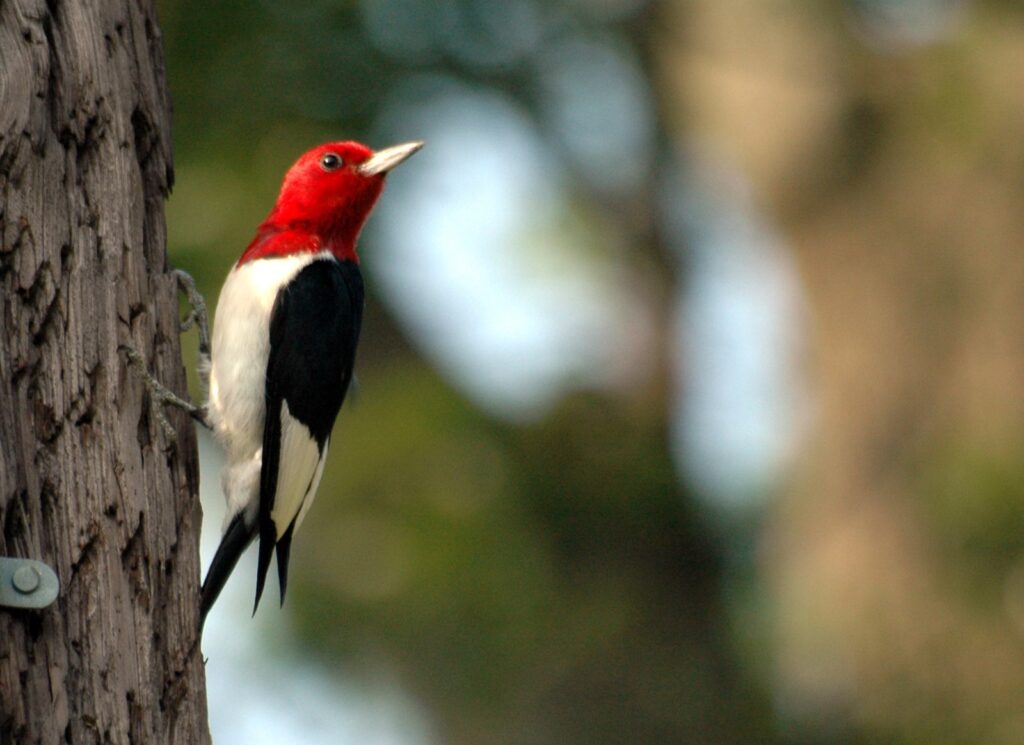
The red-headed white-bellied Red-Bellied Woodpecker

Red-bellied woodpecker feasting on sumac…or the bugs therein?

The red-bellied woodpecker. I’m not ragging on the folks who assigned woodpeckers their common names, but… okay, maybe a little. Because if I was going to describe this woodpecker to someone, “look for its red belly” would be way way way down the list.

“Neil! Come see this red-bellied woodpecker! No don’t look for a bird with a red belly. The belly looks bright white from here. I mean I can get you a close up reference photo where you can see it’s actually a bit ruddy… Ahhhh there’s no time for this, it’s that bird with the BRIGHT RED HEAD.”

It’s the same deal with the yellow-bellied sapsucker, with its brilliant red cap and (in males) equally bright red throat. And belly that if you are about five feet away from one, and happen to have a pantone deck with you, you *might* describe as the colour of watery butter.

I said I’m not actually ragging on those woodpecker namers though, and I do mean it. Because when you see the bird who scored the name “red-headed woodpecker” you can’t help but think — alright, fair enough.

Pic by The Lilac Breasted Roller (CC BY 2.0), via Wikimedia

~Kate

Categories
birbs

Eastern Red Cedar Waxwings

A good omen yesterday: a little flock of cedar waxwings flew into our cedars to feast on the berries.

I could flap my gums and wax eloquent about these softly beautiful birds, but first let’s look at the tree they are feasting on: Eastern Red Cedar (Juniperus virginiana).

I love this tree. It’s a scrubby scrappy tree. One of the first species to grow back in damaged or eroded land. It is also a far and away favourite of the critters that visit here. The bright blue “berries” — the female cones — are recklessly munched by red squirrels and most other passersby. I think it is not considered a pretty tree, but I don’t consider that consideration well considered.

The blue cones of these junipers take three years to mature – year one they flower, year two the cone turns green, and year three they are sky-blue and ready for harvest. The Eastern Red Cedar berry is listed in the Slow Food Foundation’s “Ark of Taste”: a project to recognize and draw attention to “small-scale quality productions that belong to the cultures, history and traditions of the entire planet.”

“Eastern red cedar berries are related to common juniper berries but are superior in flavor. They are mild without the turpentine notes and bitterness of common juniper. They are almost sweet, with a woodsy piney flavor.”

~ Slow Food Foundation for Biodiversity

Cedar waxwings engage in beak rubbing, dances, and food sharing as displays of courtship, and “[o]lder birds pair preferentially with each other”. As I look over at my mate of 20 plus years, I get it. I may not secrete a red waxy substance from my feather shafts, but between their food sharing and their love of the eastern red cedar, me and the waxwings have a lot in common.

~Kate


Selected Sources: The Birder’s Handbook by Paul R. Ehrlich et al; The Slow Food Foundation Ark of Taste Project

Categories
birbs fauna

A most unusual squirrel

Alright, I thought, I’ve done my walking lap, and my woolly coat and gloves are back on the bench now. I’m down to some pretty threadbare leggings and a hoody. So if I don’t start running soon, this nippy feeling is going to blow right past chilly to points more unpleasant.

And then… a sort of “chirp”. High up a tree, ahead of me on the path, and a little to my right. To my slightly muffled ears, poking out the bottom of my orange toque, it sounded a little like the indignant chirrup of a red squirrel.

Only… slightly not.

I have learned – am learning – to pay more attention to the “slightly nots”. The woods doesn’t post a roster listing who is in attendance today. Moving slow and listening fast are the only reliable ways to find out who is around.

I stopped and scanned the trees for the squirrel I’d made indignant by walking past, or anywhere near, his tree. Only it wasn’t a squirrel. Because as I turned in place, a large bird took off. From a perch high up in an oak, about 5 metres ahead of me, along the trail that follows the crest of the hill. The bird didn’t go far though. But instead took another perch, just as high, only a little closer to me, and a little closer to the hill’s edge.

A pileated woodpecker? It was large, and I’m sure I saw a flash of colour on the head.

But… it didn’t land like a pileated. And it was… squat? Can a woodpecker be squat?

I took a step back, literally and figuratively. I tried to stop expecting to see something, and instead see what was there.

And what was there was… a duck??

I squatted down and took a long hard look way up the tree.

And it was, in fact, a duck.

And not just a duck, but a duck with pizzazz. Some exotic escapee. A resplendent rainbow of duck. Colours splashed akimbo all over its little duck head and squat duck body. A squat duck body currently perched high high up an oak tree. A male duck of some kind I guessed, with his elaborate plumage. He made another chirp. And another.

I hunched down in the dirty leaves, no longer feeling so chilly, and took a minute to absorb this unexpected squirrel-chirping rainbow duck.

Just as I’d decided to move along, and let this dollop of rainbow get on with whatever he was doing, he made another much louder chirrup, and then off THEY flew, singing a new song as they went. Not only the male I had been watching, but also… a female! Who had, apparently, stayed sitting quietly on the original tree the male had started from. It seems I had fallen for the oldest trick in nature’s book — with his fancy outfit and catchy songs, Mr SquirrelRainbowDuck had been distracting me. Holding my attention, while his mate, a few trees over, sat entirely in my blindspot.

Well played Mr. Duck. Well played.

If you are a birder, you have perhaps been shouting “IT’S A WOOD DUCK!” at your screen since I first mentioned our squat rainbow friend. And right you are! Confirmed by BirdNet in real time, which I was using to record their calls, and which showed me an exact photo of the duck I was looking at, along with that wonderful ID phrase: “almost certain”. (If you’d like to hear them for yourself, the calls they made were similar to the second last calls in this list, only more intermittent.)

There is no permanent body of water in our woods. But when the wood ducks flew off, they flew towards the creek that winds along parallel to the nearby road. The creek is out of sight from the path, and not connected to our woods — except as the duck flies.

//

Have a wonderful week folks! And if you want to guarantee some goodness in your week — I recommend stopping everything to google video of fledging baby wood ducks. I promise you won’t be sorry.

~Kate

Categories
birbs

Fee-bee! Fee-bee!

Think I heard my first Eastern Phoebe of the year!

Phoebe painted with wild inks

The chickens and I were outside doing our stretches. I was doing physio for my arm (it is possible I overdid it, using a pickaxe to liberate our icy driveway last month), while the chickens were running around looking for slugs and bugs.

I was enjoying listening to the morning birdsong, when a familiar determined trill popped out from the robin-dominant din. A phoebe!

I wasn’t familiar with phoebes before we moved here. They’re adorable little flycatchers, with forked tail feathers that flick distinctively whenever they’re sat on low perches, waiting to snatch their next bug from the air.

A phoebe has nested on our house at least as long as we’ve lived here, and possibly before that. Phoebes will reuse their nests, after doing some refurbishing, so we leave the nests in place and intact year-to-year, snugged up under the roof’s overhang.

Last year the phoebe that usually nested on the back of our house built a new nest on the front instead — possibly a consequence of something-not-us mutilating their nest beyond repair while the phoebes were away for the winter. (I don’t know for certain it is the same phoebe nesting, or at least the same family line. But given that the oldest known phoebe was 10 years and 4 months old, I guess it’s possible!)

The change in nest neighbourhood was wonderful for us though, as the phoebe’s new nest was by a large window, so we were able to watch all their comings and goings — and fledgings! Bird TV. We’d witnessed part of one fledging in a previous year. We were standing by the bedroom window when a very very tiny phoebe (which are already pretty tiny to start with) landed on the little framed edge of our bedroom window, breathing heavy and looking like this whole flying business was quite new, exciting, and scary. A-dorable.

The other birds don’t appreciate the phoebe’s claiming of the front of our house as much as we do. I usually have a window-mounted feeder on that same large window, but we had to take it down last year. The phoebe was very territorial, and took to “giving the bird” — dramatic maverick-style swooping attacks — to any interloper who tried to pop by for a snack. I decided to remove the temptation, and took that feeder down until the phoebes had moved on.

It is very satisfying and exhilarating though to watch these incredibly agile and nimble little fighter pilot birds in action. Their swoops and banks and high speed catches of bugs from the air are spectacular to watch. I mean, they are catching bugs mid-flight! Last year was particularly enjoyable, as the phoebes were at least reasonably happy to include LDD moths on their menu. We had just ridiculous number of caterpillars (until their collapse) last year, so seeing the phoebe munching away on them was a delicious sight.

Sights – and sounds – of spring continue…

~Kate