We’ve had no internet for about a week now. The Bell technician who came out today traced the problem to its source – a mouse nest in the cable box. This is not the first time a mouse has made its house somewhere unfortunate. Last year our mechanic made a similar discovery under the hood of our car. Shelter is shelter.
As a little girl, one of my favourite Christmas stories was about a wee churchmouse, retconned into the story of Silent Night. The tale imagined that Silent Night was composed by Franz Gruber on guitar because the organ was broken – its leathers chewed by the hungry mouse.
Mouse nests are part of the texture of our world now, living nestled in the woods. It’s a fluffy ephemeral texture. The nests we find are lightweight and constructed from all sorts of different materials, yet somehow always distinctly mouse-house-ish.
Stacks of firewood make particularly good places to build mouse houses. My winter fuel is your habitat. I can see it. Neatly stacked wood is not so different from my log cabin. I imagine a jumble of telephone wires looks similarly suitable. It’s usually halfway there after all. Even before it’s been rearranged to suit a rodent, we humans call a tangle of wires a “nest”. Its mousey potential is that evident.
It’s inevitable that mice will get into the nooks and crannies of the human-constructed world. Mice are small and they are multiple. But I wouldn’t want to be in a universe without them. They may nibble cables and carry Lyme disease, but mice are also good food for fox. We’ve yet to have a fox try to get into our hen house, but there is lots of evidence that they regularly help themselves to the abundant local mouse population. The mice are welcome here too in their own role as predator, a natural check on LDD (“gypsy”) moth populations — mice enjoy feasting on LDD pupae.
“When we try to pick out anything by itself, we find it hitched to everything else in the Universe.”
~John Muir
Living as we do, thick in the 21st century, most of our work is done online. And despite our extensive and ever-growing book-based library, many of our references are online as well. So having no internet is pretty inconvenient. But in our case it is not life threatening, and even pleasant from time to time. I am no different from the rest of my species: it’s too easy for me to spend too much time scurrying around the web. I can fall down an internet or social media rabbithole with the best of them, and it doesn’t always bring out the best in me. A pause is welcome. I may or may not spend the time composing songs on guitar, but I am happy to have a few silent nights.
Neil was standing thoughtfully by the window a few days ago, when he abruptly interrupted his own reverie with: “Look! There’s a rabbit running across the… What is that??!”
Our home sits on the side of a drumlin, about halfway down. There are woods above us and woods below us, but our home sits on a shelf in the landscape. A flat open area as the woods step down to the road.
With woods on all sides, we often catch moments of stories whose narrative starts and ends in the trees and brush around us. Our yard is not usually the setting of the climax, though sometimes it hosts intense moments that advance the plot. The line of coyote tracks don’t pause here, they’re just following the thread between the woods north and south. A hawk may swoop fast and low across the open space, but its talons are destined for something on the other side. Or, in this case, the yard reveals a furry flash of bunny, trying to put as much distance as possible between it and the… what-is-that.
I dropped everything and ran to join Neil. If Neil thinks he sees something interesting, then Neil has seen something interesting. Don’t drop everything, and regret will follow.
The what-is-that was a weasel. A beautiful long-tailed weasel (Neogale frenata) bouncing and slinking around the yard. At a glance, it reminds you of a squirrel. Same sinewy gallop, and a similar scale, on the smaller-than-a-breadbox woodland size chart.
But the best part, the very best part, was that the weasel was mid-moult. Come winter, long- and short-tailed weasels here change out their brown coats for brilliant white ones. They are the snowshoe hares of southern Ontario. But there is a glorious chapter when the work is still in progress. And if you’re lucky, you might spot a tortoiseshell weasel. Not quite brown, not quite white. Though, in this case, the weasel had a fully moulted winter-white tail. Must be interesting to have your tail a season ahead of your torso…
The very tip of the long-tailed weasel’s tail is more stoic than the rest of its fur. It doesn’t do anything so fickle as change because of the weather. It remains an ebony black no matter what wind is blowing. There are theories to try and explain the why of it. Even the weasel, much maligned by chicken-keepers the world over, has its predators. Owls and other raptors will happily make a meal of a weasel. It’s possible the weasel’s flicking black tail tip is bait, keeping eagle eyes away from the jugular. Go after the tip, and you’ve calibrated to the wrong end. An escape might still be possible.
The name “ermine” is colloquially applied to many species of weasel, not just Mustela erminea, whenever the weasels are wearing their winter coats. And if you think an expanse of white fur with a little black dot looks familiar, but you can’t quite place it, it might just be weasels’ “noble” connection…
I hadn’t given much thought as to why the white fur trims on garments in old paintings were so often dotted with black. I assumed it was a decorative element added or dyed after the fact. But it is as nature made it. The black is the tip of the tail, included when the pelts were stitched together. A little whisper of the weasels that were. Have a look through historic portraiture, and see the plush fur trim with new eyes. Nothing says “I am powerful and important” like wrapping yourself in weasels. (We are not so far from this today, with modern humans gluing mink to our eyelashes, sights set on that elusive target, “beauty”.)
Back to present day though. And this moulty tortoiseshell jumping bean of a friend. Here is a video of its few moments in our yard. Flashy acrobatics out by the woodpile, followed by a dash through the woods when the bunny returned. I don’t know how the tale with the bunny ended, though I root equally for each of them. In this story, they are predator and prey. In another, our cast takes on new roles. A hawk chasing the weasel, the bunny nibbling the sapling to the ground. All the realities of nature. Everything wants to live, everything needs to eat. Not all stories have villains, most especially the ones that are true.
It is rare, in these times we live in, to find things of beauty shared freely. But here we are — one of my favourite documentaries ever is freely available to watch, in its entirety, from TVO.
To Make a Farm: “An intimate portrait of five young Canadians who decide to become farmers.”
If you enjoy it, you can donate to TVO, and help keep endeavours like it alive. I bought the DVD ages ago, because I’m old like that. (And I still have the DVD, because I am curmudgeonly like that.) But equally you can take it as the gift it is, and pay it forward with your own life. Creating more space for thoughts of food and its where, what, how and who. How we got into the pickle we’re in, and how we might work together to get out of it.
In the 60s, a lot of people, a lot of hippies got really carried away with y’know, doing things the old way, and it typically didn’t last. To do everything yourself, try to raise all your own food, and then they just got tired of it.
When I planted wheat, and went through the whole process, planting the seed to getting flour, it was just really complicated and I realized well you gotta do nothing but wheat if you’re going to do that and so I can’t be self-sufficient in wheat…
It’s a direction, self-sufficiency. … You do what you can do, as much of it as you can.
Prefer to listen to the story? Click the image above to hear the narrated version of this blog entry.
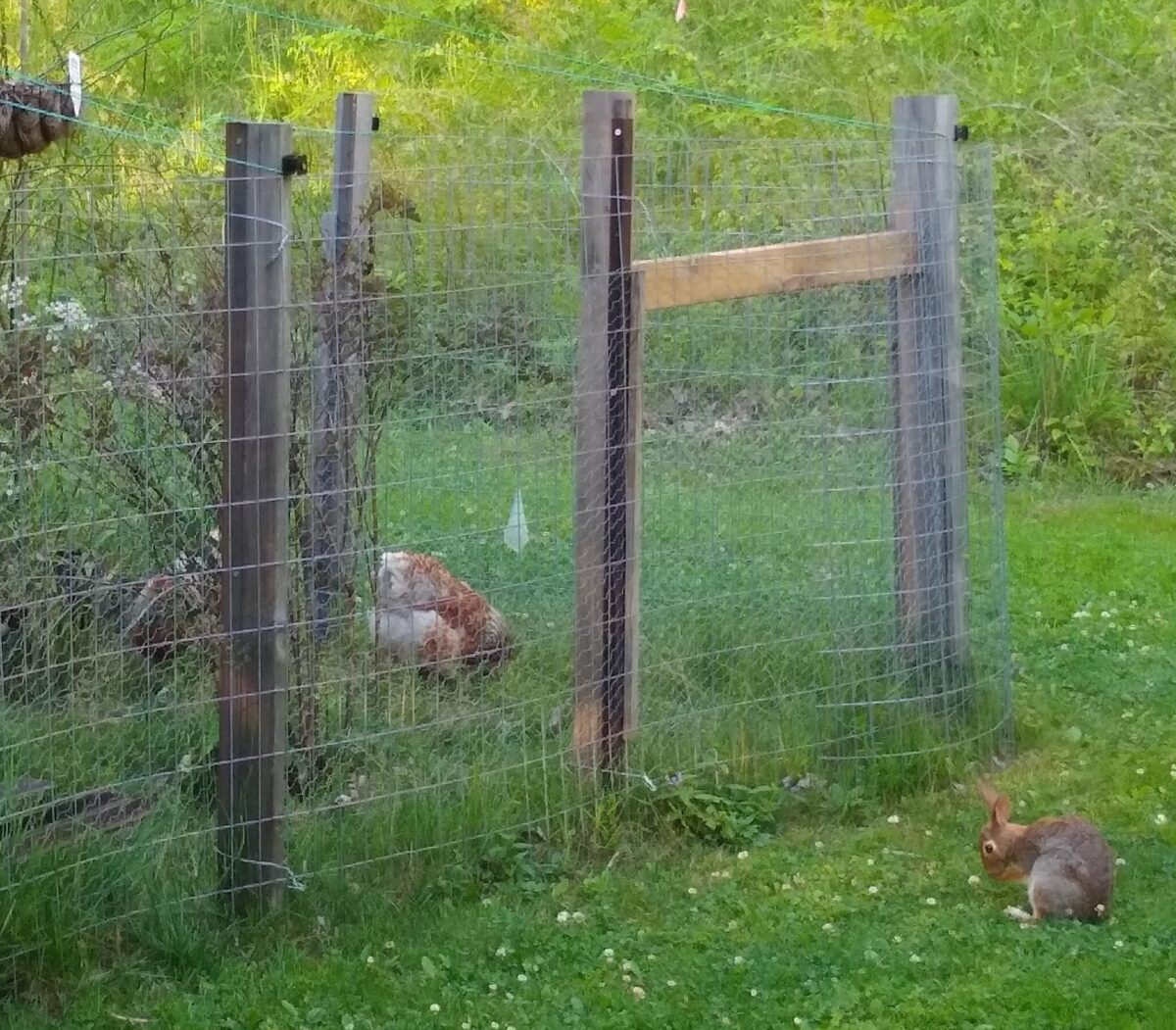
This is Scrappy. A wild eastern cottontail rabbit who has been visiting our property most evenings, all spring and summer. We can tell Scrappy is Scrappy and not other rabbits because Scrappy is missing a chunk of one ear. Which is how Scrappy got his name.
(We think Scrappy is a he, though we don’t know for sure. And however Scrappy rolls is alright by us.)
Lately we’ve noticed that while Scrappy frequents all parts of our yard, he seems to favour the clover-y grass near the chickens. And since there is clover-y grass all over our yard, we finally started to wonder: perhaps it’s not the clover that’s the reason Scrappy is there, but… the chickens?
Scrappy and our Wyandotte chickens tend to be in the yard at the same time. Our chickens live in coops that are attached to enclosed and reasonably spacious runs. We open the doors from the runs to their yard area — currently quite a bit more exposed to predators — only when one of us is outside. We try make time for this, even on busy days. The “old guys”, sometimes also known as “the little guys”, tend to come out in the morning. They’re the bantams from our original flock, and they’re much more advanced in years, so they like to go to bed early. (Our little 9 year old silkie SooZee in particular keeps a tight 4PM or earlier bedtime.) The chickens that make up the younger flock, all Wyandottes, stay up much later, closer to an 8PM or later bedtime.
Our Wyandottes are fond of rummaging around in and trimming the long grass, so we often refer to their yard time as “running the lawnmowers”. As in “do you have time to run the lawnmowers today?” The lawnmowers usually get run first thing in the morning, and again in the later evening. And Scrappy fairly consistently shows up somewhere in the yard right at Wyandotte o’clock. Not only that, but though he has his run of the yard, Scrappy also tends to work the clover on whichever side of the fence happens to be nearest the Wyandottes.
The other night, Neil and I had our last work meeting of the day outside, so the chickens (and us) could enjoy the beautiful evening. The chickens, and us… and Scrappy. Who not only appeared out of nowhere when we let the chickens out, but also went to the yard nearest them and settled down in the grass for a nap.
I think our flock might have an honorary member. If he lays eggs… do you think they are chocolate?
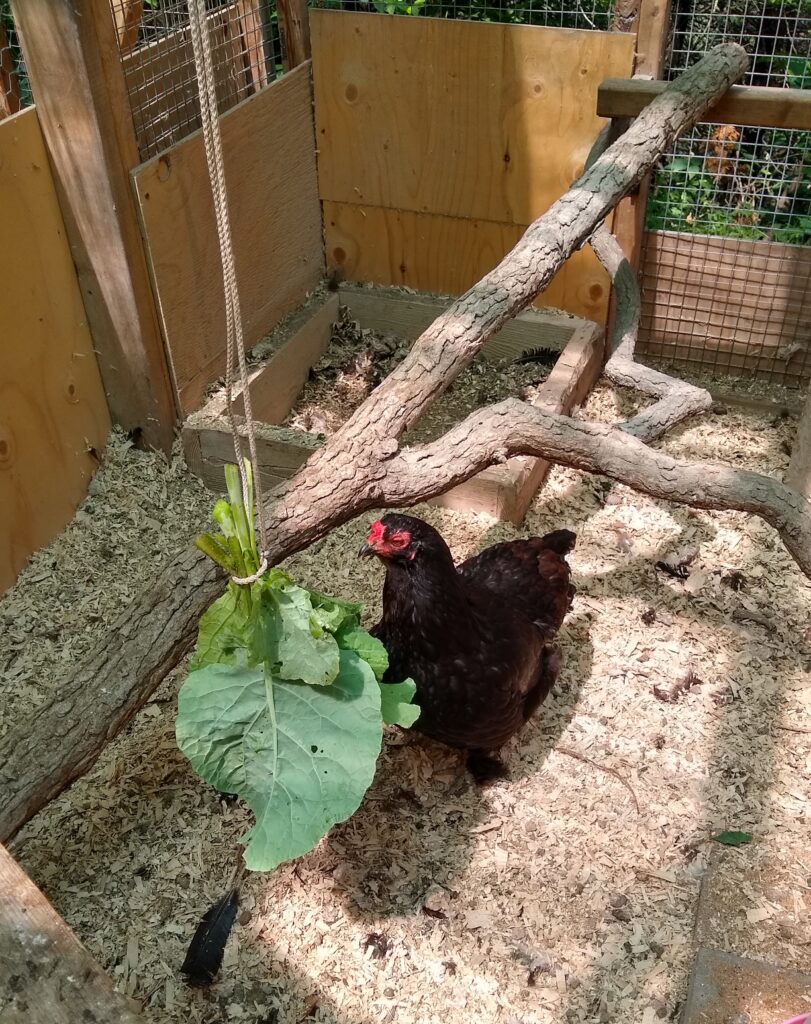
Here’s Lin enjoying a kale and borage piñata. One of the summertime treats we put out to feed the chooks/enrich the runs. And the kale comes complete with complimentary cabbage white caterpillar topping!
I know she looks skeptical, but that’s kinda just how Lin always looks (she is a very sweet chicken). That piñata will be annihilated by day’s end.
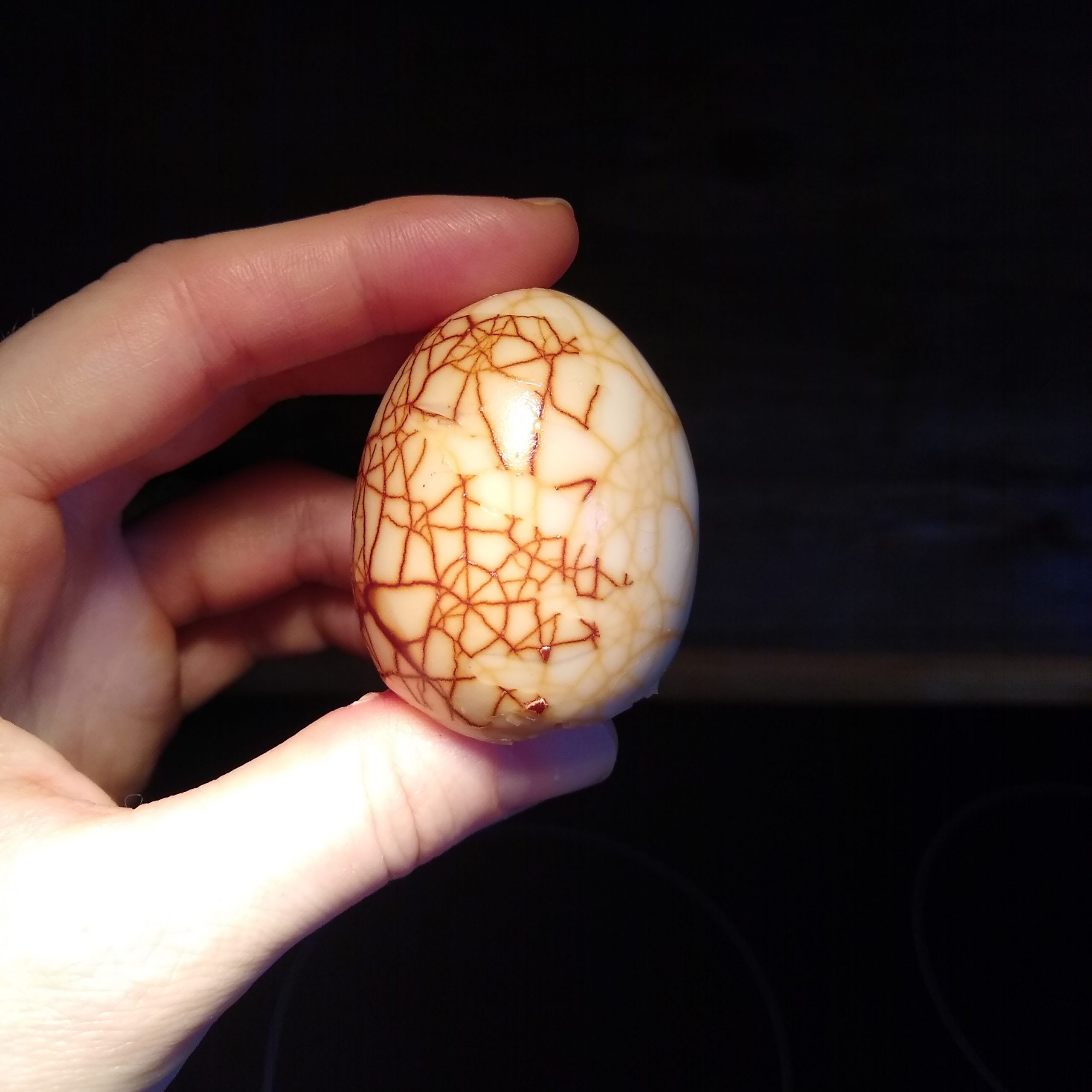
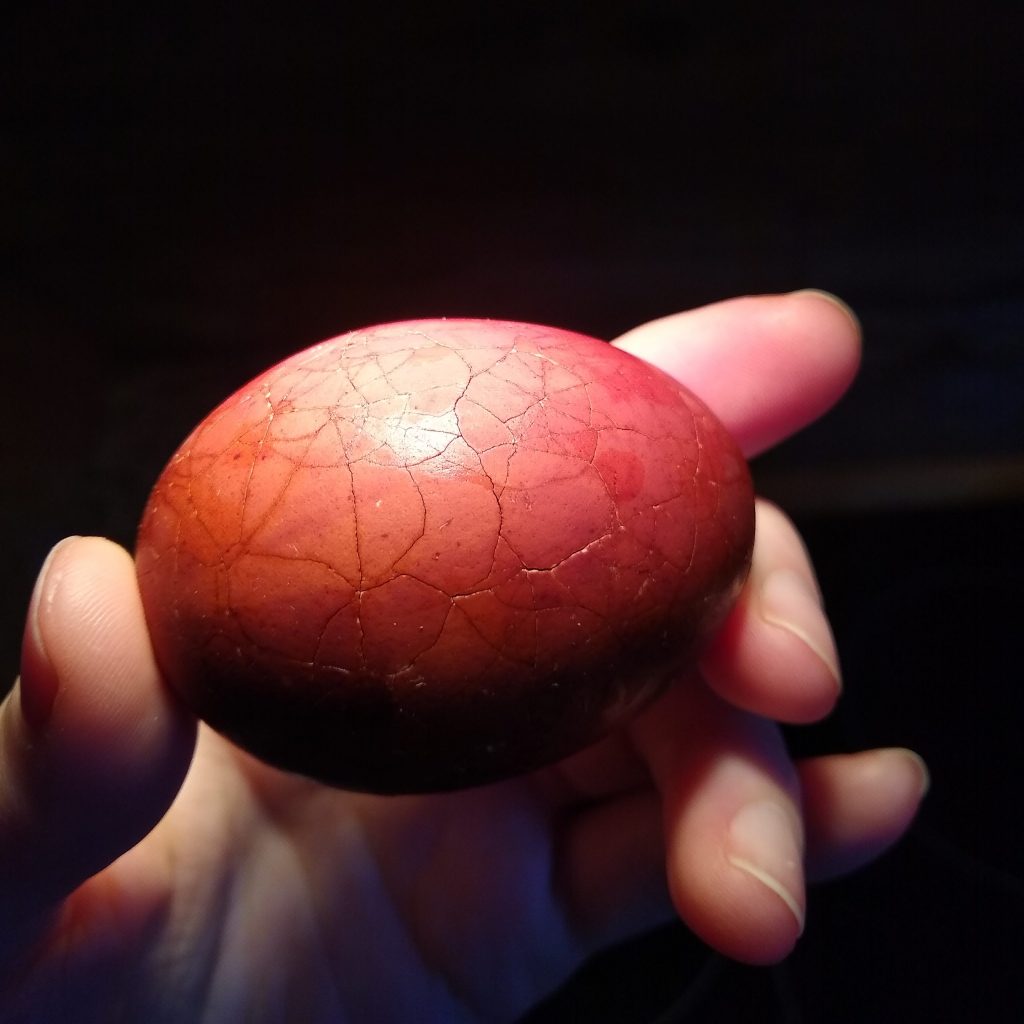
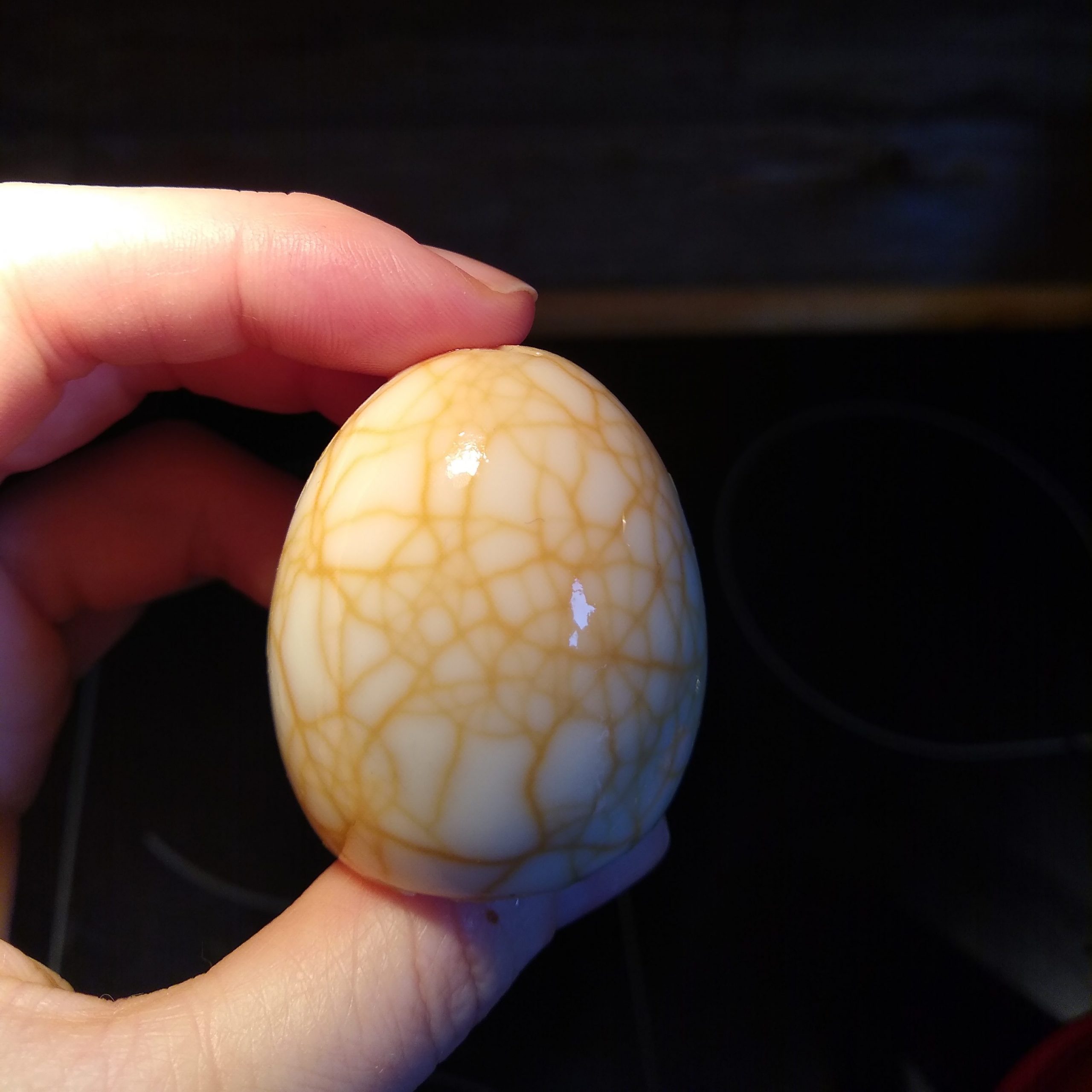
Is there anything more beautiful than a tea egg? Possibly… but in the moments I am gazing upon a tea egg, the answer is no. I mean look at it.
Beauty in the cracks
The first image up top is where I left the shell membrane partially intact — you can see how richly it shows the lines. But even fully removed, it’s strikingly geometrically randomly beautiful.
Low-poly egg
I use Signe Langford’s tea egg recipe from her book “Happy Hens & Fresh Eggs”. But you can find many other recipes online too. It’s essentially an egg steeped in a tea and spiced soy sauce mix, with the egg cracked just enough to let the colouring in.
In our life here we try to live closer to the seasons, which here often means “Kate is out following animal footprints in the snow again”. But while Snow Stories is a big part of any good winter, other kinds of making carry on.
Here is a little slice of the miscellanous making (like tea eggs) that add sparkle to winter’s darker days.
Bath Salts
Spring scents on snowy days
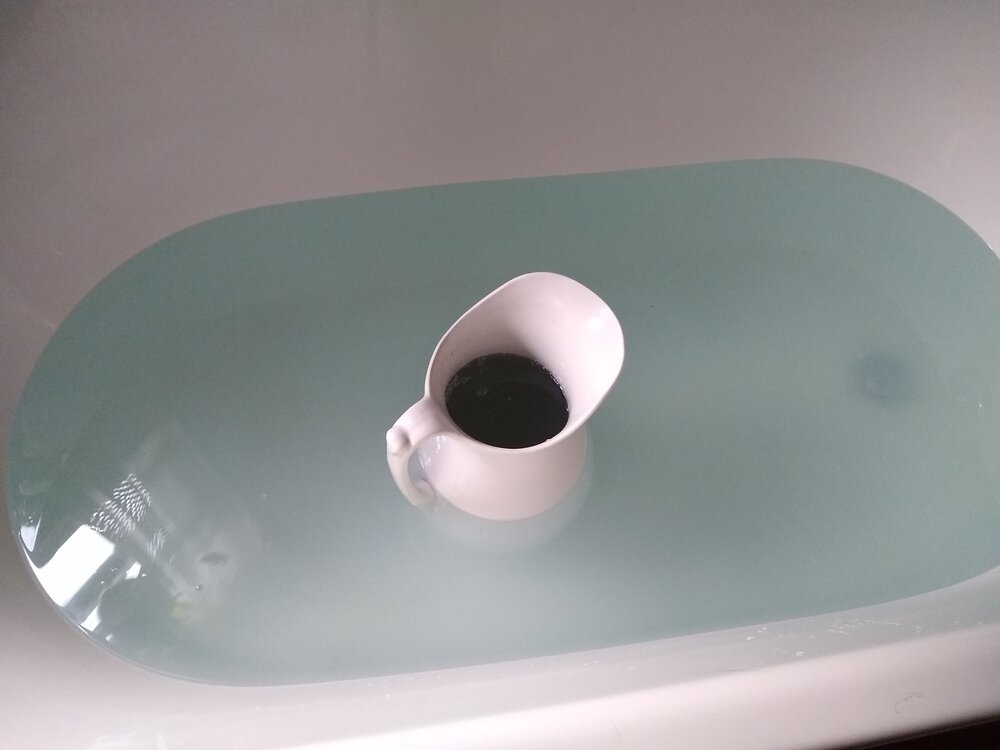
We ration how often we draw a bath here in the winter months. But it has been a mild and wet winter, and we’re not worried about the well, so a bath was on tap the other day (har har). But we were out of decadent extras to dress it up. Though a deep hot bath is a wonderful thing all on its own.
A number of years ago I adopted the habit of using “being out of X” as a prompt to try making it. Out of bread, try making bread, out of butter, try making butter, etc. So out of bath goodies… try making bath goodies!
I am as surprised as you are to find that we had everything we needed on hand. I have noticed this happen more and more often, as making projects dovetail one into the other.
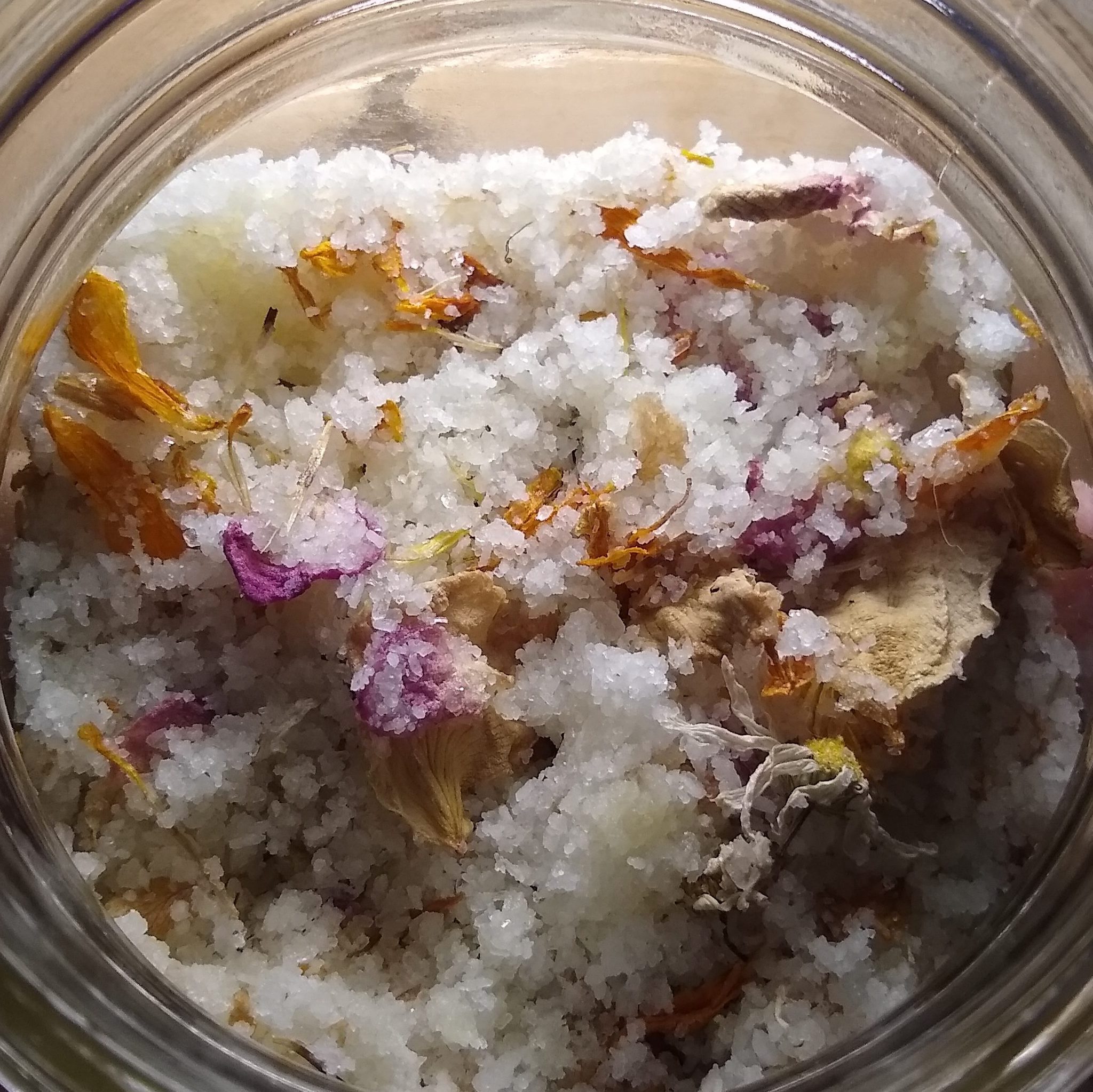
I have been growing and drying flowers for a couple of years, not in ernest, but enough that I had a couple of jars already set aside for teas or destinations unknown. Apparently the destination for some of our flowers was a warm winter bath. Home grown and dried calendula, rose petals, and chamomile joined salts and oils in a homemade bath salt mix. Recipes are easy to come by — just look for a bath salts mix that takes advantage of something you might already have on hand (dried flowers, essential oils, etc). You can also make a very nice nourishing bath from oats. It all depends on what you have in your cupboards.
Nuts To That
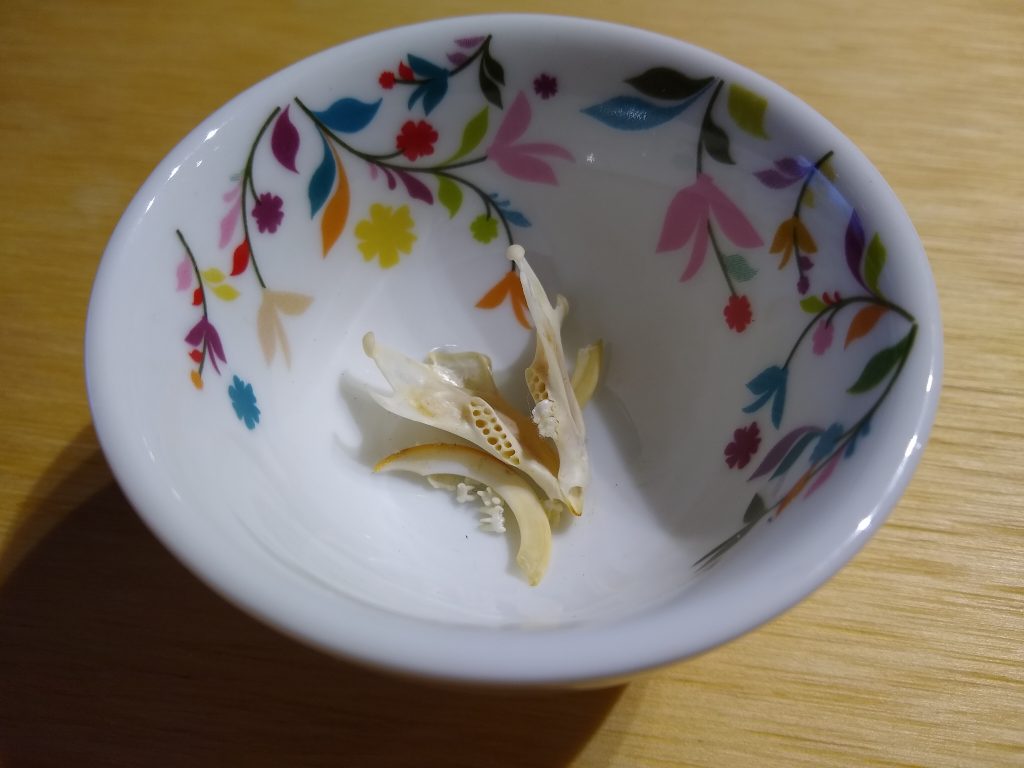
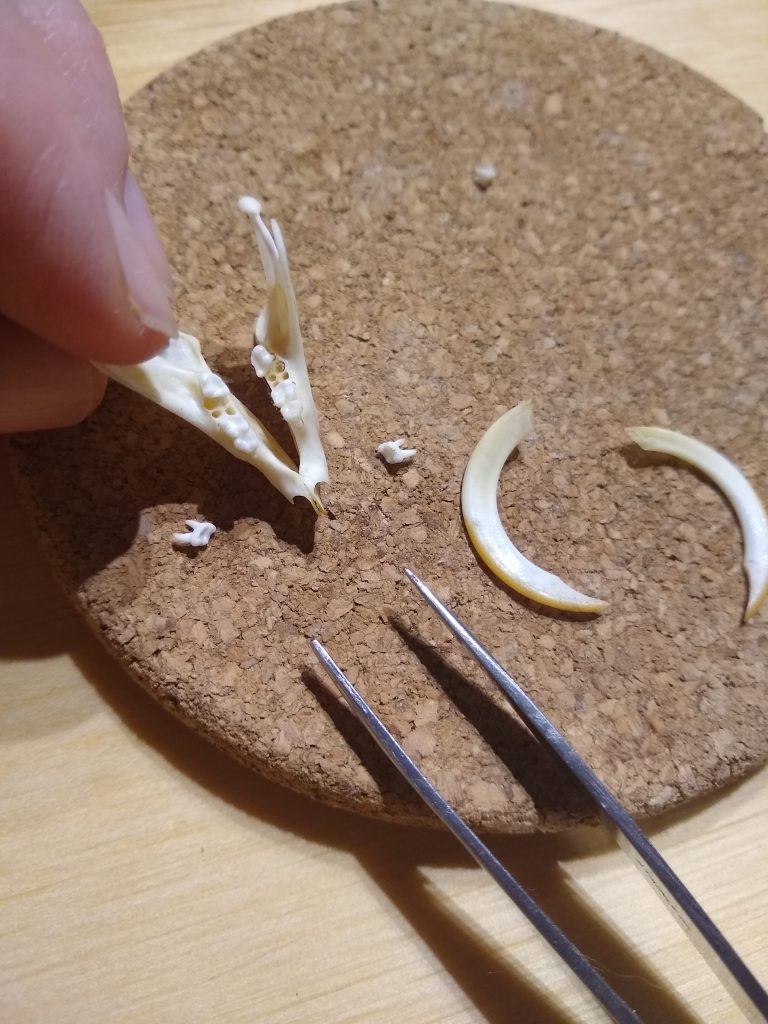
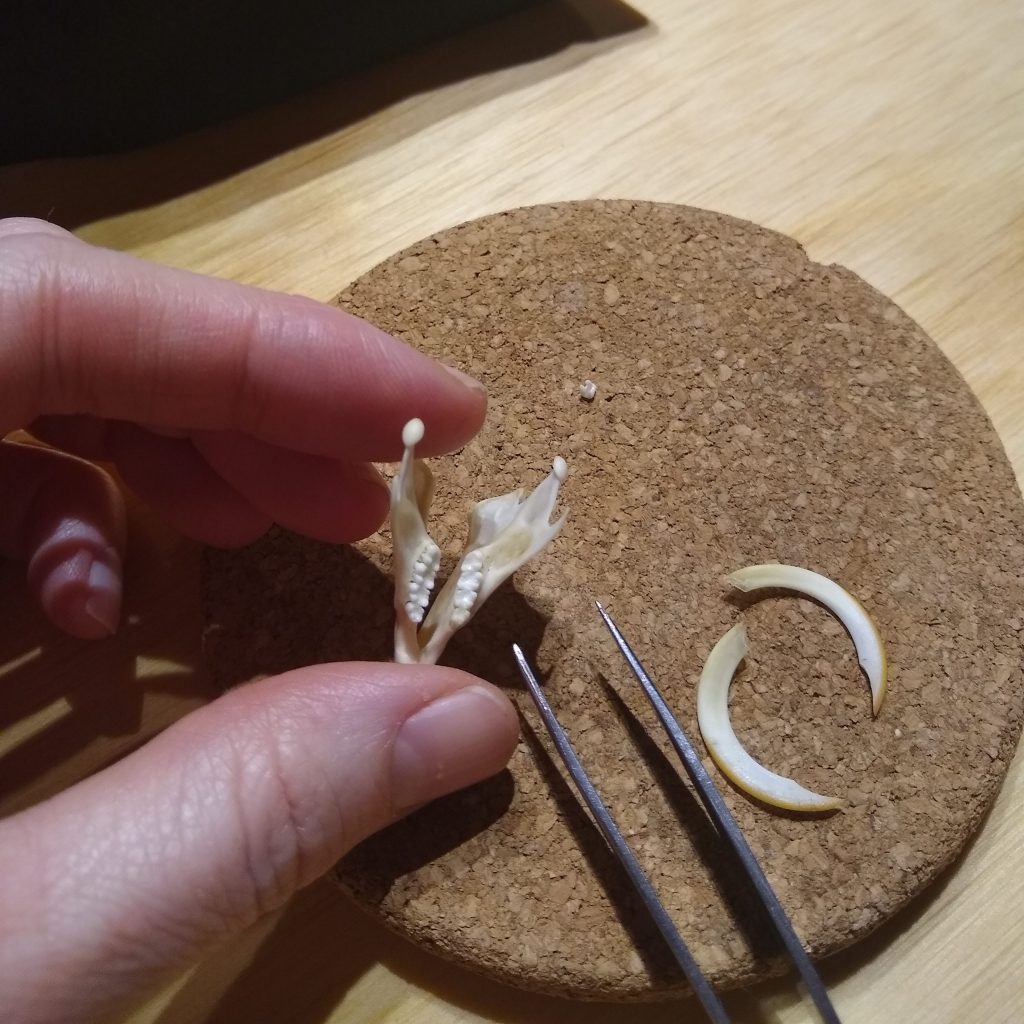
There is no segue between a floral bath and a squirrel’s jaw bone, the next maker activity, except that both interest me, and both occupied some of my leisure maker time this January. Last year I was gifted a squirrel jaw and unattached teeth. (Some people really know me…) It was from a person who prepares skulls to use for educational purposes, and sometimes he ends up with a backlog to process. He offered it to me, when I lit up at the possiblity of trying to reassemble it: “Like a puzzle!”
This pretty little bowl was originally an incense holder, from the wonderful Art.27 in Toronto. You never know where repurposing may take you…
Though it had taken me over a year to pick it up and give it a try, it actually went incredibly quickly. Though it makes perfect sense, of course there is only one tooth that will fit in each spot. And even more so than with a puzzle, the small irregularities, the individual details, tell you exactly where each would fit. Roots that were longer or shorter, closer together or further apart.
He had actually given me more teeth than belonged to this jaw, having given me definitely the ones that fit plus any extra he had. I will set the extra aside for the squirrel tooth fairy (how cute would that coin be…).
The squirrel dentist will see you now.
Fresh Eggs, Fresh Pasta
Jaw reassembled, on to more maker activities. I always like to squirrel away a few extra staples here in the winter (there’s that segue…). In case of bad weather, or just the need for extra fuel on chilly days. We make most of our meals from scratch, and have replaced many of our basics with homemade recipes. Bit by bit the homemade list gets longer. It was not always like this — we used to live in a city where take-out was easier than grocery shopping, and small kitchen cupboards only held so much — but like any maker-ing, it’s all about practice, creativity, and diving in.
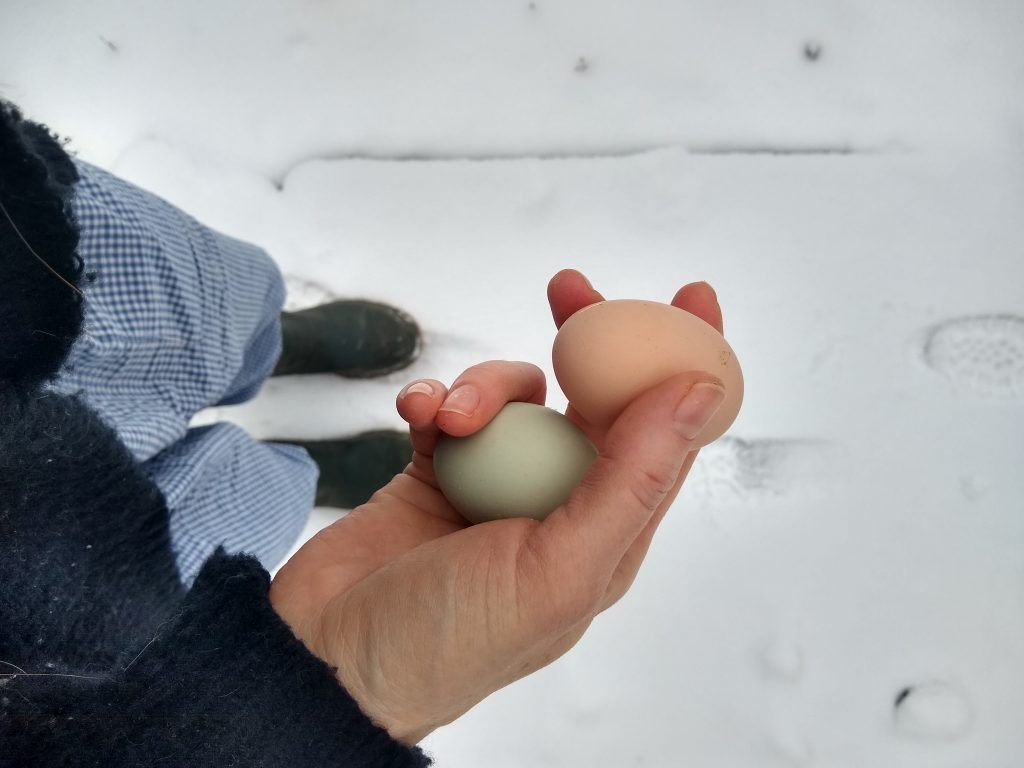
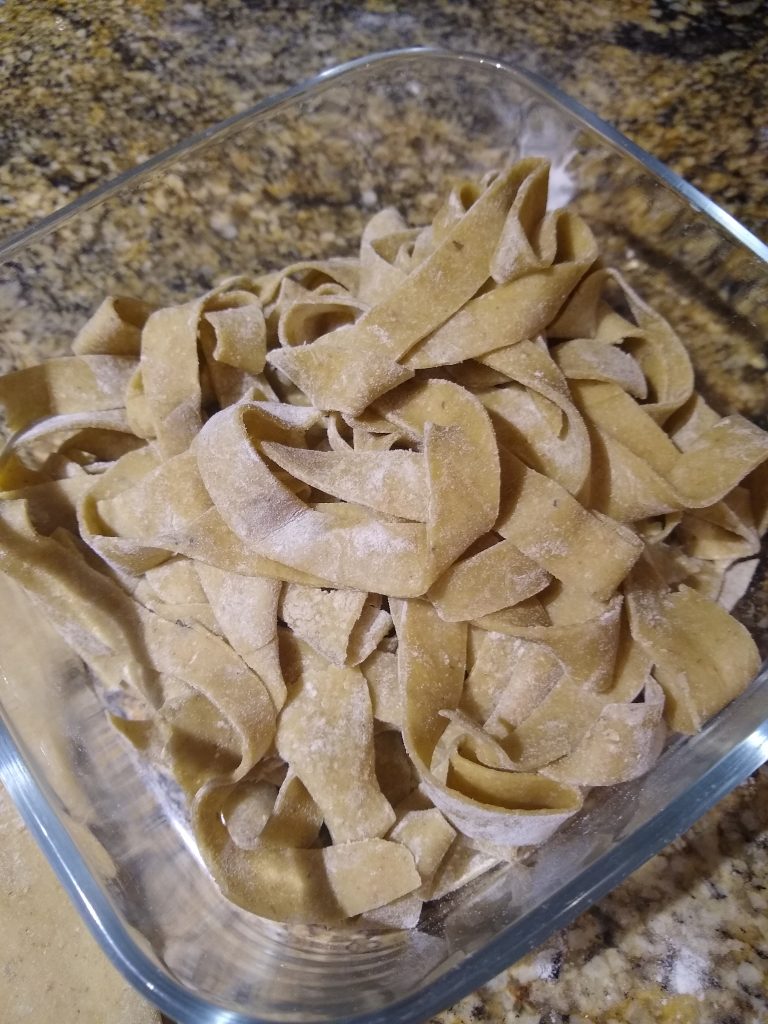
I don’t always make our pasta, but its a nice treat every once in awhile — especially when fresh eggs are available. Our “baby” hens have started laying, so winter eggs are on the menu!
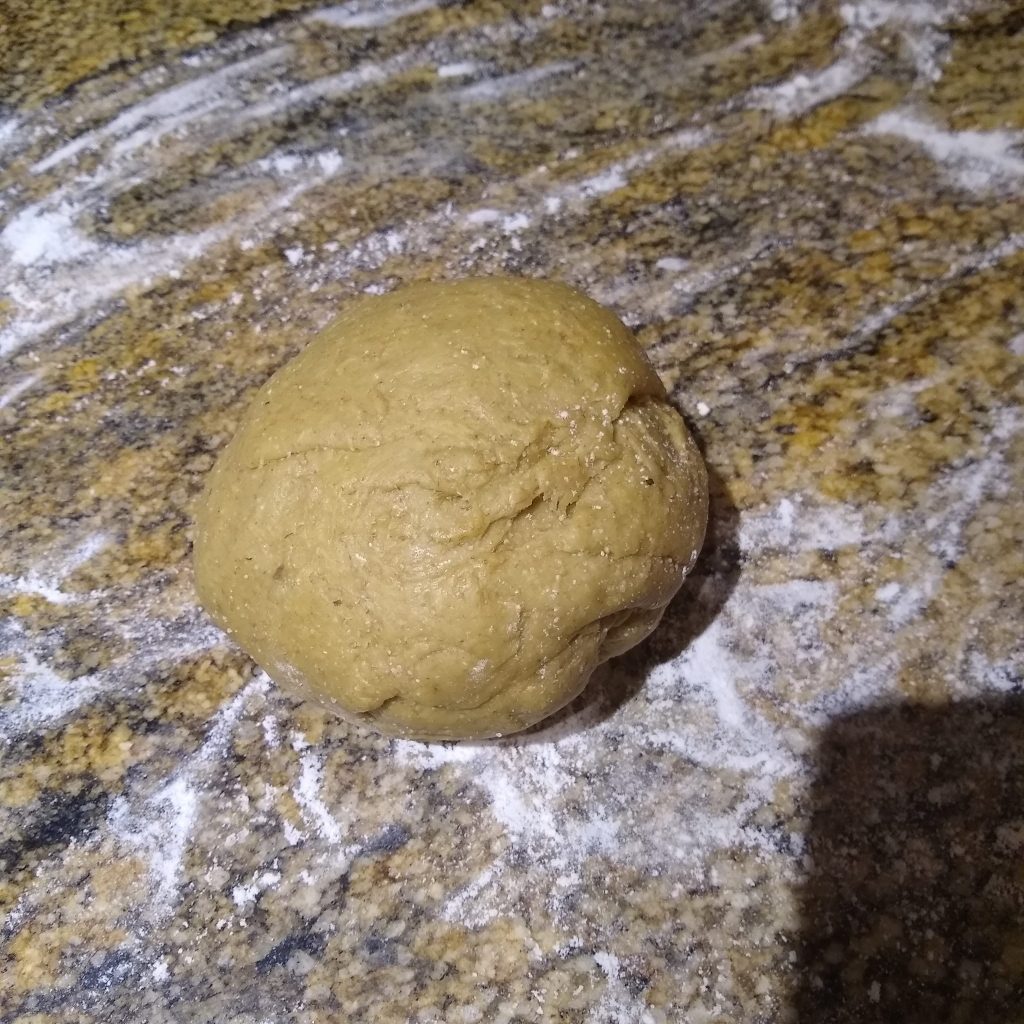
You can find fresh pasta recipes all over the internet. My most important note here is that we don’t have a pasta machine of any kind, and it’s no problem. (I am a low-gadget gal.) I use a rolling pin and a knife to make ours, and it turns out just scrumptious!
Noodling around in the kitchen
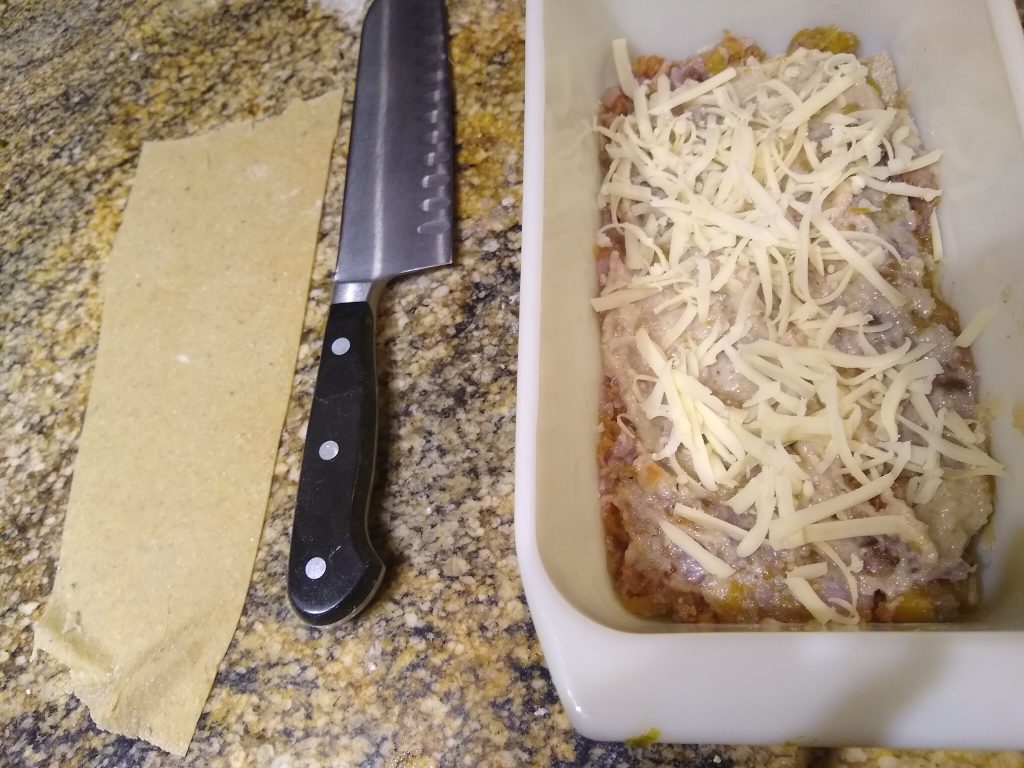
If we made pasta frequently, I might get a roller, but if you just want to give a try, you don’t need any extra tools. I added oregano to this batch, because why not. A little nod to the green shell of the easter-egger eggs it’s made from. I made up half as noodles, and half for lasagna — for weeknight meals for just the two of us, we make little lasagnas in loaf pans.
Drop the Beet
We belong to a Winter CSA this year, with Footstep Organics. We are loving still eating seasonal local veg well into the winter. I’ve really enjoyed how it’s led me to think of root veg completely differently than I once did (there are many stealth veggies in that lasanga up there). I can sneak lush colourful roots into a surprising number of dishes. I recently made beet and carrot muffins, but below is a more traditional warm beet soup… though you’re not wrong if you think it looks like raspberry gelato.
I also recently popped all manner of winter veg into barley buddha bowls, where they paired deliciously with an indulgent avocado and a peanut-y sauce.
Pasta Sauce and Punch Lanterns
Every two or three weeks, I make a double batch of my family’s meat spaghetti sauce. Here it is just after I decided to add in some of the dried celery leaves I saved from last year’s garden. This sauce is the ultimate comfort food, and finds many homes here. We pop it into baked squash, topped with broiled cheese. Use it as a lasagna layer, or just nom it over noodles.
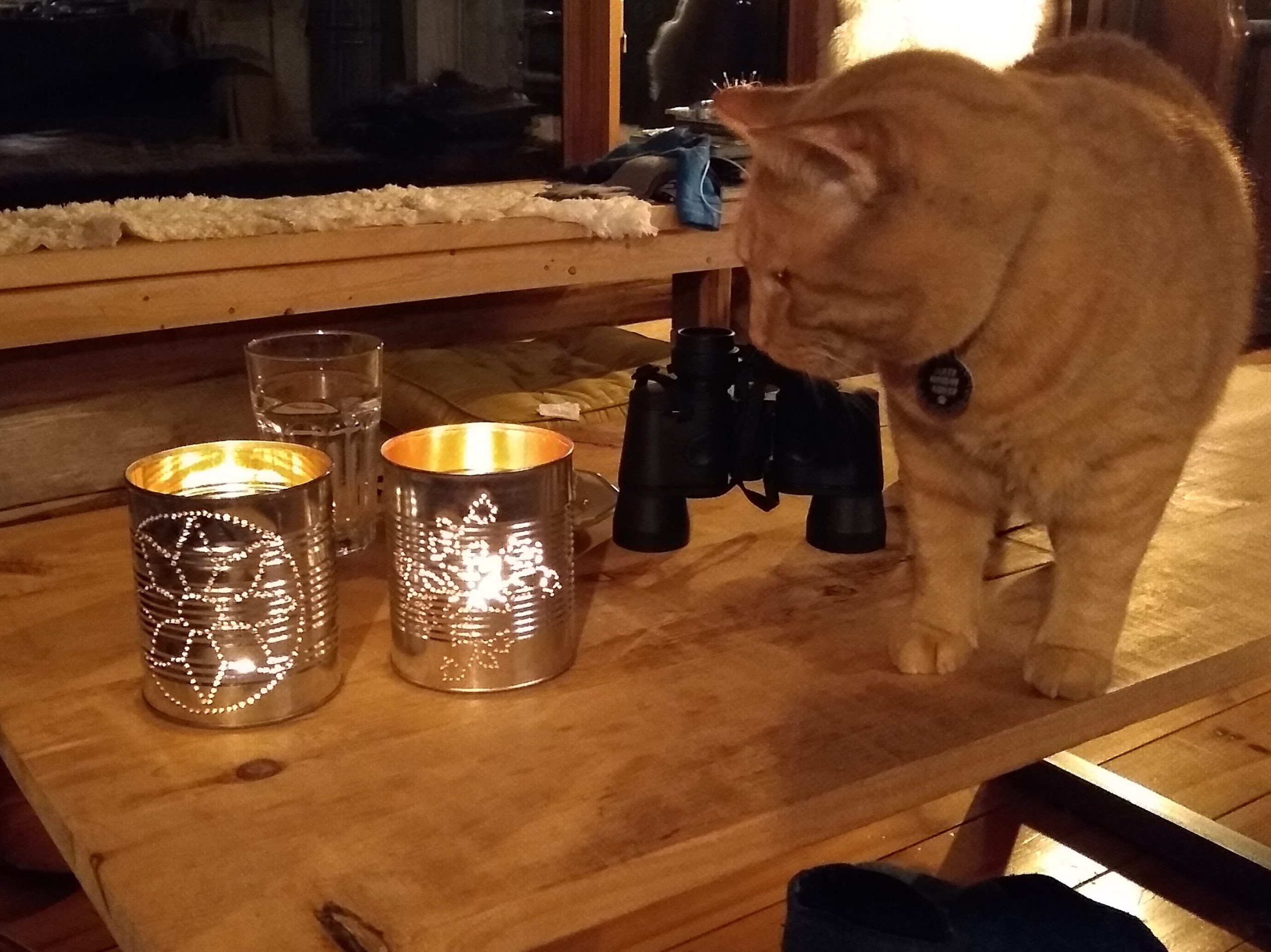
Making spaghetti sauce also means freeing up tomato tins, which means… making more tin-punch lanterns!
This one did turn out beautifully, but the simpler design of the first one I made was stronger when lit. For tomato can lanterns, simple is best! I use two cans per batch of spaghetti sauce, so our house should be very well lit by springtime. 😉
Oliver, always helping.
Sumatran Street Food
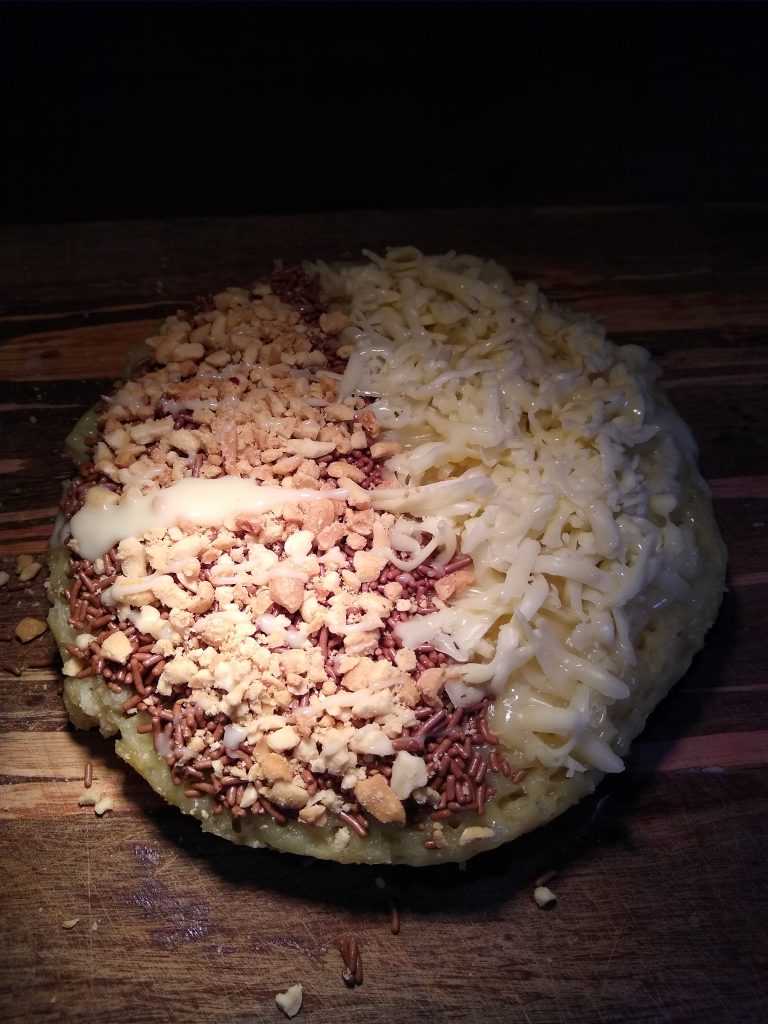
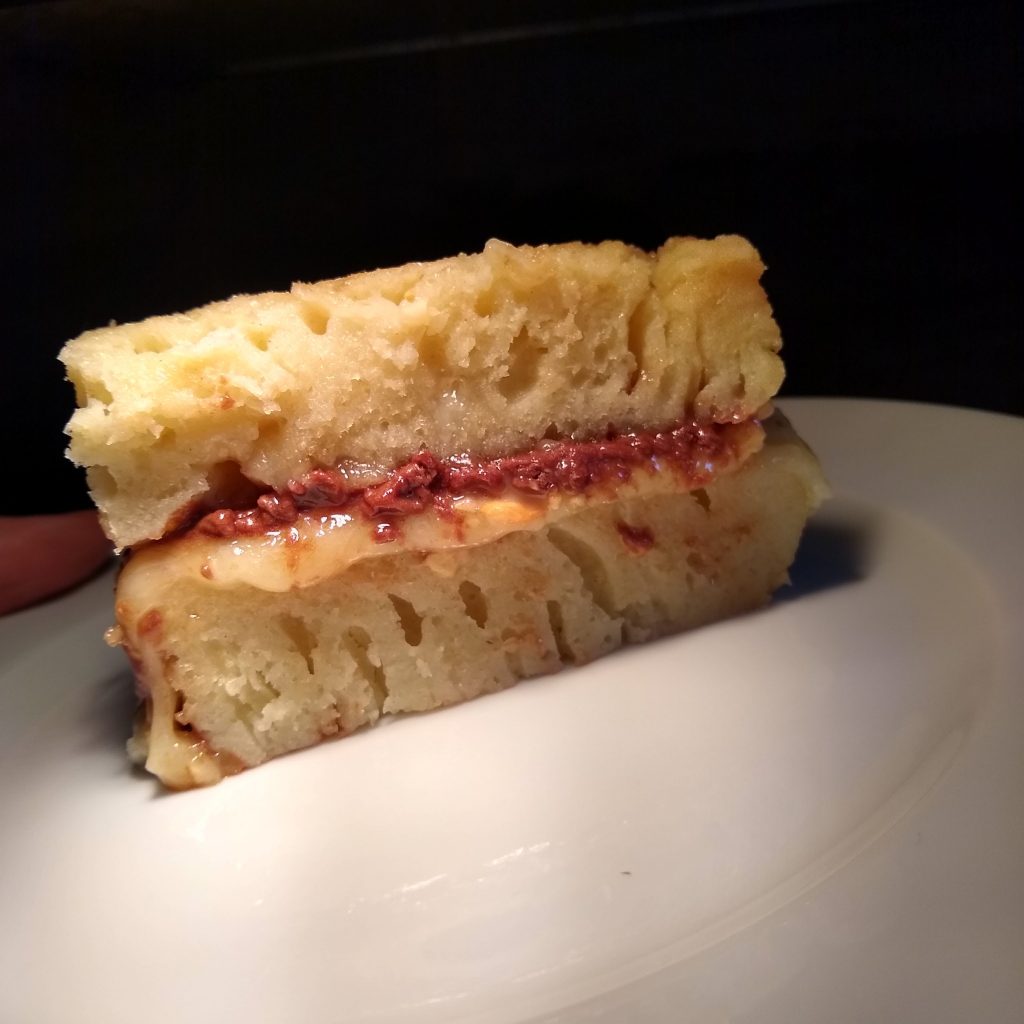
My favourite surprise kitchen experiment this month is definitely homemade martabak manis (following this recipe). I went to live and work in Sumatra for a year when I was 18, and flavours of Indonesia still taste like home. I have thought of martabak manis often, but have never thought to recreate it… until now. Though it is a street food, it turned out to be a very do-able if very decadent recipe for a home kitchen! I have a lot of room to grow in making it better, but wow was it ever delicious even on the first try.
I topped ours traditionally, which is to say, with everything. Chocolate, peanuts, condensed milk, and yes, cheese. It doesn’t sound like it will work but boy-howdy does it ever.
Good Fences, Good Neighbours
Now out of the house and up the woods. Stewarding our woods means maintaining healthy boundaries. Tracks in the snow showed that we recently had a bit of accidental trespassing by a friend of a neighbour. Though we cleared it up in person when he returned the next day, we did take the opportunity to “touch up” the fence.
We are fortunate to have good neighbours on all sides, but/and we each take different approaches to managing our properties. Some allow hunting, others gather firewood. Good fences help make it possible to ensure no one is stepping on anyone else’s toes. It’s a topic for another day, but what looks like great firewood to one person might be a snag full of cavities and nests that we are deliberately preserving. So a little work on the fence to keep things clear when we’re not around.
Attaching a strand of wire to one of the new fenceposts
Sweet Sour Dough
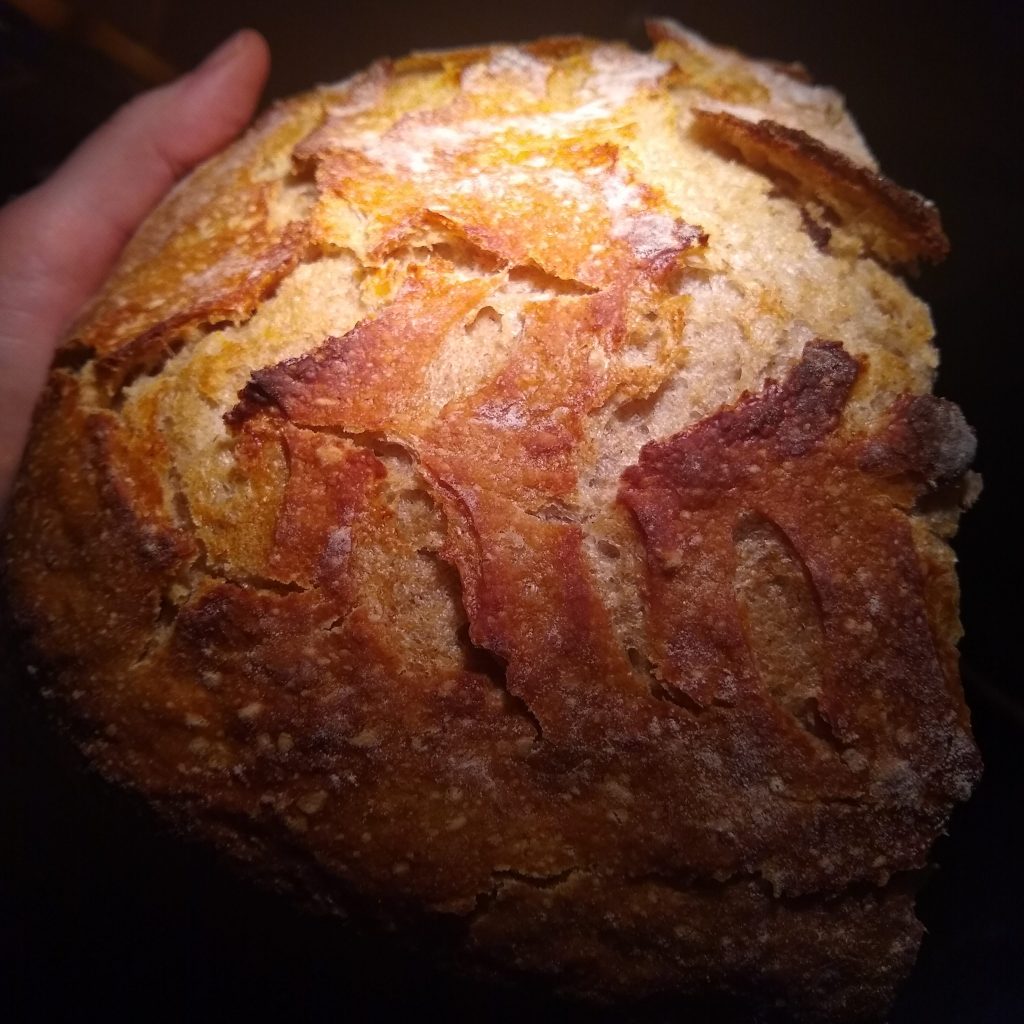
Back at the house, bread making continues. I woke up the sourdough starter again to make myself a loaf.
She was a real beaut! And you can aaaaalmost see the design I tried to slice in before baking. Getting closer!
Ciabatta Buns
And for Neil, lover of a good sandwich/burger bun, my first go at ciabatta. We’re already nearly done our second batch. This recipe from Ahead of Thyme is a winner!
This bun was responsible for hands-down the best breakfast sandwich either of us has ever had. Local cheese, local bacon (from Haanover View Farms), local spinach, very local egg, and the last of that interloping avocado — stretched into a scrumptious aioli.
Granola Bars
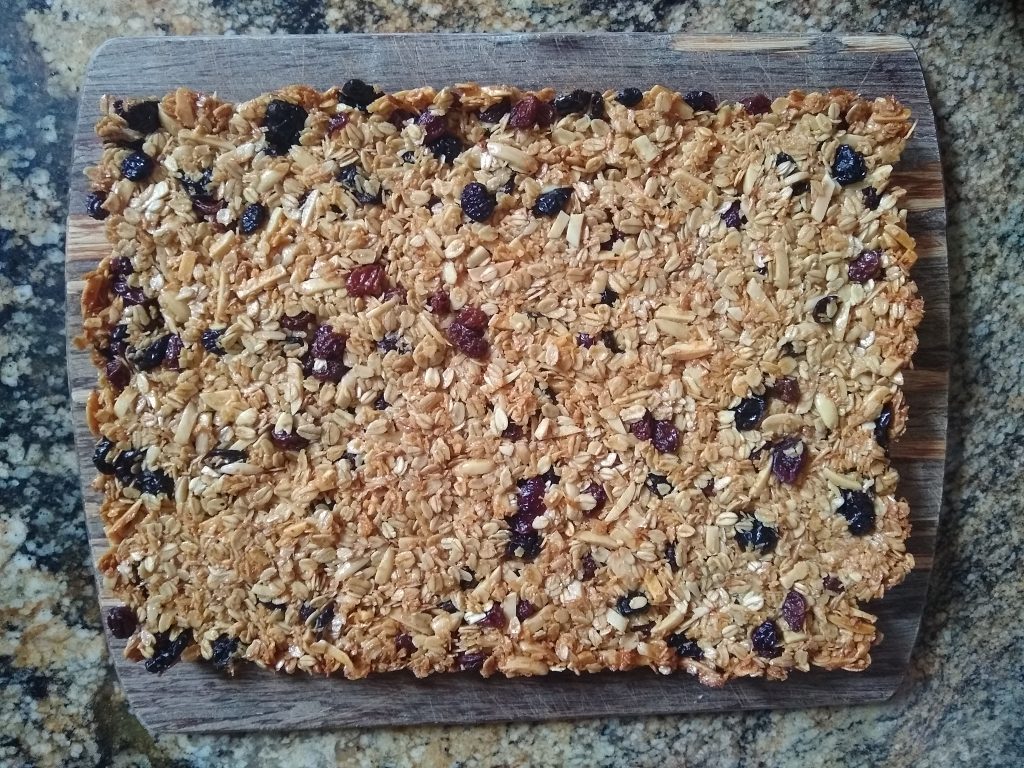
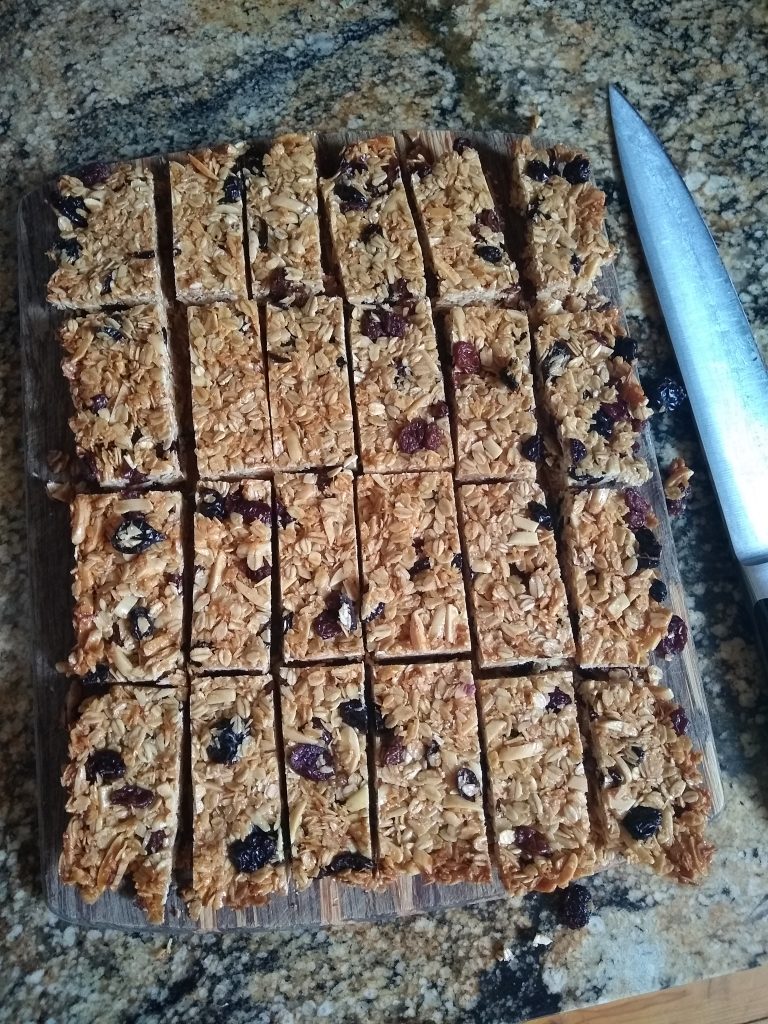
Sticking with the adage of try-to-make before you buy, I baked up a fresh batch of granola bars to fuel our woods walks, or just an afternoon of programming. I was lucky enough to find this great recipe very soon after I started making granola bars a couple of years ago. I use this Ina Garten version, heavily modified based on whatever I happen to have in stock (I also skip the sugar, and go a little lighter on the honey — and they’re still delicious!)
(Half-)Scottish Teatime
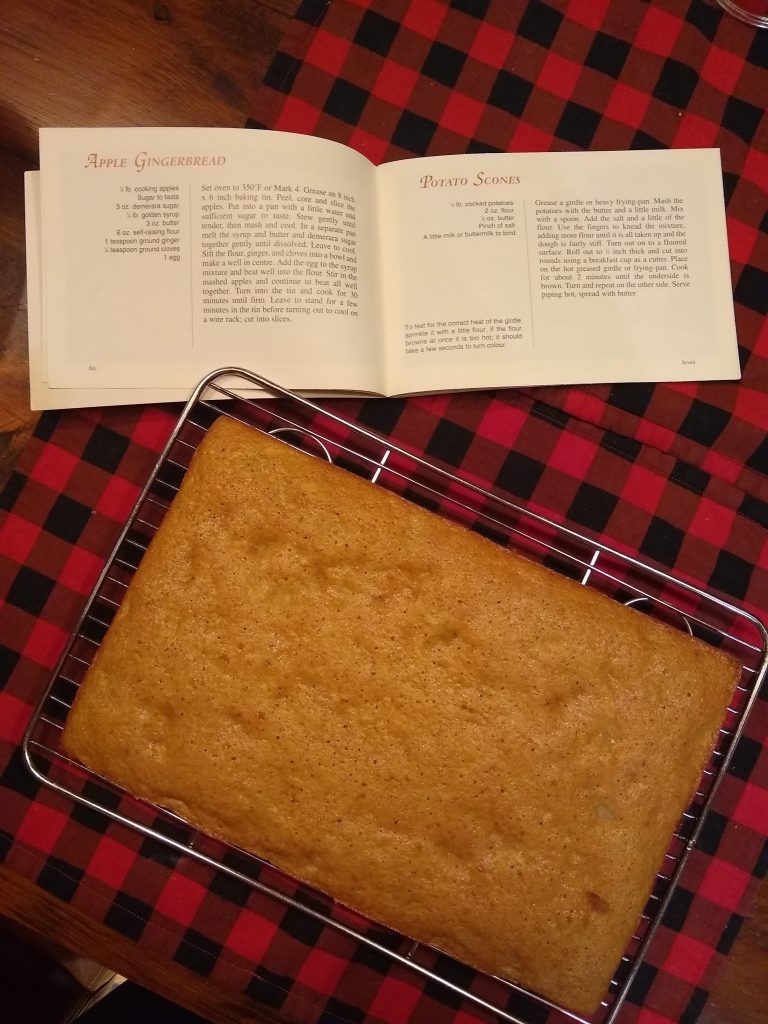
A recipe I definitely did not skimp on sugar was this Apple Gingerbread from our “Scottish Teatime Recipes” book. A $5 used book score from Samson Books that has proven to be just delightful. It doesn’t look like much, but when the syrup is measured by the pound you know it is going to be sweet. I can’t handle more than a few small bites, but Neil is very pleased it is here.
So that’s a sample of our miscellany of makering so far this January. I have a sort of feeling our next chat here will be back to Snow Stories. It seems im-possum-ble that I could stay away from talking about the animals for long… Hint hint. 🙂
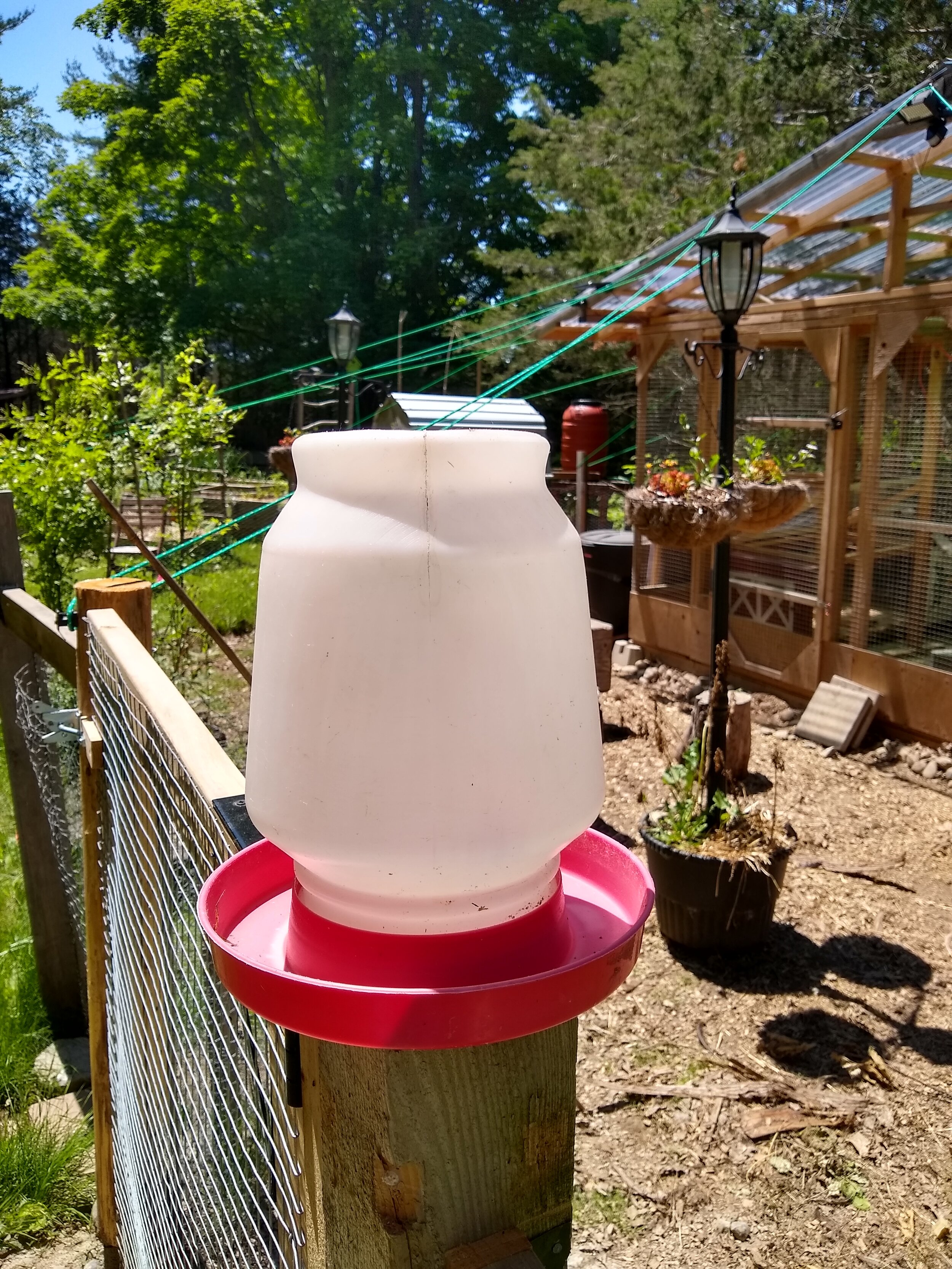
Chickens: “Thanks Bipedal Female Food-And-Water Dispenser, but do you have anything with more dirt in it? ktks”
Chickens make terrible farmers. They literally live like there’s no tomorrow. See a sprout, eat a sprout. Tomorrow be damned! Live for the now!
Party animals.
But we’ve managed to turn our chickens into gardening allies, in spite of themselves. We change over our chicken waterers every day or so. Though a chicken’s favourite water is always the grossest, dirtiest, mudpuddliest, most-recently-pooped-in water they can find, we like to feel we’re at least giving them the option of drinking fresh clean water. From there, they can do whatever their little dino hearts desire.
But chickens don’t drink a full waterer every day, so that means we are frequently removing a 2/3rds full waterer from their run. Rather than dumping it down the drain, we either consolidate it into the previously mentioned “ugly flushing buckets”, or use it to feed the gardens. I like to grow a few plants in the chicken run which are safe for them to nibble — assorted herbs, and some leafy greens like kale. I also grow roses in there, which are able to defend themselves against the chickens. Roses provide a nice bit of greenery in the run that can hold up a chicken’s reign of pecking terror. And since they’re out of chicken reach/interest, I’m able to harvest the petals and rosehips. All those plants get watered with the chicken waterers. I will turn you into gardeners yet, you tiny defoliating monsters.
Roofs for Days
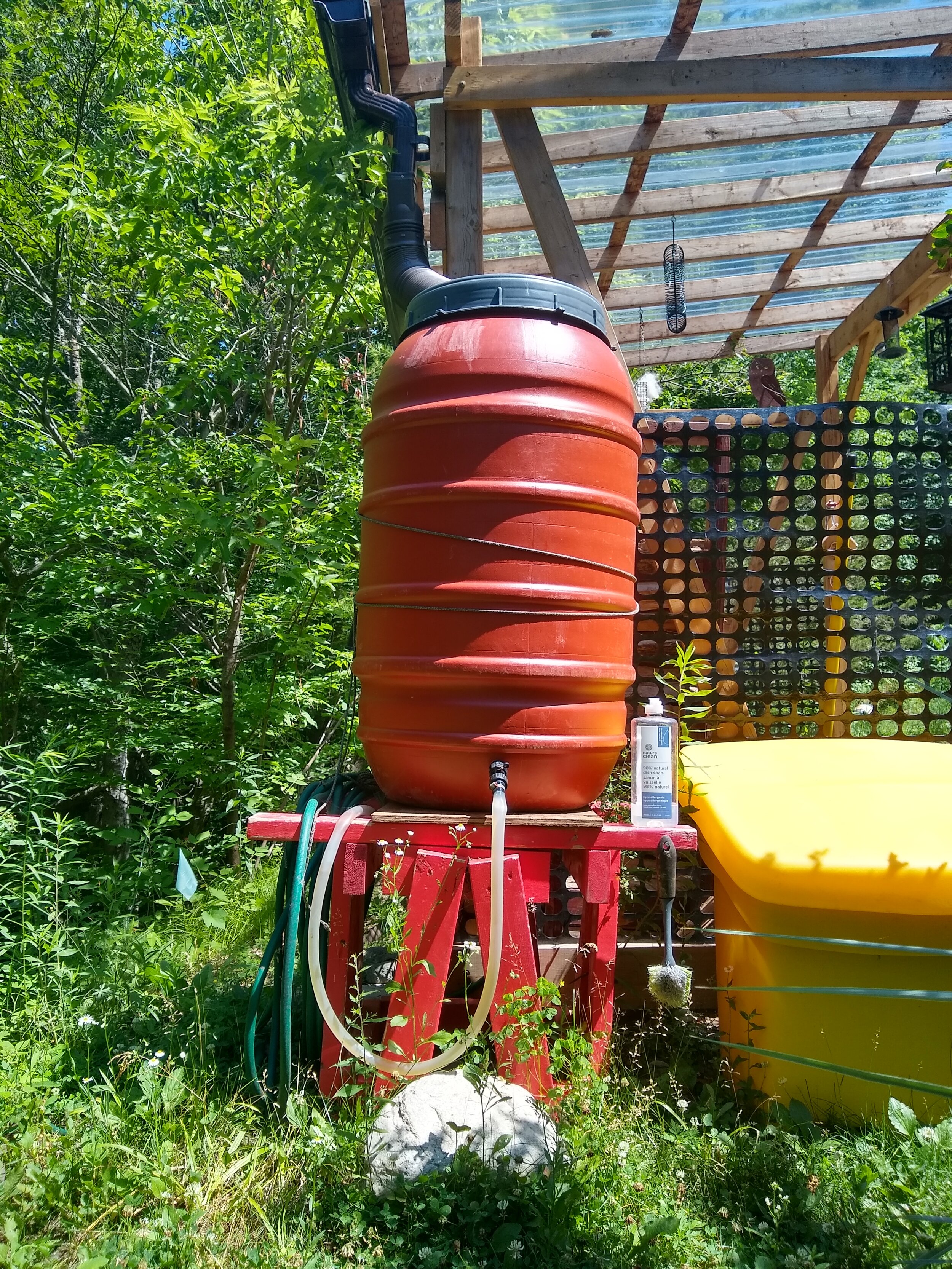
We often joke that we only build structures so we can put rainwater-collecting roofs on them. It’s not “true” but it’s also not-not true. Both our chicken run and our front firewood storage have roofs on them, with the roof water diverted into rainwater barrels. We use this water for outside chores. As-is, it’s not potable (though we have plans…), but it is great for a quick wash of muddy feet, cleaning out the compost bucket before bringing it back inside, or watering the vegetable gardens.
It’s easy enough to pop a gutter on a roof. Instead of ending up with a hard dripline around your structure that messes up the ground around it, all that water become useable, and eventually seeps back to the earth in a more gentle dispersed way.
Just out of frame — the little dish we fill with rainwater on hot days for the birds, chipmunks and other woodland critters.
Plant the Rain
Instead of planting plants and then figuring out where their water will come from, “planting the rain” means to find the water first, and let the plant follow. If you have even the tiniest interest in rainwater, this video of Brad Lancaster in Tuscon, Arizona is a must watch.
Brad’s approach of “planting the rain” transformed the barren streetscape where he lives into a life-giving food-generating oasis, by rethinking what’s possible, and working with his neighbours. Read more and find resources at his website: Harvesting Rainwater.
““One of my primary mentors was an African water farmer, Mr Zephaniah Phiri Maseko. When I spent just one day with him, seeing how he converted a wasteland into an oasis just by planting the rain.
I said “Look, the water situation is so bad in my community I want to leave, where should I go?” And he slapped me on the shoulder and he said “You can’t go. If you run away from your problems, you’ll just plant problems everywhere you go.
You gotta go home, set your roots deeper than you ever thought possible and figure out solutions.” ”
Welcome back to the grey waters! More in our series of sharing what we do around here. The spirit of these is not “HERE IS WHAT TO DO DOUBLE-STAMPED IT”, but rather “Here’s what works for us — hope you find it helpful!” We’re an open-source homestead. 🙂 Try, learn, share, repeat.
Let’s get started. Here’s few of the no-tech grey water systems we’re currently using around here:
The Red Jug
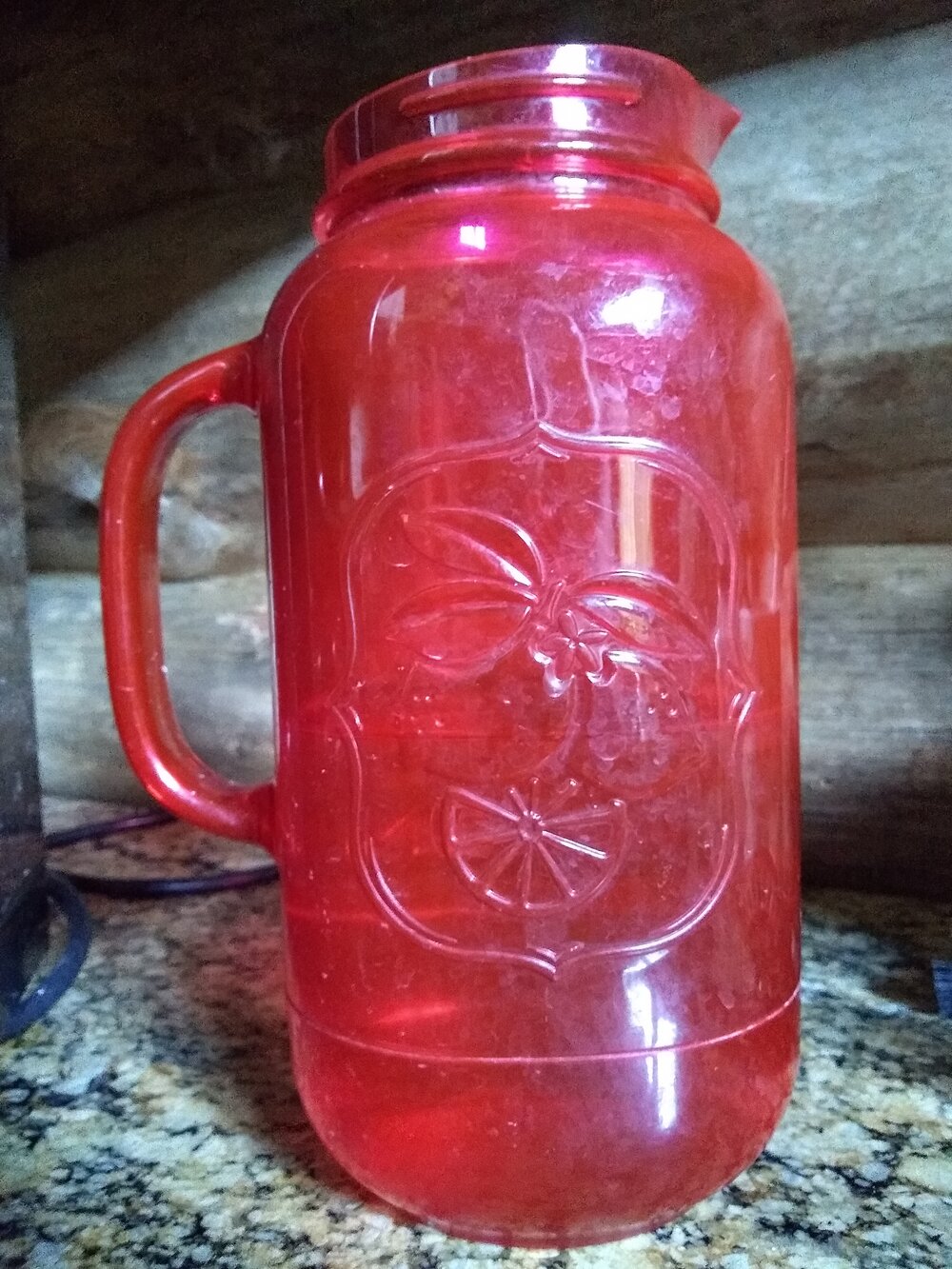
Behold its bespeckled majesty. The red jug keeps it real.
The Red Jug is a watersaving method we more-or-less drifted into. We have a nice glass carafe, but we got a big red plastic jug for when littles come to visit. It just took awhile for us to put it away again after one of those visits, and I popped it under the tap to catch the water while I was running it to get it hot.
The jug now lives full time on the counter beside the sink. Anytime we are running the tap for “a second” to get it hot or cold, the red jug is there to catch that water. It’s been a real eye-opener for just *how* much drinking water would run straight down the drain without it. Even when it’s just “a second”.
I drink a lot of tea, and that’s our primary use for the water in the red jug. We almost never fill the kettle from the tap now. The little bits and pieces of running the tap here and there keep the red jug pretty full, and it turns over pretty quickly. (I also enjoy sipping on a nice mug of boiled water, cuz I’m a weirdo.) We’ll also use the red jug water as boiling water for cooking — to boil pasta, potatoes, eggs. It’s super handy, a convenient vessel, and it feels great to know that fresh water is staying in use, rather than shooting down the drain.
Bathtub Reservoir Pond
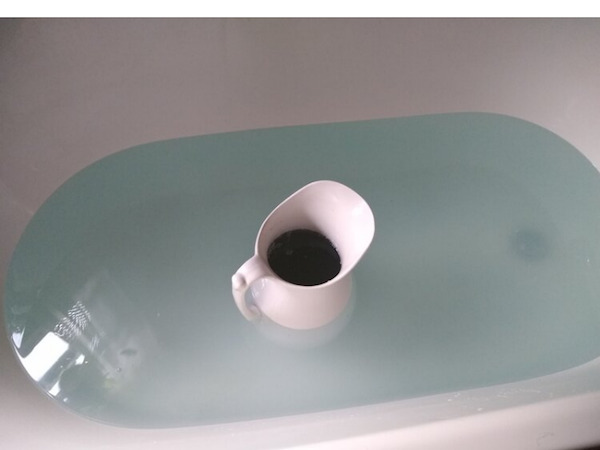
Rub-a-dub-dub-fill-the-tank-from-the-tub
We have a beautiful freestanding tub in a beautiful bathroom put together by the previous owners, who had great taste.
We also live on a well, and taking a bath uses a heck of a lot of water compared to a short shower. So baths are a special occasion, and sometimes seasonal if its an especially dry year.
But we also work hard, and the ol’ joints appreciate an occasional soaking.
The other thing that uses a heck of a lot of clean, drinkable water, is flushing a toilet. Even water-saving toilets like the ones we have use 4+ litres of drinking water every time you flush. It is madness that any house is designed for us to defecate in potable drinking water. Never mind that nearly all houses are designed that way. The water line that supplies the toilet tank is the same water line that supplies the drinking taps. Madness.
Many of our grey water hacks are attempts to work around this. The tank needs to be filled with water in order to flush, but that water could come from anywhere. So we keep a jug in the bathroom, and after one of us has had a bath, we won’t drain the tub, but instead use it like a little grey water lake. When it’s time to flush the toilet, we fill a jug with tub water. Then when we flush, we pour that water into the tank. If we wanted to be hardcore, we could shut off the water intake to the toilet tank and fill it all from the tub. But pouring in a jug still significantly affects how much water the toilet draws, and is the kind of simple patch that is easy to do.
It takes days before we’ve even really dented the water level in the tub, which really hits home just how much water is in that bathtub.
The Big Ugly Flushing Buckets
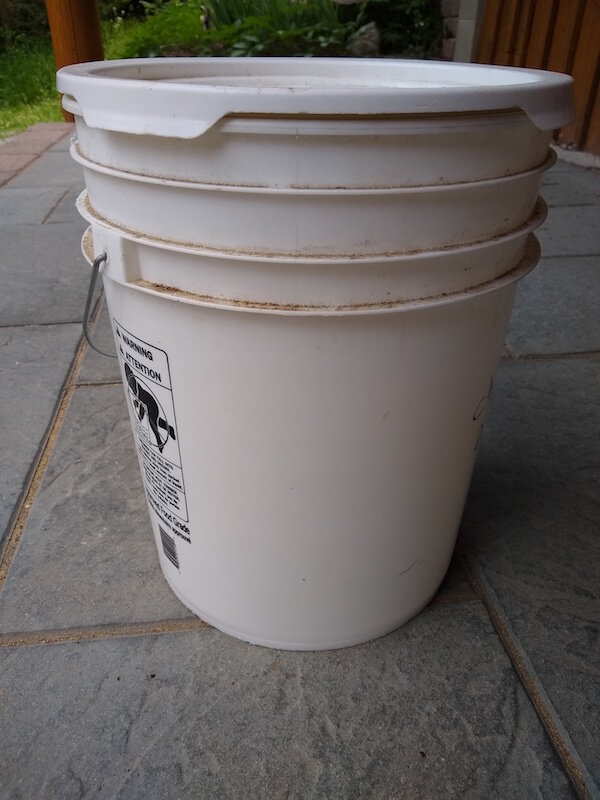
5 gallon buckets and blue tarps… now you’re homesteadin’!
The Big Ugly Flushing Buckets are just what they sound like — big 5 gallon white plastic buckets that sit in our bathroom. They function much the same as the bathtub reservoir — we pour jugs from them into the toilet tank as flushing water. You could definitely argue that these buckets make the place significantly less classy, but I’d counter that there’s not much that’s classy about pooping in drinking water.
We have a bunch of these buckets, and they get filled lots of different ways. One of the biggest is when we swap out our chicken waterers. We change the chicken’s water every day to keep it fresh, though the chickens don’t drink anywhere close to a full waterer. That means we have a reservoir of water that wasn’t touched by the chickens, but that has been sitting outside for a day. Instead of dumping it straight down the drain (and filling the septic tank), into the ugly flushing buckets it goes!
I have some plans for both elaborate (sensor-based) and simple (gravity-based) hacks to retrofit grey-water to our toilet tanks. And one day we may try out composting toilets. But “perfect” is the enemy of “done”. Every jug we pour into the toilet tank today is one jug more of drinking water not wasted.
“The earth, the air, the land, and the water are not an inheritance from our forefathers, but on loan from our children. So we have to handover to them at least as it was handed over to us.” – Mahatma Gandhi
“The mind is like water. When it’s turbulent, it’s difficult to see. When it’s calm, everything becomes clear.” ~Prasad Mahes
“When you can’t have a shower, everything sucks, everyone is stupid, and nothing will get better ever.” ~Me
Our first year here there was a record-breaking drought in Ontario. So we found ourselves pretty immediately in the deep end of country life (but at least it was dry). Neither of us understood yet the practical realities of living on well-water. We knew nothing really about how wells worked, what a “trickle-tank” was, what were “good” and “bad” numbers on the pressure gauge, recovery time…
But you sure can learn fast as your hair gets greasy and your personal stink begins to build up.
There are only two of us here, plus animals, so our demands on the well are low. In that first year though, it was difficult to find a low that was low enough. In the end, our well performed pretty miraculously. It went dry one time, but rallied within the day. Though we didn’t actually know that at the time, because we didn’t know how to reset the pump after the emergency low-level shutoff kicked in. My poor brother and brother-in-law were visiting at the time, and I played good host by hand-pumping buckets of toilet flushing water from the rainwater tank outside. Our yelp reviews are flawless.
The well continued to empty but then slowly refill, keeping us in extremely carefully managed water while each of our neighbours’ wells went dry in turn, and they had to buy in tanks of water. We took our laundry to the laundromat in town, but otherwise army-shower and mellowyellowed — why, why must that term be so gross — our way through it.
It was a character-shaping and humbling experience, and kicked us into permanent water-wareness. The rainwater catchment system the house came with — a buried septic tank outside with a submersible pump, caching water from the roof — very quickly went from a nice-to-have to a thank-god-they-put-that-in.
Our house does not officially have a “proper” greywater system, but we have created at least a half dozen greywater mini-systems — each one a little bodge-job that saves a surprising amount of water. Together they’ve taught us that any home can have a greywater system. Invent your own! It doesn’t have to be fancyschmancy pants to make a real difference. If you have a bin in your sink to catch the water as you run the taps to get them hot, then you have a greywater system. If you turn off the tap when you’re brushing your teeth, then you are practicing water management. And that puts you solidly on Team Blue Gold, you water-saving warriors.
Here are a few of the things we do around here to stretch our water:
* The Red Jug
* Bathtub Reservoir Pond
* The Big Ugly Flushing Buckets
* Chicken Gardeners
* Roofs for Days
* Plant the Rain
Over the next few posts, we’ll share the details of these little hacks — what we do to save the rain and stretch the well. Best to share them, because the more ideas the better! Enough drops of water, and you’ll have an ocean.










 Chickens: “Thanks Bipedal Female Food-And-Water Dispenser, but do you have anything with more dirt in it? ktks”