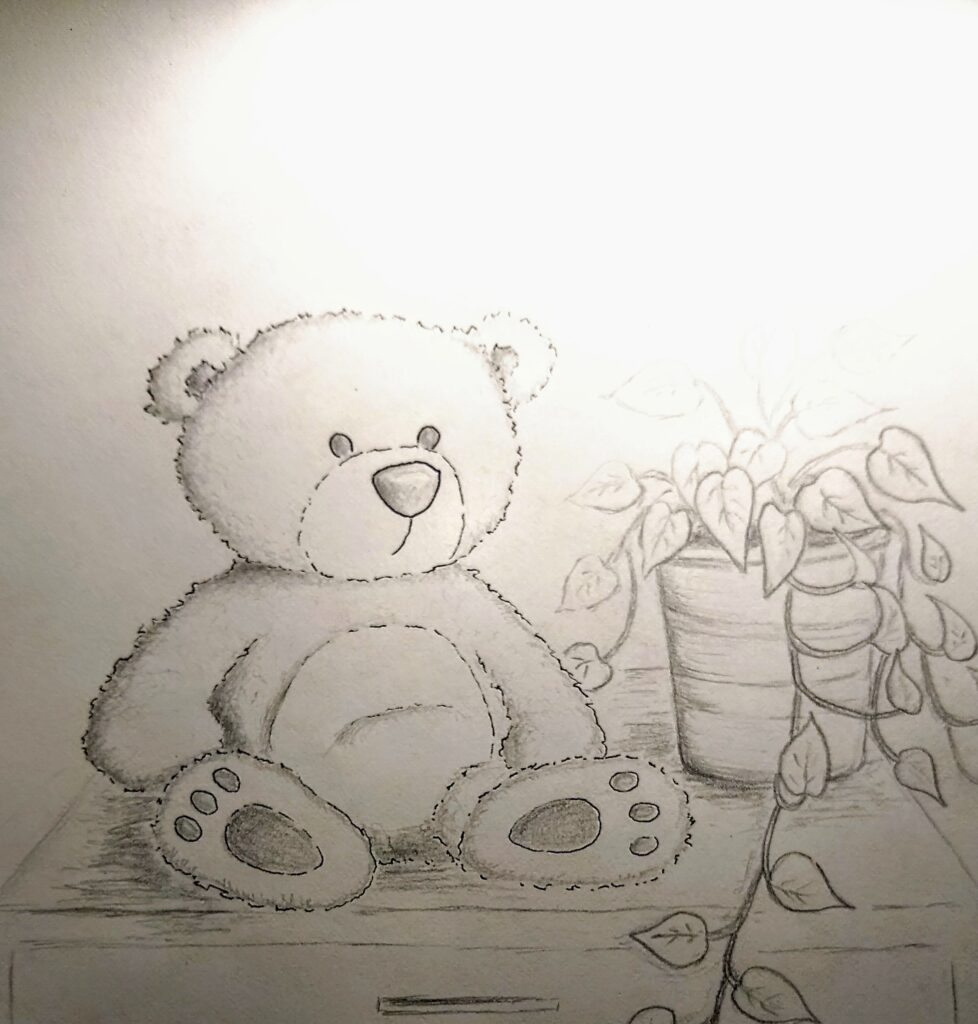
There is a bear at Stanford who sits on top of a filing cabinet. It’s a stuffed toy bear, and it belongs to one of the professors. When the professor’s students get stuck on a problem, and want to ask for his help, they first have to go and explain their problem to the bear.
Most of the time, the bear is able to solve the problem.
Or rather, the students are able to solve their own problems, by talking them through “with the bear”.
I can’t find the right combination of search terms to dig up the origin of this story again. And who knows how much truth has merged with fiction. But whether this teddy bear-tactic professor ever really existed or not, this story is true at our house.
We don’t literally leave a stuffed bear around. And anyways my only stuffed animal options are an alligator, a puffin, a monster dressed as a ninja, and a flying squirrel. As stuffed animals go, they’re solid. Though I don’t know if any of them are good listeners.
But Neil and I are often “the bear” for each other. We work on projects together and alone. If one of us is stuck on a problem, the other person might understand enough about what we’re doing to offer a helpful suggestion, a fresh perspective, or a different tactic. But even when the stuck person is working way outside our expertise, we can still “be the bear” for each other. We simply sit and listen, while the other person explains their problem to us.
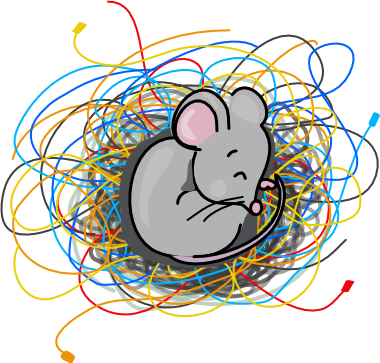
Talking to the bear lets you untangle your own thoughts. Brains can be messy, and that’s okay. But sometimes, when we leave a problem in there too long, our thoughts simply pull the existing knots tighter and tighter.
Our minds are capable of holding contradictory or “gappy” ideas. But the plot holes and conflicts often become apparent once we start teasing our thoughts apart into sentences. As we start to untangle our ideas, because we’re trying to communicate them to someone else — even if that someone else is a stuffed bear — we can often uncover the crux. And find our way out of the tangle, all “on our own”. It might even seem incredibly obvious as soon as we begin speaking aloud. A handful of sentences spoken aloud to the bear uncovers the root of, and solution to, a problem you’ve been rolling around in your mind for an hour.
At our house, if we notice the other person is stuck on a problem, we will say “do you need me to be the bear?” and come sit in their office for a bit while they figure it out. Or we might seek the other person out, saying “can you be the bear for me?” And occasionally, when Neil has drifted into explaining a complex coding problem to me that he’s stuck on, I will tuck my arms in to my sides and slowly raise them to a 90 degree angle. Sometimes it helps to get into character.
Anyone can “be the bear”. So often we just need someone to sit still with us, and listen.
~Kate